
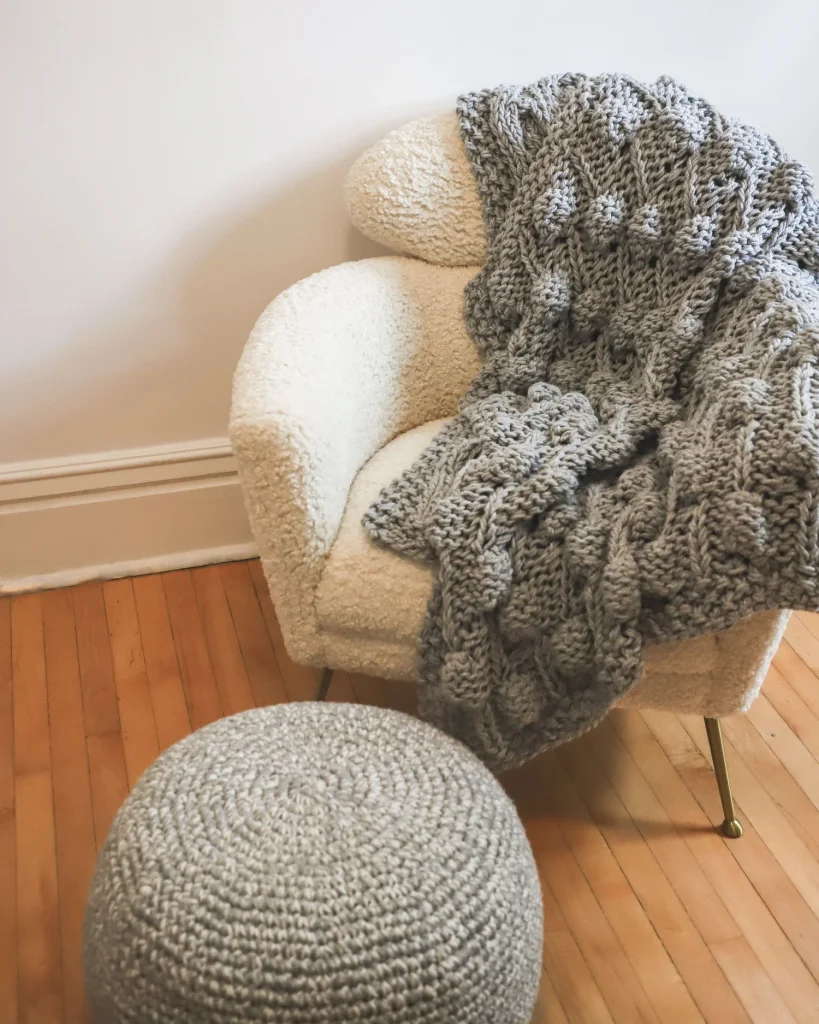
Looking to add a cozy and stylish touch to your living space? Learning how to knit or crochet a pouf is easier than you think—and it’s a fun way to create something unique with your own hands.
Imagine sinking your feet into a soft, handmade pouf after a long day or impressing your guests with a custom piece that perfectly matches your decor. In this guide, you’ll discover simple steps and tips that make the process smooth and enjoyable, even if you’re a beginner.
Ready to transform yarn into comfort? Let’s get started!

Credit: www.hoookedyarn.com
Choosing Your Materials
Choosing the right materials is crucial before you start knitting or crocheting your pouf. The feel, durability, and overall look of your pouf depend heavily on the yarn and tools you pick. Let’s break down what you’ll need to make your project both enjoyable and successful.
Selecting Yarn Types
Your yarn choice affects both the texture and sturdiness of the pouf. Thick, bulky yarns like chunky wool or cotton blends work great because they hold shape well and create a cozy, robust fabric. Avoid very soft or delicate yarns; they might not stand up to the wear and tear a pouf faces.
Think about color and maintenance too. Do you want a vibrant statement piece or something neutral that blends with your decor? Also, consider if your pouf needs to be washable—some yarns handle frequent cleaning better than others.
Picking The Right Hook Or Needles
The size of your crochet hook or knitting needles should match your yarn’s thickness. Using a hook or needles that are too small will make your pouf stiff and dense, while too large might result in a loose, floppy fabric. Check the yarn label for recommended sizes and test a small swatch first.
Personal experience taught me that experimenting with one size up or down can drastically change the feel of your project. Don’t hesitate to try different sizes before committing. The right tools will make your work smoother and your pouf sturdier.
Gathering Additional Supplies
Besides yarn and hooks or needles, you’ll need a few extras to complete your pouf. A sturdy stuffing material like polyester fiberfill or old cushions is essential to fill out your pouf and keep it comfortable. You might also want stitch markers to keep track of rounds or pattern changes.
Consider a yarn needle for sewing pieces together and weaving in ends neatly. And don’t forget scissors with sharp blades for clean cuts. Having these supplies ready ensures your workflow stays smooth and frustration-free.
Basic Stitches To Know
Mastering the basic stitches is key to creating a beautiful pouf, whether you choose to knit or crochet. These foundational skills build your confidence and make the process more enjoyable. Getting comfortable with these stitches will help you troubleshoot and customize your pouf as you go.
Simple Crochet Stitches
Crochet poufs often rely on just a few simple stitches, making them perfect for beginners. The chain stitchis where you’ll start every project—it forms the base of your work.
The single crochet stitchis dense and sturdy, ideal for creating a tight fabric that holds stuffing well. If you want a bit of texture, the half double crochetadds a slight height and softness.
- Chain Stitch (ch):Creates the starting foundation row.
- Single Crochet (sc):Produces a firm, dense fabric.
- Half Double Crochet (hdc):Adds texture and a bit of stretch.
Practicing these stitches on a small swatch before starting your pouf will save frustration. Have you noticed how consistent tension changes the look and feel of your stitches? That control is part of what makes handmade poufs special.
Essential Knitting Stitches
If knitting is your preferred craft, the knit stitchand purl stitchare your best friends. These two stitches combine to create all kinds of patterns and textures that can make your pouf stand out.
The garter stitch, made by knitting every row, produces a thick, squishy fabric that holds its shape well. If you want a smoother texture, try the stockinette stitch, which alternates knit and purl rows.
| Stitch | Effect | Why It Works for Poufs |
|---|---|---|
| Knit Stitch | Creates a smooth “V” pattern | Forms the base for most knitting patterns |
| Purl Stitch | Creates bumps opposite the knit stitch | Used to add texture and reverse patterns |
| Garter Stitch | Rows of knit stitches | Dense, stretchy fabric that maintains shape |
| Stockinette Stitch | Alternating knit and purl rows | Smooth front, textured back—great for a polished look |
Try knitting small swatches of each stitch to feel how they behave with your yarn. How might different stitch textures affect the final look and comfort of your pouf? Experimenting here can lead to a pouf you’ll love to use and show off.
Starting Your Pouf
Starting your pouf might seem like a daunting task, but with a little patience and creativity, it becomes an enjoyable journey. Whether you’re knitting or crocheting, creating a pouf is a great way to add a personal touch to your living space. Let’s dive into the first steps of crafting your own comfy, stylish pouf.
Creating The Base
The base of your pouf is the foundation. It sets the shape and stability. Choose a yarn that matches the aesthetic you desire. A bulky yarn will give your pouf a plush, cozy look, while a more structured yarn might be better for a sleek design.
Begin with a magic circle if you’re crocheting or a simple cast-on if knitting. This will be the center of your base. Gradually increase the size by adding stitches evenly around the circle or along the edges. Aim for a smooth, flat circle that will form the bottom of your pouf.
What color will you choose for your base? A neutral tone can blend seamlessly with most decor, while a bold color can make your pouf a statement piece. Consider your space and personal style as you decide.
Building The Sides
Once the base is complete, it’s time to build the sides. This step transforms your flat piece into a three-dimensional object. Continue with the same yarn to maintain a cohesive look. However, this is also an opportunity to add a pop of color or texture with a different yarn if you’re feeling adventurous.
For knitting, transition to a circular knitting needle to work seamlessly in the round. If you’re crocheting, simply continue in spirals or join each round for a more structured look. Keep an even tension to ensure the sides are sturdy and uniform.
As you build up the sides, think about the height of your pouf. Will it be a low, wide pouf for lounging, or a taller one that can double as extra seating? Each option has its own charm and utility. Consider how you’ll use your pouf to guide your decisions.
Remember, the process of making a pouf is as enjoyable as the end result. Take your time, experiment with colors and textures, and most importantly, have fun with it!

Credit: www3.designindaba.com
Shaping And Sizing
Shaping and sizing are key to creating a perfect pouf. They affect how the pouf looks and feels. Getting these right makes your project neat and comfortable. Focus on the size you want and keep your stitches even. This section helps you control the shape and size easily.
Adjusting Dimensions
Change the pouf size by altering stitch count or rows. More stitches make a wider pouf. More rows increase the height. Use a tape measure to check dimensions as you go.
Try this for a custom fit:
- Measure the space where the pouf will sit.
- Decide the pouf’s height and width.
- Adjust your pattern’s stitch count to match.
- Keep notes for future projects.
Maintaining Consistent Tension
Even tension keeps the pouf smooth and firm. Uneven tension causes bumps or loose areas. Hold your yarn and hook or needles the same way. Check your tension every few rows.
Tips for consistent tension:
- Relax your hands to avoid tight stitches.
- Use the same yarn type throughout.
- Stop and adjust if stitches look uneven.
- Practice on a small swatch first.
Finishing Touches
Finishing touches bring your knitted or crocheted pouf to life. They add style, strength, and personality to the piece. This stage is important for both looks and durability. Paying attention to details makes your pouf stand out and last longer.
Adding Texture Or Patterns
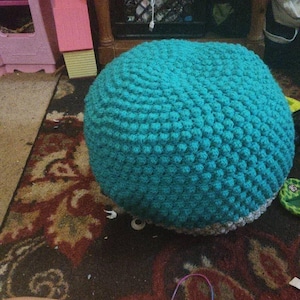
Texture gives your pouf a unique feel and look. Use different stitches to create bumps, ridges, or waves. Mix simple stitches like bobbles, cables, or popcorn for an interesting surface. Patterns can be stripes, chevrons, or blocks of color. Choose yarns with different thickness or fibers for extra depth.
- Try alternating knit and purl stitches for a ribbed effect.
- Use a crochet shell stitch for a scalloped texture.
- Combine colors with simple stripes or color blocks.
- Experiment with raised stitches like popcorn or bobble stitches.
Seaming And Closing
Seaming holds your pouf together securely. Use a yarn needle and matching yarn to sew edges neatly. Choose mattress stitch for an invisible seam or whip stitch for a strong join. Leave a small opening to stuff the pouf firmly with filling. After stuffing, close the opening carefully to keep the shape.
- Align edges evenly before sewing to avoid puckers.
- Stuff tightly with foam, old fabric, or fiberfill.
- Check for loose ends and weave them in for a clean finish.
Credit: www.etsy.com
Stuffing And Assembly
Stuffing and assembling your knitted or crocheted pouf is where your project truly comes to life. The right filling gives your pouf comfort and durability, while proper assembly ensures it holds its shape and looks polished. Let’s dive into how to pick the best stuffing and secure your pouf for everyday use.
Choosing The Right Filling
Choosing the right filling affects both the look and feel of your pouf. You want something soft enough to sit on comfortably but firm enough to keep its shape.
- Polyester Fiberfill:Lightweight and easy to work with, it offers good softness but may compress over time.
- Foam Beads:These provide a firmer, more moldable pouf and are great if you want your pouf to bounce back after use.
- Old Clothes or Fabric Scraps:An eco-friendly option that adds weight and firmness, but can be bulky and uneven.
- Foam Blocks or Mattress Foam:Perfect if you want a sturdy shape and a firm surface, although it can be harder to stuff evenly.
Think about how you will use your pouf. Will it be a footrest, extra seating, or just decorative? This helps you decide the best filling. I once used polyester fiberfill, and while it was soft, I needed to add more over time to keep the shape firm.
Securing The Pouf Shape
After filling, securing your pouf’s shape is key to preventing lumps and sagging. It’s tempting to stuff it fully and sew it shut immediately, but a few extra steps make a big difference.
- Stuff Gradually:Add your filling in small amounts, shaping as you go. This helps avoid uneven lumps.
- Use Internal Supports:Consider adding a lightweight inner frame or a tightly stuffed pillow inside for extra stability.
- Secure the Opening:Use a strong yarn and a hidden stitch like the ladder stitch to close your pouf neatly and securely.
- Reinforce Edges:Sew through the edges a couple of times to prevent the seams from stretching or opening with use.
Ask yourself—how often will your pouf be moved or sat on? The more usage, the stronger your assembly needs to be. I once skipped reinforcing seams on a pouf and ended up with a surprising burst of stuffing after a lively family game night. Don’t let that be you!
Care And Maintenance Tips
Keeping your knitted or crocheted pouf in great shape is easier than you might think. Regular care ensures it stays cozy and vibrant for years. Let’s dive into some simple yet effective ways to maintain your handmade pouf.
Cleaning Your Pouf
Dust and dirt can settle into the fibers of your pouf, dulling its look. To freshen it up, start with gentle vacuuming using a soft brush attachment. This removes surface dust without damaging the yarn.
If your pouf gets a spill, act quickly. Blot the area with a clean cloth—never rub, as that pushes the stain deeper. For stubborn spots, use a mild detergent mixed with water and test on a small hidden area first.
Some poufs allow spot cleaning only, while others with removable covers can be hand washed or machine washed on a gentle cycle. Check your yarn type—wool needs cooler water and gentle care, while acrylic yarns can handle a bit more washing.
Repairing Wear And Tear
Even the sturdiest pouf can show signs of wear over time. Loose stitches or small holes are common issues that you can fix yourself. Grab a crochet hook or knitting needle and carefully rework the damaged area to prevent it from getting worse.
Do you notice thinning yarn in spots that get the most use? Consider reinforcing these areas with a matching yarn. This not only extends the life of your pouf but keeps it looking neat.
When stuffing shifts or compresses unevenly, redistribute it by opening the pouf and fluffing the filling. You can even add extra stuffing if it feels too flat, which helps maintain its shape and comfort.
Frequently Asked Questions
What Materials Are Needed To Knit Or Crochet A Pouf?
You need chunky yarn, a large crochet hook or knitting needles, stuffing, and a yarn needle. Choose soft, durable yarn for comfort and strength. Optional materials include stitch markers and a pattern guide.
How Long Does It Take To Make A Knitted Or Crocheted Pouf?
Making a pouf typically takes 6 to 12 hours, depending on skill and complexity. Beginners may take longer, while experienced crafters can finish faster. Breaking the work into sessions helps manage time efficiently.
Can Beginners Easily Knit Or Crochet A Pouf?
Yes, beginners can make a pouf with basic knitting or crochet skills. Using chunky yarn and simple stitches makes the process easier. Following a clear pattern improves success and builds confidence.
How Do I Stuff A Knitted Or Crocheted Pouf?
Stuff your pouf evenly with polyester fiberfill or old fabric scraps. Fill tightly for firmness but leave some flexibility. Distribute stuffing uniformly to maintain shape and comfort.
Conclusion
Knitting or crocheting a pouf adds charm to any room. It’s a fun project that anyone can try. You create something useful and cozy with your hands. Choose your favorite yarn and colors to match your space. Take your time and enjoy each stitch you make.
Soon, you will have a beautiful pouf ready to use. Handmade items bring warmth and personality to your home. Start today and see how satisfying crafting can be.



