
Have you ever noticed a string of lights that just doesn’t shine right? Maybe one bulb flickers or stays dark, ruining the whole effect.
Finding that bad light in a string can be frustrating and time-consuming. But what if you could quickly spot the problem without guessing or replacing every bulb? You’ll discover simple, effective ways to identify the faulty light in your string.
By the end, you’ll save time, avoid extra costs, and get your lights glowing perfectly again. Keep reading to learn how to find that bad light with ease!
Common Causes Of Flickering
Flickering lights in your string can be more than just annoying; they can signal deeper issues that might lead to safety hazards or costly repairs. Understanding the common causes of flickering helps you pinpoint the problem quickly and fix it before it worsens. Let’s break down the usual suspects behind those annoying flickers.
Loose Connections
Loose connections are often the simplest cause of flickering lights. A bulb that isn’t screwed in tightly or connectors that have shifted can interrupt the flow of electricity.
Try wiggling the bulbs or checking the plugs along your string. You might find a loose joint that, once tightened, stops the flicker immediately.
Have you ever noticed one section flickering while the rest stays steady? That’s a classic sign of a loose connection.
Faulty Bulbs
Sometimes the problem lies within the bulbs themselves. A damaged or old bulb can flicker or burn out prematurely.
Swapping out bulbs one by one can help isolate the faulty ones. Pay attention to bulbs that flicker even when others don’t.
Not all bulbs are built the same—using replacements from a different brand or type might cause compatibility issues that lead to flickering.
Power Supply Issues
The power source feeding your string lights can cause flickering if it’s unstable. Voltage fluctuations or a weak outlet often cause inconsistent lighting.
Check if the flickering happens only when other appliances are running. Overloaded circuits can starve your string lights of steady power.
Consider testing your lights on a different outlet or using a surge protector to stabilize the current.
Environmental Factors
Environmental conditions can also play a role in flickering. Moisture, extreme temperatures, or exposure to wind can affect the wiring and bulbs.
Outdoor string lights are especially vulnerable—rain or humidity can cause short circuits or corrosion.
Have you inspected your lights for signs of water damage or wear after a storm? Protecting your lights with weatherproof covers might save you from flickering headaches.

Credit: www.youtube.com
Tools Needed For Inspection
Finding a bad light in a string requires a few basic tools. These tools help you inspect and fix the problem safely and quickly. Having the right items makes the process simple and effective. Below are the essential tools you need for inspection.
Multimeter
A multimeter measures electrical current, voltage, and resistance. It helps identify if a bulb or wire has a break. Using a multimeter, you can find bad lights by checking continuity. It is a must-have tool for any electrical inspection.
Replacement Bulbs
Replacement bulbs are important for testing and fixing the string lights. Having the right size and type ready saves time. Swap out bulbs that do not light up to see if the problem is solved. Keep extra bulbs on hand for quick repairs.
Screwdrivers
Screwdrivers help open bulb sockets and access wires. Use the correct size to avoid damage. They also assist in tightening loose connections. Having both flathead and Phillips screwdrivers covers most needs.
Electrical Tape
Electrical tape insulates and protects exposed wires. Use it to cover any repairs or splices. It prevents short circuits and keeps connections safe. Always have electrical tape available during inspection and repair.
Step-by-step Troubleshooting
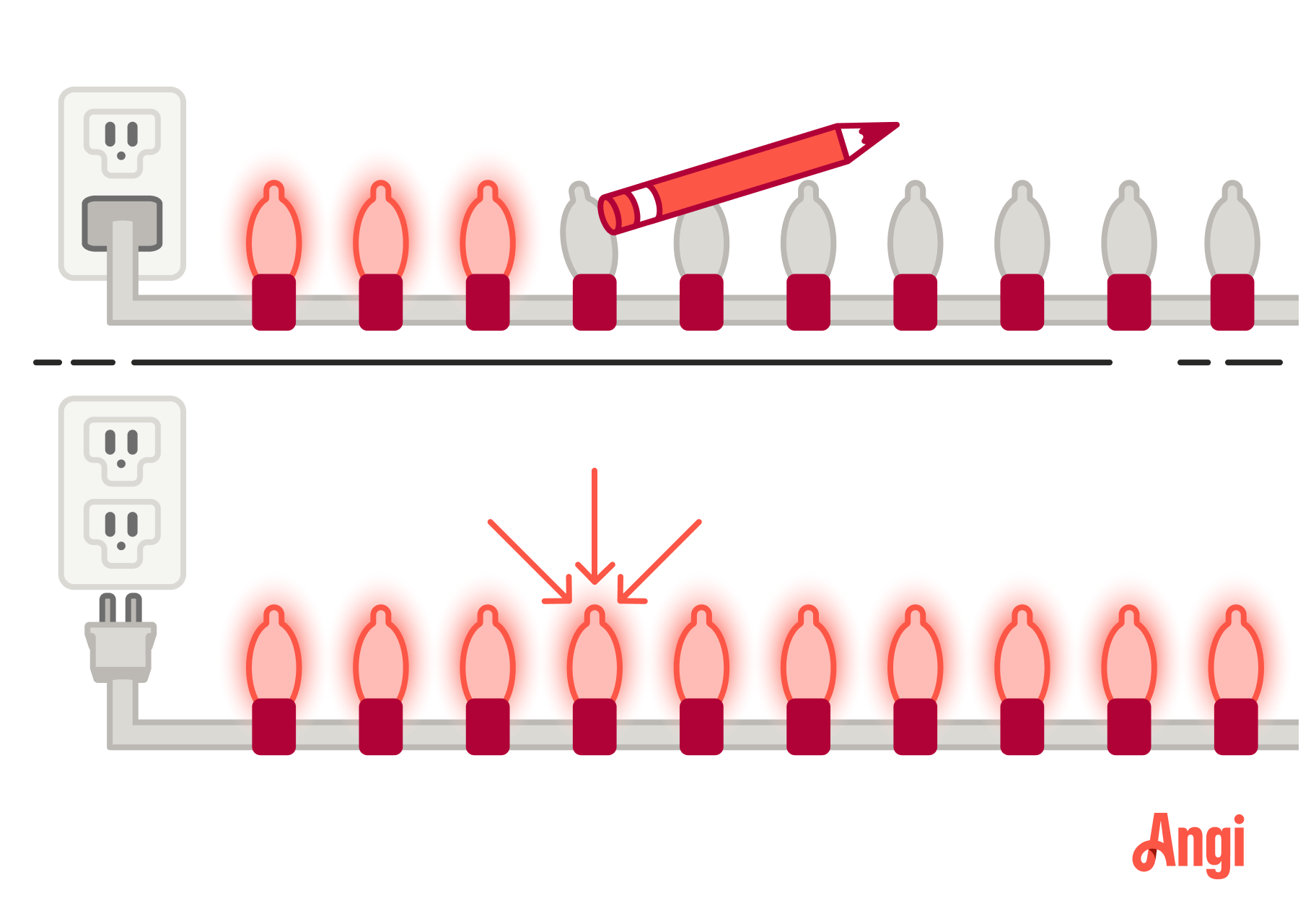
Check each bulb closely to spot any flickering or dim lights. Test sections with a multimeter to find breaks or faults in the wire. Replace bad bulbs or damaged wires to restore full string light function.
When your string lights go dark, troubleshooting can save the day. A systematic approach helps identify the faulty section. Follow these steps to restore your lights and brighten your space.Check The Power Source
Ensure the plug is secure in the outlet. Verify that the outlet functions. Try using another device to test the power source. A tripped breaker or a blown fuse might be the issue. Resetting the breaker or changing the fuse could solve the problem.Inspect Bulbs Individually
Examine each bulb for visible damage or discoloration. A single broken bulb can disrupt the entire string. Replace any broken bulbs with identical ones. Ensure the replacement is secure in the socket.Examine Wiring And Connections
Look for frayed or broken wires along the string. Damaged wires can cause a short circuit. Check each connection point for loose or exposed wires. Secure any loose connections to restore power flow.Test With Replacement Components
Use a known good bulb to test each socket. If the string lights up, the original bulb was faulty. For persistent issues, try a different set of lights. This helps identify if the problem is with the components or the power source.Quick Fixes For Flickering Lights
Flickering string lights can be more than just annoying—they might signal a simple issue you can fix quickly. Before you consider tossing the entire set, try these quick fixes that often solve flicker problems without needing an electrician. These solutions are straightforward and can save you time and money.
Tighten Loose Bulbs
Loose bulbs are a common cause of flickering. A bulb that isn’t screwed in properly can create an inconsistent connection, leading to that annoying flicker.
Simply check each bulb and tighten it gently but firmly. You might be surprised how many bulbs were just slightly loose, causing the entire string to behave erratically.
Secure Wiring
Damaged or loose wiring often disrupts the flow of electricity. Look closely for any exposed wires, broken insulation, or sections where the wiring feels loose.
If you find any problem areas, try to secure the wires with electrical tape or replace the damaged section. Keeping your wiring neat and intact ensures steady power to every bulb.
Replace Faulty Bulbs
A single faulty bulb can affect the whole string’s performance. If tightening doesn’t work, try swapping out bulbs one by one.
Use bulbs that match the original specifications to avoid compatibility issues. Sometimes, a quick replacement can stop flickering immediately.
Use Stabilizers
Voltage fluctuations in your power supply can cause your lights to flicker unexpectedly. Using a stabilizer or surge protector can help maintain consistent power.
These devices protect your lights from sudden voltage drops or spikes, especially during storms or heavy appliance use. Have you noticed flickering only at certain times? A stabilizer might be the fix.
Preventive Measures
Preventive measures are key to avoiding bad lights in string setups. These actions protect your lights and keep them working longer. Small efforts can stop big problems.
Regular Maintenance
Check string lights often for damage or wear. Clean bulbs gently to remove dust. Replace broken bulbs immediately. Look for frayed wires or loose connections. Keep the lights dry and free from dirt.
Proper Storage
Store lights in a cool, dry place after use. Coil them loosely to avoid tangles and breaks. Use a container or box to protect from crushing. Keep away from sharp objects that could cut wires. Label storage to find lights quickly next time.
Avoid Overloading Circuits
Do not plug too many lights into one outlet. Overloading causes overheating and shorts. Use power strips with built-in circuit breakers. Check the wattage limit of your string lights. Spread lights across different circuits if needed.
Use Quality Components
Buy lights made with good materials. Choose bulbs that fit well and last long. Use certified cords and plugs to ensure safety. Avoid cheap, low-quality strings that break easily. Quality parts reduce risks and improve performance.

Credit: www.youtube.com
Credit: www.angi.com
Frequently Asked Questions
What Are Common Signs Of Bad Lights In Strings?
Bad lights in strings often flicker, stay dim, or fail to light up. Check for broken bulbs or loose connections. These signs usually indicate faulty wiring or burnt-out bulbs needing replacement.
How Can I Test For Bad Lights In A String?
Use a multimeter or light tester to check continuity. Test each bulb and socket for power flow. Replace any bulbs that fail the test to ensure the string works properly.
Why Do Some String Lights Stop Working Suddenly?
String lights may stop due to blown fuses, damaged wires, or faulty bulbs. Overloading or exposure to moisture can also cause sudden failure. Inspect and replace faulty parts to restore function.
Can I Fix Bad Lights In A String Myself?
Yes, you can fix bad string lights by replacing bulbs and fuses. Ensure the power is off before handling. For complex wiring issues, professional help is recommended.
Conclusion
Finding bad light in string takes patience and careful checking. Look closely at each bulb and wire for signs of damage. Test the lights by plugging them in and observing any flickers or dim spots. Replace any broken bulbs quickly to keep the string working well.
Regular checks help avoid bigger problems later. Remember, good lighting makes your space safe and bright. Keep your string lights in good shape with simple steps. This way, your lights will shine beautifully and last longer.



