
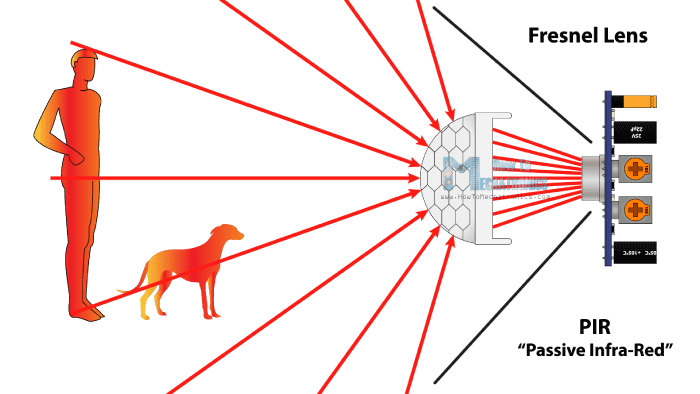
Have you ever wondered how your motion-activated lights or security alarms know when you’re nearby? The secret lies in a small device called a Passive Infrared (PIR) sensor.
Understanding how this sensor works can help you make smarter choices for your home or business security. You’ll discover the simple yet fascinating way PIR sensors detect movement, why they’re so reliable, and how they can improve your safety and convenience.
Keep reading to unlock the mystery behind this clever technology that’s quietly protecting you every day.
Basics Of Passive Infrared Sensors
Passive infrared (PIR) sensors detect motion by sensing heat changes in their environment. They are widely used in security systems, automatic lighting, and smart devices. Understanding their basics helps to grasp how they work effectively in daily applications.
What Is A Pir Sensor
A PIR sensor is an electronic device that detects infrared radiation. All objects emit some infrared energy, especially warm bodies like humans and animals. PIR sensors pick up this energy without emitting any radiation themselves, making them passive.
Core Components
- Pyroelectric sensor:Detects changes in infrared radiation.
- Lenses or mirrors:Focus infrared energy onto the sensor.
- Signal processing circuit:Converts sensor signals into usable outputs.
- Housing:Protects internal parts and shapes detection area.
How Pir Sensors Detect Motion
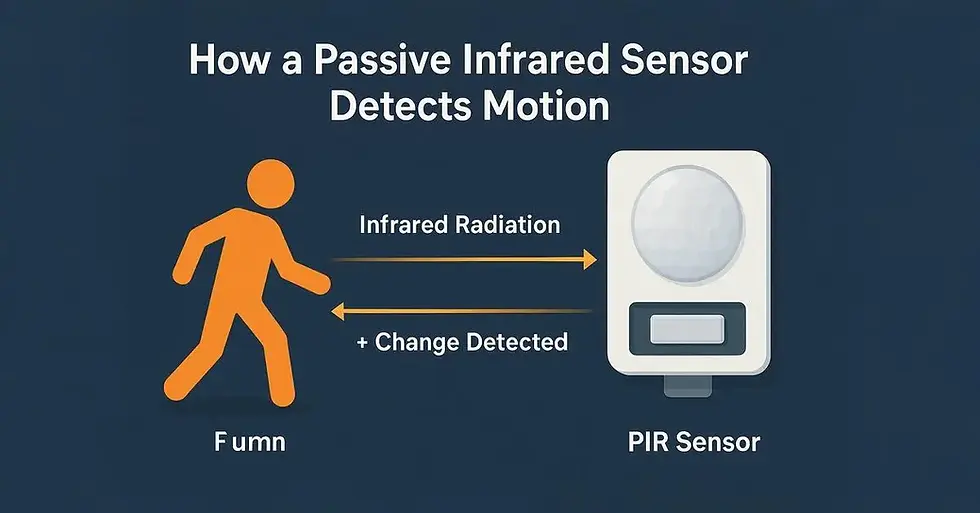
The sensor detects heat emitted by objects in its field of view. When a warm body moves, the infrared radiation changes rapidly. The pyroelectric sensor senses this change and sends a signal to the circuit.
The circuit then processes this signal to identify motion. Still objects do not cause a change, so the sensor ignores them. This method allows PIR sensors to detect movement efficiently and save energy.
Credit: www.fintechshield.co.in
Principles Behind Pir Technology
Understanding the principles behind Passive Infrared (PIR) technology helps you see why it’s so effective at detecting movement without any physical contact. PIR sensors rely on detecting heat energy emitted by objects, particularly living beings, and translate that into signals your devices can respond to. Let’s break down the key concepts that make PIR sensors work.
Infrared Radiation And Heat
Everything around you emits infrared radiation, a type of heat energy invisible to the naked eye. Humans and animals produce more infrared radiation than most objects because of body heat. PIR sensors detect these changes in infrared radiation within their field of view.
Think about walking past a PIR sensor in a dark room. Although you can’t see the heat, the sensor picks up the sudden change in infrared energy caused by your body. This triggers the sensor to react, like turning on a light or activating an alarm.
Pyroelectric Effect
The core of PIR technology is the pyroelectric effect, where certain materials generate an electrical signal when exposed to temperature changes. PIR sensors use crystals that respond to shifts in infrared radiation by producing a small voltage.
This voltage is then processed by the sensor’s electronics to detect movement. The effect is sensitive enough to notice subtle changes, such as a person walking across the room, but it ignores steady heat sources like a heater left on.
Sensor Sensitivity To Movement
PIR sensors don’t just detect heat; they detect changes in heat over time. Movement causes a variation in infrared radiation that the sensor can track. This is why standing still near a PIR sensor might not trigger it, but walking quickly across its range will.
Adjusting the sensor’s sensitivity settings can help avoid false alarms from pets or minor environmental changes. Have you ever wondered why some motion sensors miss slow movements? It’s because the sensor is designed to respond best to dynamic heat patterns rather than static ones.
Types Of Pir Sensors
Passive Infrared (PIR) sensors are essential in motion detection technology. They detect infrared radiation emitted by objects. Understanding the different types of PIR sensors helps in choosing the right one for specific needs.
Single Element Vs Dual Element
Single element PIR sensors have one sensing element. They detect changes in infrared energy. This type is basic and cost-effective. Dual element PIR sensors have two sensing elements. They offer improved accuracy. This type reduces false alarms, making it reliable for security systems.
Fresnel Lens Integration
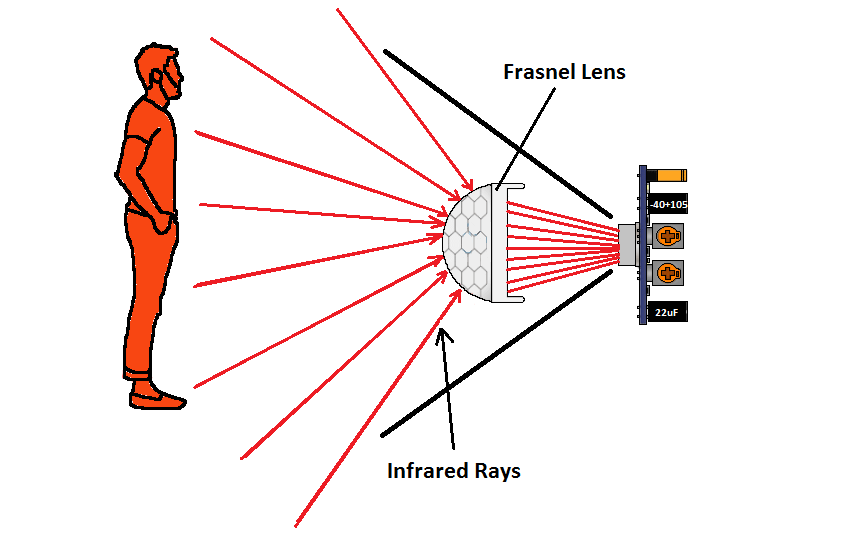
Fresnel lenses are crucial in PIR sensor function. They focus infrared signals onto the sensor elements. This enhances the detection capability. Fresnel lenses can be molded into various shapes. This allows customization for different coverage patterns.
Sensor Range And Coverage
PIR sensor range depends on several factors. The lens type and sensor design are key. Standard PIR sensors cover a range of 10-15 meters. Coverage can vary based on the environment. Optimal placement enhances sensor performance. Proper installation ensures effective motion detection.
Applications Of Pir Sensors
PIR sensors detect motion by sensing heat changes in their environment. Their ability to spot infrared radiation makes them useful in many areas. These sensors help improve safety, save energy, and add convenience in daily life.
Home Security Systems
PIR sensors play a key role in home security. They detect movement near doors and windows. When motion is sensed, alarms or lights activate. This helps alert homeowners to intruders. PIR sensors work well because they only react to body heat, reducing false alarms.
Automatic Lighting Control
These sensors can turn lights on and off automatically. They detect when people enter or leave a room. Lights switch on as someone arrives and off when the area is empty. This adds comfort and saves electricity by avoiding lights left on unnecessarily.
Energy Efficiency Solutions
PIR sensors help cut energy waste in buildings. They control heating, ventilation, and air conditioning based on occupancy. Systems run only when people are present. This lowers utility bills and reduces environmental impact. Many offices and public places use PIR sensors for this reason.
Advantages And Limitations
Passive Infrared (PIR) sensors offer many benefits but also come with some limits. Understanding these helps in choosing the right sensor for your project. This section explores the main advantages and common challenges of PIR sensors. It also suggests ways to improve their accuracy for better performance.
Benefits Of Using Pir Sensors
- Low power consumption saves energy and extends device life.
- Simple design makes them cost-effective and easy to install.
- Detects motion without physical contact or sound.
- Works well in various lighting conditions, including darkness.
- Compact size fits easily into many devices and systems.
- Reliable for basic security and automation tasks.
Common Challenges
- Limited detection range, usually about 5 to 12 meters.
- Can mistake heat sources like pets or heaters for humans.
- Performance drops in extreme weather or direct sunlight.
- Fixed detection zones may cause blind spots.
- Requires a clear line of sight to detect movement accurately.
Ways To Improve Accuracy
- Place sensors away from heat sources and direct sunlight.
- Use multiple sensors to cover larger or complex areas.
- Combine PIR sensors with other sensor types like ultrasonic.
- Adjust sensitivity settings to reduce false triggers.
- Regularly clean the sensor lens to avoid dust interference.

Credit: medium.com
Future Trends In Pir Technology
Passive Infrared (PIR) sensor technology continues to evolve rapidly. The future holds exciting improvements that will boost its performance and applications. These trends aim to make PIR sensors smarter, more sensitive, and usable in new ways.
Integration With Smart Devices
PIR sensors are increasingly being built into smart home systems. They work with devices like smart lights, security cameras, and thermostats. This integration allows automated responses based on motion detection. For example, lights can turn on automatically when someone enters a room. Smart assistants can also use PIR data to improve user experience. This trend will make homes safer and more energy efficient.
Advancements In Sensitivity
New PIR sensors will detect even the slightest movement. Enhanced sensitivity helps in distinguishing between humans and pets. It reduces false alarms and improves accuracy. Some sensors will use multiple detection zones for better coverage. These improvements will benefit security systems and automated lighting. The focus is on creating sensors that respond reliably in all environments.
Expanding Use Cases
PIR sensors will find use in more industries beyond home security. They will monitor occupancy in offices to save energy. Healthcare facilities might use them for patient monitoring. Retail stores can track customer movement patterns. Even agriculture can benefit by detecting animal activity. The expanding use cases show how versatile PIR technology has become.
Credit: medium.com
Frequently Asked Questions
What Is A Passive Infrared Sensor?
A Passive Infrared Sensor (PIR) detects infrared radiation from objects. It senses heat changes in its environment, often used for motion detection in security systems.
How Does A Pir Sensor Detect Motion?
PIR sensors detect motion by sensing infrared heat changes. When a warm object moves, the sensor picks up the heat variation and triggers a response.
Where Are Passive Infrared Sensors Commonly Used?
PIR sensors are used in security alarms, automatic lighting, and occupancy detection. They are popular due to low power use and reliable motion sensing.
What Are The Advantages Of Pir Sensors?
PIR sensors are energy-efficient, cost-effective, and easy to install. They provide accurate motion detection without emitting any radiation, making them safe and reliable.
Conclusion
Passive infrared sensors detect heat from moving objects nearby. They help save energy by turning devices on and off. These sensors work quietly and need little power. Many devices use them, from alarms to automatic lights. Understanding how they work can help you choose the right sensor.
Simple, reliable, and effective—these sensors make daily life easier. Keep this knowledge in mind for your next project or purchase.



