
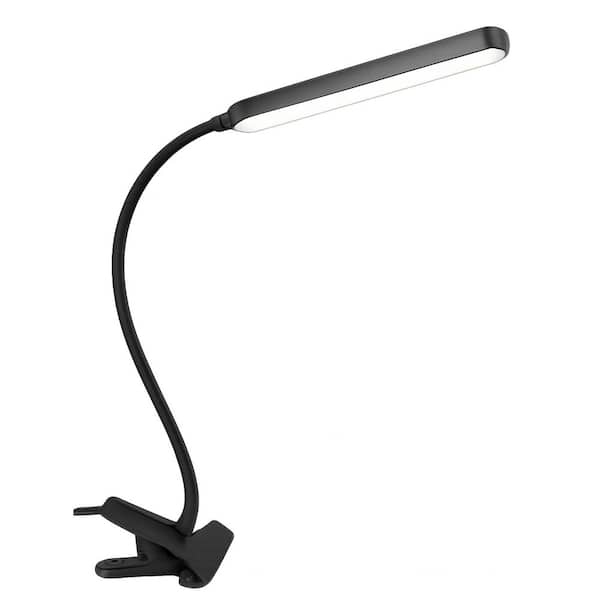
Have you ever wondered how much power your desk lamp actually uses? Knowing the answer can help you save money on your electricity bill and choose the right lighting for your space.
Whether you use your lamp for work, reading, or late-night creativity, understanding its energy consumption is key. Keep reading to discover how many watts a desk lamp uses and what that means for your daily energy use. This simple knowledge could change the way you light up your workspace—and your wallet.

Credit: www.amazon.com
Desk Lamp Wattage Basics
Understanding the wattage of your desk lamp helps you manage energy use and lighting quality effectively. Wattage tells you how much power a lamp consumes and can impact your electricity bill and the brightness you get. Let’s look at some basic facts about desk lamp wattage that can help you make smarter choices for your workspace.
Common Wattage Ranges
Most desk lamps use bulbs that range between 15 and 60 watts, but this depends on the type of bulb inside.
- Incandescent bulbs:Usually 40 to 60 watts, offering warm light but consuming more power.
- Compact fluorescent lamps (CFLs):Typically 9 to 15 watts, providing the same brightness as a 40-watt incandescent bulb but using less energy.
- LED bulbs:Use about 4 to 15 watts, highly energy-efficient and long-lasting.
If you want to save on energy, look for lamps with LED bulbs. They provide bright light without hiking up your electricity bill.
Factors Affecting Wattage
Not all desk lamps with the same wattage provide the same brightness or energy usage. Several factors change how much power your lamp uses.
- Type of bulb:LEDs use less wattage than incandescent bulbs for similar brightness.
- Brightness level:Dimmable lamps let you adjust wattage by lowering light intensity.
- Lamp design and size:Bigger lamps or those with multiple bulbs naturally consume more power.
- Usage habits:Leaving a lamp on for long hours increases total energy consumption, even if wattage is low.
Have you ever wondered if your lamp’s wattage matches your actual lighting needs? Checking this can prevent wasted energy and improve your workspace comfort.
Types Of Desk Lamp Bulbs
Desk lamps use different types of bulbs that affect brightness and power use. Each bulb type has unique features and energy needs. Knowing these helps choose the right lamp for your space and budget.
Incandescent Bulbs
Incandescent bulbs are the traditional type. They use about 40 to 100 watts. These bulbs produce a warm light but waste a lot of energy as heat. They last around 1,000 hours, which is shorter than other bulbs.
Led Bulbs
LED bulbs are energy-efficient and long-lasting. They use only 4 to 15 watts to give the same brightness as incandescent bulbs. LEDs last up to 25,000 hours. They emit less heat and come in various colors.
Cfl Bulbs
CFL bulbs are compact fluorescent lamps. They use 9 to 15 watts and last about 8,000 hours. CFLs save energy but take a few seconds to reach full brightness. They contain a small amount of mercury, so careful disposal is needed.
Halogen Bulbs
Halogen bulbs are a type of incandescent bulb with better efficiency. They use 30 to 50 watts and provide bright, white light. Halogens last longer than regular incandescent bulbs but shorter than LEDs and CFLs. They get very hot during use.
Energy Consumption Comparison
Understanding how many watts a desk lamp uses can help you make smarter decisions about energy consumption. By comparing energy usage, you can ensure that your workspace is both efficient and cost-effective. Let’s dive into how wattage relates to brightness, the efficiency of different bulb types, and what your average daily usage might look like.
Wattage Vs Brightness
Wattage is often confused with brightness, but they are not the same. Wattage measures energy use, while lumens measure brightness. A higher wattage does not always mean a brighter light. For example, a 10-watt LED can be as bright as a 60-watt incandescent bulb. Next time you’re shopping for a desk lamp, check the lumens to ensure you’re getting the brightness you want.
Efficiency Of Different Bulbs
Light bulbs vary significantly in efficiency. LEDs are currently the most energy-efficient option, providing high brightness with low wattage. Compact Fluorescent Lamps (CFLs) are also more efficient than traditional incandescent bulbs but less so than LEDs. If you’re looking to save on electricity bills, switching to LEDs could be a smart move. Plus, they last longer, reducing waste and maintenance costs.
Average Daily Usage
Ever wondered how much energy your desk lamp uses daily? Consider how many hours you use it and the bulb’s wattage. If you use a 10-watt LED lamp for 5 hours a day, that’s just 0.05 kWh. Multiply that by 30 days, and it’s 1.5 kWh per month, which is quite minimal. Keeping an eye on your usage can help you manage your electricity bills effectively.
Have you ever thought about how much energy you could save by switching bulbs? Small changes can lead to significant savings over time. Assess your current setup and see where you can make improvements for a more energy-efficient workspace.
Calculating Electricity Costs
Understanding how much a desk lamp costs to run can help you manage your electricity bill better. Calculating electricity costs is simpler than it sounds, and it starts with knowing the energy your lamp uses. Once you have that, you can estimate how much it adds to your monthly and yearly bills.
How To Calculate Energy Use
Look at your desk lamp’s wattage, usually printed on the bulb or lamp itself. This number tells you how many watts the lamp consumes per hour.
Multiply the wattage by the number of hours you use the lamp daily. This gives you the daily energy use in watt-hours (Wh).
Since electricity bills are based on kilowatt-hours (kWh), divide the watt-hours by 1,000. For example, a 40-watt lamp used for 5 hours a day uses:
- 40 watts × 5 hours = 200 Wh
- 200 Wh ÷ 1,000 = 0.2 kWh daily
Estimating Monthly And Yearly Costs
Check your electricity rate on your bill, usually in cents per kWh. Suppose it’s $0.12 per kWh. Multiply your daily kWh by this rate to find the daily cost.
Using the example above: 0.2 kWh × $0.12 = $0.024 per day.
To get monthly and yearly costs, multiply daily costs by 30 and 365, respectively:
| Time Period | Cost |
|---|---|
| Monthly | $0.024 × 30 = $0.72 |
| Yearly | $0.024 × 365 = $8.76 |
Does this seem higher or lower than you expected? Small changes, like switching to an LED bulb, can reduce these costs significantly. Are you ready to check your lamp’s wattage and see what it really costs you?
Tips To Save Energy With Desk Lamps
Saving energy with desk lamps helps reduce electricity bills and environmental impact. Small changes in how you use and choose lamps can make a big difference. Focus on smart choices to keep your workspace bright and energy-efficient.
Choosing Low-wattage Bulbs
Select bulbs that use less power but still provide enough light. LED bulbs are a great option because they use very few watts. Look for bulbs labeled with low wattage but high brightness. This change cuts energy use without making your desk too dark.
Using Timers And Sensors
Install timers to turn lamps off automatically after work hours. Motion sensors switch lights on only when you are near the desk. These tools stop lamps from running when not needed. They save energy and add convenience to your daily routine.
Maximizing Natural Light
Place your desk near windows to use sunlight during the day. Open curtains fully to let in the most light. Natural light reduces the need for desk lamps. It also creates a healthier and more pleasant work environment.

Credit: www.amazon.ca
Impact On Environment
Understanding the environmental impact of your desk lamp can change how you use lighting in your daily life. Every watt consumed adds up, not just to your electricity bill but also to the planet’s health. Have you ever considered how the small choices you make with lighting affect the environment around you?
Carbon Footprint Of Desk Lamps
Desk lamps may seem harmless, but their carbon footprint depends largely on the type of bulb and the hours they stay on. Traditional incandescent bulbs use more watts and release more carbon dioxide due to higher energy consumption. Even a 60-watt bulb running for 5 hours daily can add up to significant emissions over time.
Think about this: switching from an incandescent to an LED desk lamp can reduce carbon emissions by up to 80%. This is because LEDs use fewer watts while providing the same brightness. How often do you leave your desk lamp on without needing it? That habit increases your carbon footprint more than you might realize.
Benefits Of Energy-efficient Lighting
Energy-efficient lighting such as LEDs not only cuts down your electricity usage but also lowers environmental harm. These lamps use less power, last longer, and generate less heat, which means less waste and less frequent replacements.
By choosing energy-efficient desk lamps, you contribute to reducing greenhouse gas emissions. Plus, you save money in the long run. Have you checked the wattage on your current desk lamp? Switching to a lower wattage LED can make a big difference for both your wallet and the planet.

Credit: www.amazon.com
Frequently Asked Questions
How Many Watts Does A Typical Desk Lamp Use?
A typical desk lamp uses between 15 and 60 watts, depending on the bulb type. LED lamps use less energy, usually around 5 to 10 watts, making them more efficient than incandescent bulbs.
Does Led Desk Lamp Use Less Electricity?
Yes, LED desk lamps consume significantly less electricity. They use about 75% less energy than traditional incandescent bulbs, reducing your electricity bills and environmental impact.
Can I Reduce Desk Lamp Wattage Without Losing Brightness?
Yes, switching to LED or CFL bulbs can reduce wattage while maintaining brightness. These bulbs provide the same light output as higher-wattage incandescent bulbs but use fewer watts.
How Does Wattage Affect Desk Lamp Energy Cost?
Higher wattage means higher energy consumption and cost. Using low-wattage, energy-efficient bulbs like LEDs reduces electricity use and lowers monthly energy bills.
Conclusion
A desk lamp usually uses between 5 to 60 watts. Choosing the right wattage helps save energy and money. LED lamps use less power and last longer. Brightness matters more than watts for your comfort. Always check the lamp’s label before buying.
Small changes make a big difference in energy use. Keep your workspace well-lit without wasting power. Simple steps lead to smarter lighting choices.



