
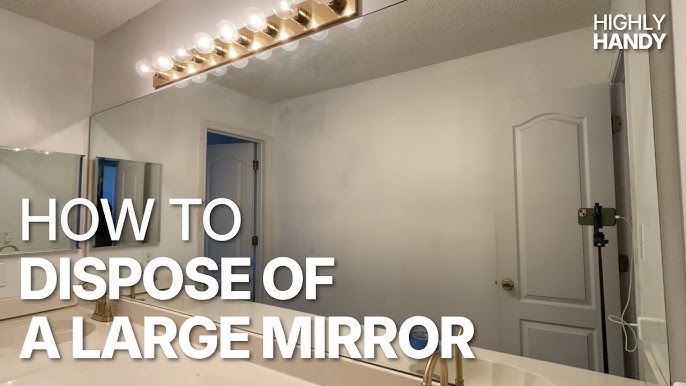
Have you ever faced the tricky challenge of removing a large mirror glued to your wall? It might seem impossible without damaging your wall or the mirror itself.
But don’t worry—you’re not alone, and there are smart, safe ways to get it done. In this guide, you’ll discover simple steps and expert tips that make this tough job easier than you think. Keep reading to learn how to protect your space and remove that stubborn mirror with confidence.

Credit: www.youtube.com
Tools And Materials Needed
Removing a large mirror glued to the wall is a task that demands the right set of tools and materials. Without them, you risk damaging your wall or the mirror itself. Gathering everything beforehand makes the job smoother and safer, so you won’t have to stop midway searching for supplies.
Essential Tools
- Utility knife:A sharp blade helps cut through caulk or adhesive edges cleanly.
- Putty knife or paint scraper:Use these to gently pry the mirror away without breaking it.
- Wire or fishing line:This is handy for sawing through the adhesive layer behind the mirror.
- Screwdriver or drill:Some mirrors have hidden screws or clips that need removing.
- Plastic or rubber wedges:These protect your wall as you create space between the mirror and surface.
Do you have all these tools ready? Missing one could turn a quick job into a frustrating ordeal.
Safety Equipment
- Safety goggles:Protect your eyes from glass shards or debris.
- Heavy-duty gloves:Prevent cuts from sharp mirror edges.
- Dust mask:Useful if you’re sanding or scraping old adhesive that may release particles.
- Long sleeves and pants:Shield your skin from accidental scratches.
Personal experience taught me the hard way—skipping gloves led to a nasty cut that delayed my project. Wouldn’t you want to avoid that?
Adhesive Removal Supplies
- Adhesive remover or solvent:Products like Goo Gone or rubbing alcohol help break down stubborn glue.
- Heat gun or hairdryer:Warmth softens adhesive, making it easier to peel away.
- Clean rags or cloths:For wiping off residue after removal.
- Sandpaper or scraper:To smooth the wall surface once the adhesive is gone.
Have you considered how much time you might save by warming the adhesive first? It’s a small step that makes a big difference.

Credit: www.angi.com
Preparing The Workspace
Clear the area around the mirror to avoid damage or injury. Gather tools like a putty knife, gloves, and safety glasses before starting. Protect the floor and nearby furniture with drop cloths or old sheets.
Removing a large mirror glued to the wall requires careful preparation. A well-organized workspace ensures a smooth and safe process. Before starting, focus on setting up your area correctly. This will help prevent accidents and keep your materials organized.Clearing The Area
Clear all items near the mirror. Move furniture and decorations to another room. This creates space for you to work freely. It also prevents accidental damage to your belongings. Use this time to identify potential hazards.Protecting The Floor And Walls
Cover the floor with a drop cloth or old sheets. This protects against scratches and falling debris. Use painter’s tape to shield walls around the mirror. This prevents damage during removal. Double-check that coverings are secure.Ensuring Proper Lighting
Good lighting is essential for this task. Ensure the room is well-lit, using lamps or portable lights if needed. Bright lighting helps you see all edges and any glue residues. This reduces the risk of making mistakes.Assessing The Mirror And Adhesive
Before you start prying a large mirror off your wall, it’s crucial to take a moment to assess both the mirror and the adhesive holding it in place. This step helps you avoid damage to your wall, the mirror, and even yourself. Understanding what you’re dealing with ensures you choose the safest and most effective removal method.
Identifying Adhesive Type
Different adhesives require different approaches. Some mirrors are glued with strong construction adhesive, while others use double-sided tape or silicone sealant. You can often tell the type by gently inspecting the edges or corners of the mirror.
Try pressing gently near the edges. If the mirror feels firmly stuck with no give, it’s likely a heavy-duty adhesive. Sticky residues or a rubbery feel might indicate tape or silicone. Knowing this helps you decide if you’ll need solvents, heat, or special tools.
Checking Mirror Size And Weight
Large mirrors can be surprisingly heavy and fragile. Knowing the size and weight of your mirror helps you plan how to support it during removal. Ask yourself: Can you safely handle it alone, or will you need an extra pair of hands?
Measure the dimensions and estimate the weight if possible. If your mirror is larger than 3 feet by 4 feet or feels cumbersome, prepare for a careful, slow removal with proper support to prevent breakage.
Evaluating Wall Surface
The type of wall your mirror is attached to makes a big difference. Drywall, plaster, tile, or wood will each react differently when you pull or pry off the mirror. Understanding your wall type helps you avoid costly damage.
Look for cracks, paint chips, or unevenness around the mirror. These might signal a fragile surface that needs extra care. If you’re unsure, test a small hidden area with gentle pressure before moving forward.

Credit: www.reddit.com
Loosening The Mirror
Removing a large mirror glued to a wall requires patience and care. Loosening the mirror is the key step. The adhesive holds the mirror firmly, so weakening it helps prevent damage. Use gentle techniques to soften the glue before trying to pull the mirror away.
Using Heat To Soften Adhesive
Heat can make adhesive easier to remove. A hairdryer or heat gun works well. Warm the edges of the mirror slowly and evenly. Keep the heat moving to avoid cracks or warping. Check if the glue feels softer by pressing gently. Stop heating once the adhesive becomes pliable.
Applying Solvents Safely
Certain solvents dissolve glue effectively. Use rubbing alcohol or commercial adhesive removers. Apply the solvent with a cloth or cotton swab along the mirror edges. Let it sit a few minutes to penetrate the adhesive. Avoid harsh chemicals that can damage paint or mirror backing. Ensure good ventilation during this process.
Inserting A Pry Tool Carefully
Use a thin, flat tool like a putty knife or plastic scraper. Slide it gently between the wall and mirror edge. Wiggle the tool slowly to break the adhesive bond. Work around the mirror in small sections. Do not force the tool to avoid cracks or wall damage. Patience pays off in this delicate step.
Removing The Mirror
Removing a large mirror glued to the wall requires patience and care. The mirror’s weight and glass material demand a cautious approach. Taking your time reduces the chance of damage or injury. Proper tools and techniques make the process smoother. Prepare your workspace by clearing the area and protecting the floor.
Working Slowly And Steadily
Start by loosening the edges of the mirror gently. Use a thin, flexible tool to separate the glue from the wall. Move the tool slowly along the edges, avoiding sudden force. Small movements help prevent cracks and breakage. Keep checking the mirror’s grip to see if it loosens evenly. Take breaks if you feel pressure building up.
Handling Mirror With Care
Wear thick gloves to protect your hands from sharp edges. Support the mirror’s weight as you lift it away from the wall. Hold the mirror firmly but without squeezing too hard. Avoid tilting the mirror suddenly to stop glass from falling out. Place the mirror on a flat, cushioned surface once removed. Dispose of broken pieces safely and responsibly.
Getting Assistance If Needed
Large mirrors can be heavy and awkward to handle alone. Ask a friend or family member to help hold or move the mirror. Two people can balance the weight better and reduce risk of dropping. Communication is key to coordinate movements smoothly. Professional help is wise for very large or complex mirrors. Safety should always be your top priority.
Cleaning Residual Adhesive
After successfully removing a large mirror glued to your wall, you’ll likely find stubborn adhesive residue left behind. Cleaning this leftover glue is crucial before any wall repairs or repainting. Dealing with adhesive might seem tedious, but with the right approach, you can restore your wall’s smooth surface efficiently.
Scraping Off Remaining Glue
Start by gently scraping off the thickest parts of the glue. Use a plastic scraper or putty knife to avoid damaging the wall’s surface. Metal tools might seem stronger but can easily scratch or dent the drywall or paint underneath.
Work slowly and carefully, applying light pressure. You don’t want to gouge the wall. If the glue resists, soften it first with warm water or a damp cloth to make scraping easier.
Using Adhesive Removers
If scraping alone doesn’t clear the residue, adhesive removers come in handy. Look for products labeled safe for painted surfaces or drywall to prevent extra damage. Apply a small amount to a cloth and gently rub the sticky spots.
Test the remover on a hidden patch of your wall before full application. Some chemicals can discolor or weaken paint. Natural alternatives like vinegar or rubbing alcohol can also work but may need more elbow grease.
Wiping And Preparing Wall For Repair
Once the glue is gone, wipe the area with a clean, damp cloth to remove any leftover remover or residue. Let the wall dry completely before moving on to repairs. You want a clean, dry surface for patching holes or repainting.
Have you noticed any rough patches or slight damage after adhesive removal? Light sanding can smooth these out. Preparing your wall properly here makes a huge difference in how your new paint or repair looks afterward.
Repairing The Wall
After removing a large mirror glued to the wall, the surface often needs repair. The glue and mirror removal can leave holes, cracks, and rough patches. Fixing these imperfections restores the wall’s smoothness and prepares it for painting. Proper wall repair improves the room’s appearance and prevents future damage.
Filling Holes And Cracks
Use a putty knife to apply spackling paste or wall filler. Press the filler firmly into holes and cracks to fill all gaps. Allow the filler to dry completely, following the product instructions. For larger holes, apply filler in layers, letting each layer dry before adding the next.
Sanding And Smoothing Surface
Once the filler is dry, sand the repaired area with fine-grit sandpaper. Sand gently to blend the patches with the rest of the wall. Remove dust with a dry cloth or vacuum to create a clean surface. Smooth walls ensure paint sticks well and looks even.
Repainting Or Retouching
Choose paint that matches the existing wall color. Use a small brush or roller for repaired spots. Apply thin coats and let each coat dry before adding another. Repainting blends the patched areas with the rest of the wall for a seamless finish.
Safety Tips Throughout The Process
Removing a large mirror glued to the wall can be tricky and even dangerous without the right precautions. Safety should be your top priority throughout the process to avoid injuries and damage. Taking simple but effective safety measures will protect you and make the task smoother.
Wearing Protective Gear
Always wear thick gloves to protect your hands from sharp edges and broken glass. Safety goggles are a must to shield your eyes from flying shards or dust. Consider wearing long sleeves and sturdy shoes to cover your skin and feet, reducing the risk of cuts.
Have you ever underestimated how easily glass can cut? I once tried removing a small mirror without gloves and ended up with a painful scratch. Don’t repeat that mistake—gear up properly before you start.
Handling Glass Safely
Work slowly and carefully to avoid sudden breaks. Use a putty knife or a similar tool to gently pry the mirror away, minimizing pressure. Keep the mirror close to the wall as you remove it to reduce the chance of dropping it.
Make sure you have a clear, clutter-free workspace. This gives you space to move safely and prevents tripping hazards. Remember, rushing increases the risk of accidents, so stay calm and focused.
Disposing Of Broken Glass Properly
Don’t just toss broken glass into regular trash bags. Use a thick cardboard box or wrap pieces in multiple layers of newspaper before placing them in a sealed bag. Clearly label the package as “broken glass” to alert anyone handling the trash.
Think about your local disposal rules—some areas require special handling for glass waste. Taking time to dispose of shards correctly keeps your home and community safe from injuries.
Frequently Asked Questions
How Do I Safely Remove A Large Mirror Glued To Wall?
Use a utility knife to cut around the mirror edges. Apply heat with a hairdryer to soften glue. Gently pry with a putty knife, working slowly to avoid damage.
What Tools Are Needed To Remove A Glued Mirror?
You need a utility knife, hairdryer, putty knife, safety gloves, and eye protection. These tools help soften glue and safely detach the mirror.
Can I Remove A Glued Mirror Without Damaging The Wall?
Yes, by heating the glue and carefully prying the mirror off. Move slowly and keep the wall’s condition in mind to minimize damage.
How Do I Dispose Of A Large Mirror Safely?
Wrap the mirror in thick blankets or bubble wrap. Secure it with tape to prevent breakage. Check local disposal rules for glass and take it to a recycling center.
Conclusion
Removing a large mirror glued to the wall takes patience and care. Use the right tools to avoid damage. Work slowly and gently to protect the wall and glass. Safety matters—wear gloves and eye protection. Follow the steps, and the mirror will come off without trouble.
This way, you keep your space safe and ready for new decor. Simple, careful actions make the job easier and safer.



