
Are you curious about how your lungs work every minute? Understanding how to calculate minute ventilation can give you valuable insight into your breathing and overall health.
Whether you’re a student, healthcare professional, or just someone interested in your body, knowing this simple calculation can make a big difference. You’ll discover exactly what minute ventilation is, why it matters, and how you can easily calculate it yourself.
Keep reading to unlock this essential piece of knowledge that connects your breath to your well-being.

Credit: www.osmosis.org
Minute Ventilation Basics
Minute ventilation is a key concept in understanding how our lungs work. It shows the total air we breathe in or out every minute. This measure helps to see how well the lungs deliver oxygen and remove carbon dioxide.
Knowing the basics of minute ventilation can help in health checks and medical care. It is especially important for people with breathing problems or those using breathing machines.
What Is Minute Ventilation
Minute ventilation is the amount of air moved in or out of the lungs each minute. It combines two factors:
- Tidal volume: the air moved in one breath
- Respiratory rate: the number of breaths per minute
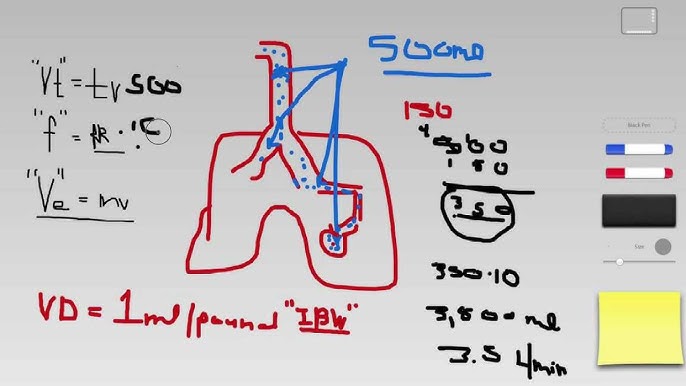
The formula is simple: Minute Ventilation = Tidal Volume × Respiratory Rate. This shows how much air passes through the lungs every minute.
Importance In Respiratory Health
Minute ventilation helps measure lung function and breathing efficiency. It reveals if the lungs provide enough oxygen to the body.
Doctors use minute ventilation to monitor patients with lung diseases. It guides treatment plans and ventilator settings.
Changes in minute ventilation can signal health issues early. It is a tool to assess stress on the respiratory system.

Credit: www.youtube.com
Key Components
Understanding the key components of minute ventilation is essential for accurately calculating it. Minute ventilation measures the total volume of air you breathe in one minute. Two main factors influence this value: the amount of air you take in with each breath and how many breaths you take per minute.
Tidal Volume
Tidal volume is the amount of air you inhale or exhale during a normal breath. This volume varies depending on your activity level, posture, and lung health. For instance, when you’re resting, your tidal volume might be around 500 milliliters, but it can increase significantly during exercise.
Think about how your breathing changes when you climb stairs or jog. Your body demands more oxygen, so your tidal volume naturally increases. This change directly impacts your minute ventilation by increasing the total air moved in a minute.
Respiratory Rate
Respiratory rate is the number of breaths you take per minute. This rate can fluctuate based on factors like stress, fitness, and illness. A typical resting respiratory rate for adults is between 12 and 20 breaths per minute.
Imagine you’re feeling anxious, and your breathing speeds up. Even if your tidal volume stays the same, your minute ventilation will rise because you’re taking more breaths each minute. Monitoring both tidal volume and respiratory rate gives you a complete picture of your breathing efficiency.
Simple Calculation Method
Calculating minute ventilation doesn’t have to be complicated. You only need a simple formula and a few numbers you can easily measure or find. Understanding this straightforward approach lets you quickly estimate how much air moves in and out of the lungs every minute, which is crucial for assessing breathing efficiency.
Formula For Minute Ventilation
The formula for minute ventilation is quite simple:
| Minute Ventilation (VE) | = | Tidal Volume (VT) | × | Respiratory Rate (RR) |
|---|
Here’s what each term means:
- Tidal Volume (VT):The amount of air you breathe in or out with each breath (usually measured in liters).
- Respiratory Rate (RR):The number of breaths you take per minute.
Step-by-step Calculation
First, find your tidal volume. You can use typical values like 0.5 liters for an average adult at rest.
Next, count how many breaths you take in one minute. This is your respiratory rate.
Now multiply tidal volume by respiratory rate. For example, if your tidal volume is 0.5 liters and you breathe 12 times per minute, your calculation looks like this:
| Minute Ventilation (VE) | = | 0.5 liters | × | 12 breaths/min | = | 6 liters/min |
This means you move about 6 liters of air in and out of your lungs every minute. Does your breathing rate change when you exercise? Try this calculation before and after to see how your body adapts.
Practical Examples
Minute ventilation is found by multiplying the number of breaths per minute by the air volume per breath. For example, breathing 12 times per minute with 500 ml each breath equals 6 liters per minute. This simple calculation helps understand lung function clearly.
Calculating minute ventilation is a crucial skill that can provide insight into a person’s respiratory health. Understanding this concept is not just for healthcare professionals; it can be useful for anyone interested in health and fitness. Let’s dive into practical examples to see how you can calculate minute ventilation and adjust it for various scenarios.Calculating With Normal Values
To calculate minute ventilation, you need to multiply the tidal volume by the respiratory rate. Tidal volume is the amount of air inhaled or exhaled during a normal breath, typically around 500 milliliters for a healthy adult. The respiratory rate averages about 12 to 20 breaths per minute. Imagine you measure a tidal volume of 500 mL and a respiratory rate of 15 breaths per minute. Multiply these numbers to get the minute ventilation: 500 mL x 15 = 7,500 mL or 7.5 liters per minute. This figure is considered a normal minute ventilation for an average adult at rest.Adjusting For Medical Conditions
Minute ventilation can vary significantly in the presence of medical conditions. For instance, people with chronic obstructive pulmonary disease (COPD) often have a higher respiratory rate. This can affect their minute ventilation. Consider a patient with COPD who has a tidal volume of 400 mL and a respiratory rate of 20 breaths per minute. Calculate their minute ventilation: 400 mL x 20 = 8,000 mL or 8 liters per minute. This increased value reflects the body’s effort to compensate for reduced lung efficiency. Think about how different activities or health conditions might alter these numbers. Could exercise increase the tidal volume while reducing the respiratory rate? Understanding how these variables interact can provide valuable insights into respiratory health. By regularly calculating minute ventilation, you can monitor changes over time, potentially highlighting health issues before they become serious. What other medical conditions might impact these calculations, and how would you adjust for them?Common Mistakes
Calculating minute ventilation may seem straightforward, but common mistakes can lead to inaccurate results that affect patient care or your understanding of respiratory function. Being aware of these errors helps you avoid pitfalls and ensures your calculations are reliable every time. Let’s look at two frequent mistakes that often trip people up.
Misinterpreting Tidal Volume
Tidal volume is the amount of air inhaled or exhaled during a normal breath. A common error is confusing tidal volume with total lung capacity or using the wrong units, such as milliliters instead of liters. This mistake can dramatically skew minute ventilation results, especially if you multiply the wrong volume by the respiratory rate.
Check your tidal volume source carefully. Are you using the correct value for a resting breath, or is it from a forced breath? Using forced vital capacity instead of tidal volume inflates your minute ventilation calculations and misrepresents actual breathing patterns.
Incorrect Respiratory Rate
The respiratory rate is how many breaths occur per minute. People sometimes record this value inaccurately due to timing errors or counting during irregular breathing patterns. Even a small miscount can significantly alter your minute ventilation, since it directly multiplies the tidal volume.
Make sure you count breaths over a full minute when possible. If you measure for 15 seconds and multiply by four, any error in timing gets magnified. Have you ever rushed through counting? That’s a common trap that leads to wrong respiratory rates and misleading minute ventilation.

Credit: www.youtube.com
Tools To Assist Calculation
Calculating minute ventilation requires accuracy and ease. Various tools help simplify this process. These tools range from basic manual aids to advanced digital devices. Each option suits different needs and skill levels. Using the right tool speeds up calculation and reduces errors.
Manual Calculation Aids
Manual aids provide a simple way to calculate minute ventilation. Healthcare professionals often use them for quick estimates. A common tool is the respiratory rate chart combined with tidal volume tables. These charts list average tidal volumes by patient size or condition.
Another aid is the handheld calculator or a formula card. These tools help users apply the calculation formula correctly:
- Minute Ventilation = Respiratory Rate × Tidal Volume
Manual aids require understanding of the formula and patient data. They are useful in settings without digital access.
Digital Devices And Apps
Digital tools make minute ventilation calculation faster and more precise. Many apps allow input of respiratory rate and tidal volume. The app then calculates minute ventilation instantly. Some devices connect directly to ventilators or monitors. They pull real-time data for continuous calculation.
Digital tools often include extra features:
- Data storage for tracking changes over time
- Graphical displays for easy interpretation
- Alerts for abnormal ventilation values
These tools suit busy clinics and hospitals. They reduce human error and save time.
Frequently Asked Questions
What Is Minute Ventilation And Why Is It Important?
Minute ventilation is the total air moved in one minute during breathing. It helps assess lung function and breathing efficiency, critical in medical settings.
How Do You Calculate Minute Ventilation In Adults?
Multiply tidal volume (in liters) by respiratory rate (breaths per minute). This gives minute ventilation in liters per minute.
What Units Are Used For Minute Ventilation Measurement?
Minute ventilation is typically measured in liters per minute (L/min), reflecting the volume of air breathed per minute.
How Does Tidal Volume Affect Minute Ventilation Calculation?
Tidal volume directly impacts minute ventilation; higher tidal volume increases total air moved per minute.
Conclusion
Calculating minute ventilation helps track breathing health clearly. It shows how much air moves in and out each minute. Knowing this helps doctors check lung function well. Use simple math: multiply breaths per minute by tidal volume. This easy step gives important info about breathing.
Understanding minute ventilation supports better care and breathing control. Keep practicing this calculation to feel confident and informed. Breathing matters. Keep it simple. Stay aware.



