
Are you wondering how high your chandelier should hang above your dining table? Getting the height just right can transform your room from ordinary to stunning.
Too low, and it might block views or feel cramped. Too high, and you lose that warm, inviting glow. You’ll discover simple rules and expert tips to help you find the perfect balance. Keep reading, and you’ll soon know exactly how to hang your chandelier for style, comfort, and the wow factor you want.
Credit: www.2modern.com
Ideal Height For Chandeliers Above Tables
Finding the ideal height for a chandelier above your table can transform the entire room’s vibe. Too low, and it can block views or feel cramped. Too high, and it might lose its impact or fail to light the space properly.
Let’s look closely at how to balance style and function when hanging your chandelier.
Standard Height Recommendations
The most common guideline suggests hanging a chandelier about 30 to 36 inches above the table surface. This range works well for most ceiling heights, especially standard 8-foot ceilings. It allows enough clearance for people to see each other and prevents the fixture from overwhelming the space.
In rooms with higher ceilings, you can add 3 inches for every additional foot above 8 feet. For example, a 10-foot ceiling would mean hanging the chandelier roughly 36 to 42 inches above the table.
- Measure from the table surface to the bottom of the chandelier
- Keep the light centered over the table for balance
- Adjust slightly if your chandelier is oversized or has a unique shape
Factors Influencing Height
Ceiling height is just one factor. The size and style of your chandelier also matter a lot. A large, dramatic chandelier needs more space below it to avoid feeling imposing.
Think about the table size too. A longer or wider table calls for a larger fixture hung slightly higher. This keeps the room feeling open and ensures light spreads evenly.
Consider how you use the table. If you often have tall centerpieces or decorations, you might want to raise the chandelier to avoid collisions. Also, think about the chandelier’s brightness and whether it provides enough light when hung at your chosen height.
Have you ever been in a dining room where the chandelier felt like it was in your face or barely noticeable? Adjusting the height could have made all the difference. What’s the chandelier situation in your dining area right now?

Credit: www.1800lighting.com
Measuring The Table And Room Dimensions
Measuring the table and room dimensions is essential for placing a chandelier correctly. This step ensures the light fixture complements the space without overwhelming it. Accurate measurements help create balance and improve the room’s overall look.
Table Height And Size
Start by measuring the table’s height from floor to top. Most dining tables range between 28 to 30 inches tall. Note the table’s length and width too. Large tables need bigger chandeliers or multiple lights. Small tables require smaller or single fixtures. The chandelier should hang low enough to light the table but high enough to avoid head bumps.
Ceiling Height Considerations
Measure the ceiling height in the room where the chandelier will hang. Standard ceilings are around 8 feet tall. Higher ceilings allow for longer chains or rods for the chandelier. Low ceilings need fixtures close to the ceiling to save space. The chandelier’s height must match the room height to keep good proportions. This avoids the chandelier feeling too big or small for the room.
Adjusting Height For Different Table Types
Different table heights need different chandelier heights to keep balance and comfort. Lower tables call for lower chandeliers, while higher tables need them hung a bit higher. This adjustment helps light the space well without blocking views or movement.
Adjusting the height of a chandelier can enhance a room’s ambiance. Each table type requires a unique chandelier placement. The right height ensures functionality and aesthetics. Let’s explore how to adjust chandelier height for various table types.Dining Tables
For dining tables, consider both table size and room height. The chandelier should hang 30 to 36 inches above the table. This height provides ample light without obstructing views. Ensure the chandelier is proportionate to the table’s width. This creates a balanced look.Kitchen Islands
Chandeliers above kitchen islands need careful placement. Hang them 30 to 34 inches above the counter. This height offers good illumination for tasks. Use multiple small fixtures for longer islands. This approach enhances both style and functionality.Coffee Tables
For coffee tables, a lower chandelier works best. Position it 24 to 30 inches above the table. This creates a cozy atmosphere in living rooms. Ensure it’s not too low to avoid head bumps. A smaller chandelier often suits coffee tables well.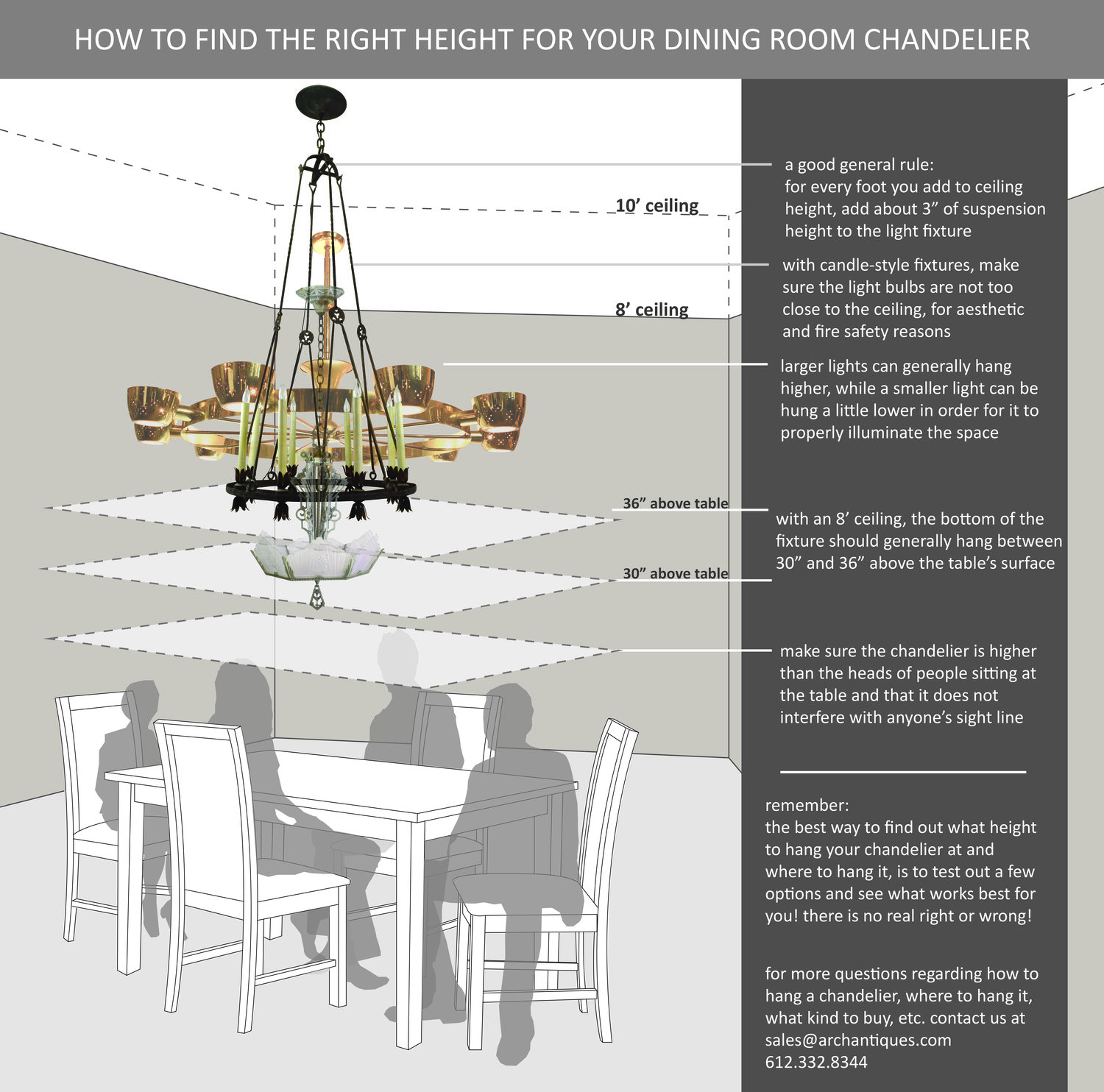
Credit: www.archantiques.com
Choosing The Right Chandelier Size
Choosing the right chandelier size is crucial to creating a harmonious look in your dining area. A chandelier that’s too big can overwhelm the space, while one that’s too small may feel lost. Getting the size right not only enhances the room’s style but also ensures the light is distributed effectively.
Proportions And Scale
Start by measuring your table and the room size. A common guideline is that the chandelier’s diameter should be about half to two-thirds the width of your table. If your table is 60 inches wide, aim for a chandelier around 30 to 40 inches in diameter.
Remember, the height of your ceiling also affects how a chandelier’s scale feels. In a room with higher ceilings, you can go for a larger or more dramatic fixture without it overpowering the space. Think about how the chandelier fits with other furniture pieces too—if your chairs and table are bulky, a slightly larger chandelier may balance the look better.
Visual Balance
Visual balance means the chandelier should feel like a natural part of the room, not an awkward addition. One way to check this is to step back and see if the chandelier draws your eye in a pleasing way, without stealing too much attention.
Consider the style and shape of your chandelier as well. A wide, flat chandelier works well over rectangular tables, while a tall, tiered design suits round tables better. Also, think about how the light spreads—does it evenly illuminate the table without creating harsh shadows?
Have you ever walked into a room where the chandelier just didn’t fit? What made it feel off? Use those observations to guide your choice and avoid common mistakes.
Style And Lighting Effects
Choosing the right height for a chandelier above a table depends on the style and lighting effects you want to create. The chandelier’s position affects both the room’s look and its function. It can set a mood or make tasks easier. Understanding the difference between ambient and task lighting helps in making the best choice. The chandelier’s style also changes the room’s overall feel.
Ambient Vs. Task Lighting
Ambient lighting fills the room with soft, even light. It creates a warm, inviting space. Chandeliers used for ambient light often hang higher above the table. This spreads light across the whole room.
Task lighting focuses on a specific area. It helps with activities like reading or eating. Chandeliers meant for task lighting hang lower. This directs light right onto the table surface. The height should allow clear visibility without glare.
Impact On Room Aesthetics
The chandelier’s height shapes the room’s style and feel. A low-hanging chandelier creates a cozy, intimate atmosphere. It draws attention to the table as a focal point.
A chandelier hung higher opens up the space. It makes the room feel larger and airier. The light fixture’s design also matters. Large, ornate chandeliers suit tall ceilings and grand rooms. Simple, sleek designs work well in modern spaces.
Balance is key. The chandelier should match the table size and ceiling height. This harmony enhances the room’s beauty and function.
Common Mistakes To Avoid
Choosing the right height for your chandelier above the table can transform your dining space. But many homeowners make avoidable mistakes that affect both the look and function of the room. Understanding these common errors can save you frustration and help you create a balanced, inviting atmosphere.
Too Low Or Too High Placement
Placing a chandelier too low can block sightlines and make the space feel cramped. Imagine trying to have a conversation across the table while ducking under the light—it’s distracting and uncomfortable.
On the other hand, hanging it too high loses the cozy effect and reduces the light’s impact on the table surface. A good rule is to keep the bottom of the chandelier about 30 to 36 inches above the tabletop. This height provides enough clearance while focusing light exactly where you want it.
Ignoring Room Layout
Your chandelier’s height should respond to the room’s size and table shape. If you ignore these factors, the fixture may look out of place or create awkward lighting.
For example, a long dining table in a narrow room needs a different chandelier height compared to a round table in a spacious area. Think about how people move around the table and how shadows fall—does your chandelier enhance or hinder these elements?
Have you ever walked into a room and felt the lighting was “off” but couldn’t pinpoint why? Often, it’s because the chandelier height didn’t match the room’s layout. Take a moment to assess your space before you make the final call.
Installation Tips And Safety
Proper installation of a chandelier ensures both beauty and safety in your space. Taking care during setup prevents accidents and keeps the light fixture secure. Follow these key tips to install your chandelier correctly and safely.
Wiring And Support
Always turn off the power before handling electrical wiring. Use a voltage tester to confirm no current flows through the wires. Connect wires using wire nuts and electrical tape for extra safety. The chandelier must attach to a strong ceiling box designed for heavy fixtures. Check the weight rating of the ceiling box to match your chandelier’s weight. Secure the mounting bracket tightly to the ceiling box to avoid wobbling. If unsure, hire a licensed electrician for proper wiring and support.
Adjustability Features
Choose a chandelier with adjustable chains or rods for easy height changes. This allows you to position the light perfectly above your table. Make sure the adjustment mechanism locks firmly to prevent slipping. Test the fixture’s stability after adjusting the height. Consider chandeliers with dimmable bulbs to control light levels. This adds comfort and ambiance to your dining area. Keep the cords and chains neat to avoid tangled wires or unsafe loops.
Frequently Asked Questions
How High Should A Chandelier Hang Above A Table?
A chandelier should hang 30 to 36 inches above the table surface. This height ensures proper lighting and unobstructed views. It balances aesthetics and functionality in dining or living areas.
Does Table Size Affect Chandelier Hanging Height?
Yes, larger tables may require chandeliers to hang slightly higher. This prevents the fixture from overwhelming the space while maintaining proper illumination. Adjust height proportionally for best visual balance.
What Height Suits A Chandelier In Rooms With High Ceilings?
For high ceilings, add 3 inches of height per extra foot over 8 feet. This keeps the chandelier visually connected to the table and room. Avoid hanging it too low or too high.
Can Chandelier Height Impact Room Ambiance?
Yes, correct chandelier height enhances ambiance by providing balanced light. Too low creates glare; too high reduces effectiveness. Proper placement promotes comfort and style in dining areas.
Conclusion
A chandelier’s height above a table shapes the room’s look and feel. Keep it about 30 to 36 inches above the surface for best results. This distance allows light to spread evenly and keeps the chandelier out of the way.
Too low can block views; too high can reduce light. Always think about room size and ceiling height too. The right height makes your space cozy and bright. Simple and clear – that’s the secret to a perfect chandelier setup.



