
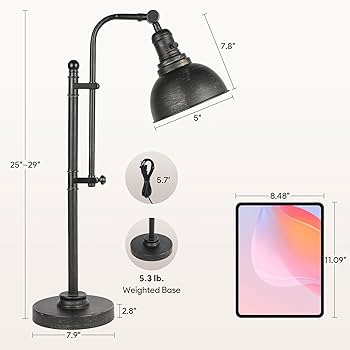
Have you ever wondered how many volts your desk lamp uses? Knowing this simple fact can help you choose the right bulb, save energy, and keep your workspace safe.
Whether you want to replace a bulb or set up a new lamp, understanding the voltage is key. Keep reading, and you’ll discover everything you need to know about desk lamp volts—and why it matters to you.

Credit: www.amazon.com
Desk Lamp Voltage Basics
Understanding the voltage of your desk lamp is key to using it safely and efficiently. Voltage indicates the electrical force that powers the lamp. Knowing this helps you pick the right bulb and avoid electrical mishaps.
Common Voltage Ratings
Most desk lamps operate at standard household voltages, which vary by region. In the US, you’ll usually find lamps rated for 120 volts. In many other countries, the common voltage is 220 to 240 volts.
Some desk lamps, especially those with LED or USB-powered bulbs, might run on lower voltages like 12 voltsor 5 volts. These lamps often come with adapters or transformers that convert higher voltage from your outlet.
Checking the lamp’s label or manual will tell you its voltage rating. Using a bulb that matches this rating ensures your lamp works properly and lasts longer.
Why Voltage Matters
Voltage affects how your desk lamp performs and how safe it is to use. If the voltage is too high for the lamp, it can cause overheating or damage. Too low, and the lamp might flicker or not light up at all.
Have you ever tried a bulb that didn’t fit your lamp’s voltage? It’s frustrating when the light won’t turn on or burns out quickly. Matching voltage prevents these issues and keeps your workspace well-lit.
Also, understanding voltage can help you save energy. Choosing the right lamp and bulb combination means less wasted power and lower electricity bills. Would you want to reduce your energy costs simply by checking your lamp’s voltage?
Types Of Desk Lamps By Voltage
Desk lamps come in various voltage types, each designed to meet different lighting needs and safety standards. Understanding these voltage categories can help you choose the right lamp for your workspace or reading nook. Let’s look at the common types of desk lamps by voltage and what sets them apart.
Low Voltage Lamps
Low voltage desk lamps typically operate at 12 volts or less. They use transformers to reduce the voltage from your home’s power supply, making them safer to touch and energy-efficient.
These lamps are great if you want softer lighting or plan to use LED bulbs that run on low voltage. Have you noticed how some desk lamps feel cooler to the touch? That’s often because they run on low voltage, which produces less heat.
Standard Voltage Lamps
Standard voltage lamps run on the typical household voltage, usually around 120 volts in the US or 230 volts in many other countries. These are the most common desk lamps you’ll find in stores.
They offer bright, consistent light and work well with a wide range of bulbs. If you need a lamp for detailed work like drawing or crafting, a standard voltage lamp can provide the steady illumination you want without extra hassle.
High Voltage Lamps
High voltage desk lamps operate above standard household voltage levels and are less common for everyday use. They are usually found in specialized environments or with industrial-grade lighting.
If you require extremely bright light for precision tasks, these lamps might be what you need. However, they demand careful handling and proper fixtures to avoid safety risks. Have you ever wondered why some professional workspaces have noticeably brighter lamps? High voltage lighting could be the reason.
Checking Your Desk Lamp’s Voltage
Ever wondered how many volts your desk lamp uses? Knowing your lamp’s voltage is essential not just for safety but also for ensuring its longevity. Let’s explore how you can easily check your desk lamp’s voltage using two straightforward methods.
Reading The Label
Take a close look at your desk lamp. Most manufacturers place a label on the lamp’s base or near the bulb socket. This label usually contains critical information including the voltage.
Look for numbers followed by a ‘V’, which denotes volts. If your lamp’s label reads “120V”, it means it operates on 120 volts. A quick glance at this label can save you from potential electrical mishaps.
Using A Multimeter
If the label is missing or unreadable, a multimeter can be your best friend. This handy tool measures various electrical properties, including voltage.
First, make sure your lamp is unplugged. Set the multimeter to the voltage setting, plug in the lamp, and carefully touch the probes to the lamp’s plug prongs.
The multimeter will display the voltage, giving you a precise reading. This method is especially useful if you have older lamps with worn-out labels.
Have you ever used a multimeter before? If not, it might be an exciting tool to add to your toolbox, offering a peek into the unseen world of electricity.
Safe Usage Tips
Using a desk lamp safely is about more than just plugging it in and switching it on. Understanding how to handle the voltage correctly can protect your lamp and your home from damage. Let’s look at some key tips to keep your desk lamp running smoothly without any electrical issues.
Avoiding Overvoltage
Overvoltage can instantly damage your desk lamp or reduce its lifespan significantly. Check the lamp’s voltage rating—typically 110V or 220V depending on your location—and match it with your power source. Using a lamp rated for 110V in a 220V outlet can cause overheating or even fire hazards.
Have you ever experienced a sudden flicker or burn smell from a lamp? That’s often a sign of overvoltage. Using a voltage converter or transformer can help if your lamp and outlet voltages don’t match.
Proper Wiring And Plugs
Proper wiring is essential for safe lamp operation. Ensure the plug fits snugly into the socket without any loose connections. Loose plugs can cause sparks or short circuits, which can be dangerous.
Inspect the lamp’s cord regularly for any signs of wear or damage. If you notice frayed wires or cracks, replace the cord immediately. Don’t try to fix wiring issues yourself unless you have electrical experience—safety first.
Handling Voltage Fluctuations
Voltage fluctuations can cause your desk lamp to flicker or fail prematurely. These fluctuations often happen during storms or due to electrical load changes in your home. Installing a surge protector can shield your lamp from sudden voltage spikes.
Have you considered how stable your home’s power supply is? If you notice frequent flickering, it might be time to consult an electrician. Protecting your lamp from unstable voltage extends its life and keeps your workspace safe.
Choosing The Right Bulb Voltage
Choosing the right bulb voltage for your desk lamp is important. It ensures your lamp works safely and efficiently. Using the wrong voltage can damage the lamp or reduce its lifespan. Knowing the correct voltage helps you pick the best bulb for your needs.
Bulb Compatibility
Each desk lamp is designed to work with a specific voltage. Common voltages include 110V, 220V, or 12V for low-voltage lamps. Check the lamp’s label or manual for the recommended voltage. Using a bulb with a different voltage can cause flickering or overheating.
Some bulbs have voltage ranges. For example, LED bulbs may work with both 110V and 220V. Always confirm that the bulb matches your lamp’s voltage to avoid problems. Proper compatibility extends the life of both the bulb and lamp.
Energy Efficiency Considerations
Choosing the right voltage also affects energy use. Bulbs designed for your lamp’s voltage run more efficiently. They use power without wasting it as heat. This saves electricity and lowers your energy bill.
Low-voltage bulbs often use less energy but may need a transformer. Transformers adjust the voltage to the correct level. LED bulbs are a good option for energy savings and long life. Select bulbs that fit your lamp voltage and energy goals.
Common Voltage-related Issues
Desk lamps are designed to work with specific voltage levels. Using the wrong voltage or facing voltage fluctuations can cause several common issues. These problems affect lamp performance and safety. Understanding these issues helps keep your lamp working well.
Flickering Lights
Flickering happens when the voltage supply is unstable. It may cause the bulb to blink on and off rapidly. Loose connections or a faulty power source often cause flickering. This issue can strain your eyes and reduce lamp life.
Burned Out Bulbs
Too much voltage can burn out bulbs quickly. Over-voltage makes the filament inside the bulb overheat. Using bulbs not rated for your lamp’s voltage also causes early burnout. Always check the correct voltage before replacing bulbs.
Electrical Hazards
Incorrect voltage may lead to electrical hazards. Overloading the lamp can cause short circuits or sparks. Faulty wiring and damaged cords increase the risk of fire. Ensure your lamp’s voltage matches your power supply to avoid dangers.
Voltage Standards Around The World
Desk lamps need power to work, but the voltage they use can differ worldwide. Voltage standards affect the lamp’s design and safety. Knowing these standards helps when buying or using desk lamps abroad. Voltage is the electrical force that pushes current through the lamp’s bulb.
Different countries set their own voltage limits for household devices. This affects what kind of desk lamp you can use and where. Let’s explore common voltage standards across the world.
North America
In North America, the standard voltage is usually 120 volts. This includes the United States, Canada, and Mexico. Most desk lamps here are designed for 120V power. Plug types are typically Type A or Type B with two or three pins.
Using a lamp rated for 120V in this region ensures proper function and safety. If a lamp needs 240V, a voltage converter is necessary.
Europe And Asia
Europe and many parts of Asia use a higher voltage standard, mostly 220 to 240 volts. Countries like Germany, France, and Japan follow this range. Desk lamps here are made to handle this higher voltage.
Plug types vary, such as Type C, Type F, or Type G, depending on the country. Using a 120V lamp without a converter can cause damage or poor performance.
Other Regions
Other parts of the world may have mixed voltage standards. Australia and New Zealand use 230 volts, similar to Europe. Some African and South American countries might use either 110V or 220V.
Always check local voltage standards before using or buying desk lamps. A voltage mismatch can harm the lamp or be unsafe to use.

Credit: www.cafr.ebay.ca
Upgrading Or Modifying Desk Lamp Voltage
Upgrading or modifying the voltage of a desk lamp can enhance its performance or adapt it to different power sources. It involves changing the lamp’s power input to fit new bulbs or settings. This process requires careful planning to avoid damage or hazards.
Understanding the right tools and safety measures is essential before starting any voltage change. Using the correct devices ensures smooth operation and protects the lamp and user.
Using Voltage Converters
Voltage converters adjust the electricity supply to fit your desk lamp’s needs. They can increase or decrease voltage safely. These devices are useful when moving lamps between countries with different power standards.
Converters come in various sizes and types. Choose one that matches your lamp’s wattage and voltage. A converter that is too weak can cause the lamp to flicker or stop working. Too strong can damage the lamp’s components.
- Check the lamp’s voltage rating before buying a converter.
- Use a converter with a slightly higher wattage capacity than the lamp.
- Follow the converter’s instructions carefully.
Safety Precautions
Handling electrical devices needs extra caution. Incorrect voltage modification can lead to fire or electric shock. Always unplug the lamp before any work.
Wear insulated gloves to protect against shocks. Avoid touching wires directly. Make sure all connections are tight and insulated.
Test the lamp in a safe area after modification. Use a multimeter to check voltage output before plugging it in. Keep flammable materials away during testing.
- Do not modify voltage if unsure about electrical work.
- Consult a professional electrician for complex changes.
- Keep children and pets away from work areas.
Credit: www.honeywellstore.com
Frequently Asked Questions
What Voltage Do Most Desk Lamps Use?
Most desk lamps use 110 to 120 volts in the US and 220 to 240 volts in Europe. This voltage powers the bulb safely and efficiently.
Can I Use A Desk Lamp With Different Voltage?
Using a desk lamp with the wrong voltage can damage it. Always check the lamp’s voltage rating before plugging in.
How To Find The Voltage Of A Desk Lamp?
The voltage rating is usually on the lamp’s label or base. Check the manufacturer’s instructions for exact voltage information.
Are Led Desk Lamps Different In Voltage?
LED desk lamps typically use lower voltage, often 12 or 24 volts, but they include adapters for standard home voltage compatibility.
Conclusion
Desk lamps usually run on standard voltages like 110 or 220 volts. Knowing the right voltage helps keep your lamp safe and working well. Using the wrong voltage can cause damage or make the lamp less bright. Always check the label or manual for the exact voltage before plugging in.
This simple step protects your lamp and your home. Now, you can choose and use a desk lamp with confidence.



