

Hanging a heavy shelf by yourself might sound tricky, but you can do it with the right steps. Imagine having a sturdy shelf that holds all your favorite books, decorations, or tools without wobbling or falling.
You don’t need extra help or expensive tools to make it happen. In this guide, you’ll discover simple tricks and expert tips that make the job easier and safer. By the end, you’ll feel confident and proud of your handiwork.
Ready to turn your wall into a strong, stylish storage space? Let’s get started!
Credit: www.familyhandyman.com
Choosing The Right Shelf
Choosing the right shelf is crucial before you start hanging a heavy shelf by yourself. The shelf you pick must support the weight you plan to place on it and fit well in your space. A wrong choice can lead to accidents or damage to your walls and belongings.
Material And Weight Capacity
The material of your shelf directly affects how much weight it can hold. Solid wood shelves usually carry more weight than particleboard or MDF. Metal shelves can be very strong but may not suit every room style.
Check the weight capacity listed by the manufacturer. If you plan to store heavy items like books or tools, pick a shelf rated well above your expected load. Remember, it’s better to have extra strength than to risk collapse.
Have you ever underestimated the weight your shelf could handle? I learned the hard way when a flimsy shelf bent under a stack of heavy books. Since then, I always choose shelves designed for heavy loads.
Size And Style Considerations
The size of your shelf impacts both its function and how easy it is to hang. Longer shelves need more support points, which can make installation trickier. Smaller shelves might be simpler to hang but offer less storage.
Style matters too. A thick, chunky shelf might look great but could be heavy and hard to handle alone. Slimmer, simpler designs are often lighter and easier to install, especially when working solo.
Think about your room’s decor and the shelf’s purpose. Do you want a floating shelf for a modern look or a traditional bracketed shelf for extra security? Your choice affects both appearance and installation effort.
Gathering Essential Tools
Before you start hanging a heavy shelf by yourself, gathering the right tools is crucial. The right equipment not only makes the job easier but also ensures your shelf stays securely mounted. Skipping this step can lead to frustration and, worse, a shelf that won’t hold up.
Power Drill And Bits
A power drill is your best friend for drilling holes quickly and accurately. Choose one with adjustable speed settings to control the drilling process better. Having a variety of drill bits on hand lets you match the size to your screws or anchors perfectly.
Think about the last time you struggled with a manual screwdriver—did it feel like you were fighting the wall? A power drill saves time and effort, reducing the chance of slipping and damaging your wall.
Stud Finder And Level
Locating studs is key for hanging heavy shelves safely. A stud finder helps you pinpoint where the studs are behind your wall, giving you solid support points. Without this, your shelf may only be attached to drywall, which can’t bear much weight.
A level is equally important. It ensures your shelf sits straight, preventing items from sliding off or looking uneven. Have you ever hung something only to realize it’s tilted? A level prevents that common frustration.
Anchors And Screws
Not all anchors and screws are created equal. Choose heavy-duty anchors designed to handle substantial weight if you can’t drill directly into studs. Screws should be long enough to go deep into the wall or stud for a secure grip.
Consider the material of your wall—drywall, plaster, or concrete—as this affects the type of anchors you need. Using the wrong anchor is like building a foundation on sand; it won’t hold. Do you know which anchors match your wall type?
Locating Wall Studs
Locating wall studs is a crucial step in hanging a heavy shelf by yourself. Without proper support, your shelf might end up on the floor along with everything on it. To ensure a sturdy installation, finding the right spot on your wall is key. Below, you’ll find practical advice on how to locate wall studs efficiently.
Using A Stud Finder Effectively
A stud finder can be your best friend when trying to locate wall studs. This handy tool detects changes in density behind the wall, helping you pinpoint where the studs are. Make sure to read the instructions specific to your stud finder model, as different models may have unique features.
Begin by calibrating the stud finder on a piece of wall you know is free of studs. This ensures accurate readings. Slowly slide the stud finder horizontally across the wall. When it lights up or beeps, you’ve likely found a stud. Repeat this process a few times to confirm the location.
Marking Stud Positions
Once you’ve identified the stud, marking it accurately is essential. Use a pencil to make a small mark at the top of the wall where the stud begins. Then, make another mark at the bottom for consistency.
Consider marking the center of the stud to ensure your shelf is anchored securely. Most studs are about 1.5 inches wide, so finding the center maximizes support. These marks will guide you as you prepare to drill and hang your shelf.
Do you remember the last time you hung something that fell down because it wasn’t anchored properly? Learning to locate and mark studs can save you from such mishaps. Plus, it gives you the confidence to tackle similar projects in the future.
Preparing The Shelf And Wall
Preparing the shelf and wall properly ensures a strong hold for your heavy shelf. This step prevents accidents and keeps your shelf steady. Take your time to get accurate measurements and prepare the wall correctly. Safety and stability depend on this preparation.
Measuring And Marking Drill Points
Start by measuring the length of the shelf and the wall space. Use a tape measure to find the center point of both. Mark the points where you will drill holes for the brackets. Make sure marks are level and evenly spaced.
Use a spirit level to check the marks. This tool helps keep the shelf straight after hanging. Mark drill points clearly with a pencil. Double-check measurements before drilling.
Pre-drilling Holes
Choose a drill bit slightly smaller than the wall anchors or screws. Pre-drilling makes it easier to insert screws and reduces wall damage. Drill holes at the marked points carefully.
Drill slowly and keep the drill steady. Avoid making holes too large or uneven. Clean dust from holes before inserting anchors. Pre-drilling ensures secure fixing of heavy shelves.
Mounting The Shelf Alone
Mounting a heavy shelf alone can feel challenging but is doable with the right approach. Planning and using simple tools help make the job safer and easier. Focus on steady support and secure fixing to avoid accidents. Follow clear steps to keep control over the shelf during installation.
Using Temporary Supports
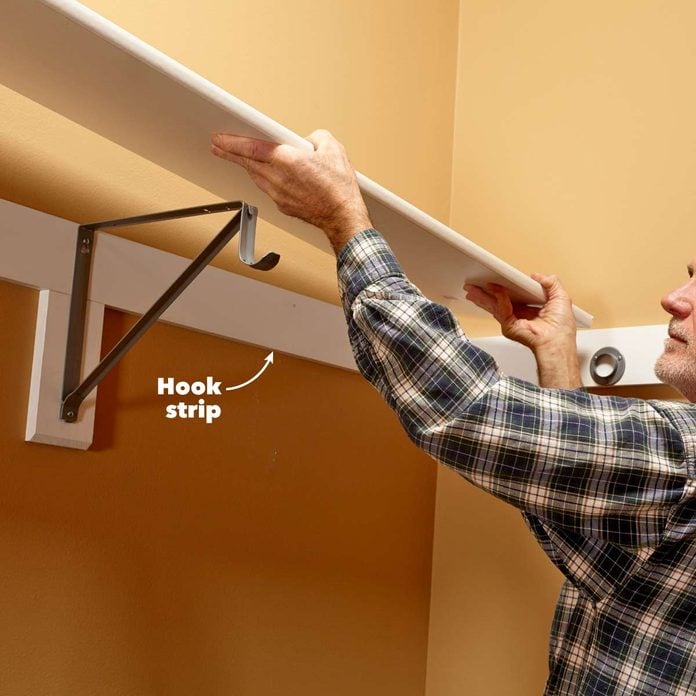
Temporary supports hold the shelf while you fix it to the wall. Use sturdy items like a stack of books or a small stool. Place them under the shelf to keep it level and steady. This frees your hands to work with screws and brackets. Check that the shelf stays balanced before moving to the next step.
Securing Brackets Safely
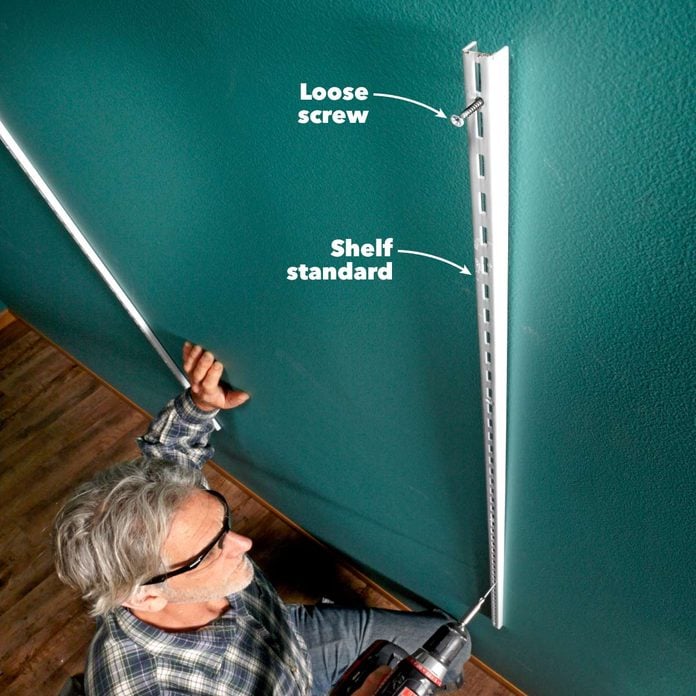
Attach brackets firmly to the wall to support the shelf’s weight. Use a stud finder to locate strong spots behind the wall. Mark these points clearly for accurate drilling. Drill holes carefully to avoid damage. Screw brackets tightly but avoid over-tightening, which can weaken the wall. Test the bracket strength by gently pressing before placing the shelf.
Credit: www.familyhandyman.com
Ensuring Stability And Safety
Ensuring the shelf remains stable and safe is vital when hanging heavy shelves alone. Proper checks prevent accidents and protect your belongings. Stability also keeps the shelf looking neat and professional.
Checking Level And Alignment
Start by using a spirit level to check the shelf’s horizontal position. Place the level on top of the shelf. Adjust the shelf until the bubble centers between the lines.
Mark the wall at the shelf edges. This ensures the shelf stays straight when mounted. Double-check the marks before drilling holes.
Use a measuring tape to confirm equal distance from the floor or ceiling on both sides. This simple step avoids a crooked shelf.
Testing Weight Support
Begin with light items to test the shelf’s strength. Gradually increase weight to the shelf’s expected load. Watch for any signs of bending or instability.
Press gently under the shelf to detect movement. If it shifts, recheck the fasteners and wall anchors.
Use sturdy brackets and anchors designed for heavy loads. This adds extra security and prevents shelf failure.
Tips For Managing Heavy Loads
Managing heavy loads on a shelf requires care and smart planning. Proper handling prevents accidents and keeps your shelf strong. These tips will help you keep the shelf safe and sturdy for a long time.
Distributing Weight Evenly
Spread the weight across the shelf to avoid pressure points. Place heavier items near the wall or close to the brackets. Avoid putting all heavy objects in one spot. Use a level to check if the shelf stays balanced. This helps the shelf hold more weight safely.
Regular Maintenance Checks
Check the shelf often for signs of wear or damage. Look for cracks, loose screws, or bending. Tighten screws and brackets as needed. Clean dust and dirt from the shelf and wall mounts. Regular checks stop small problems from becoming big issues.

Credit: citygirlmeetsfarmboy.com
Frequently Asked Questions
How Do I Safely Hang A Heavy Shelf Alone?
Use a stud finder to locate wall studs for strong support. Mark holes accurately. Use wall anchors if needed. Secure the shelf bracket tightly. Use a level to keep the shelf straight. Take your time for safety and precision.
What Tools Are Essential For Hanging Heavy Shelves?
You need a stud finder, drill, level, screws, and anchors. Also, a screwdriver and measuring tape help. These tools ensure the shelf is secure and level. Proper tools make the process easier and safer.
How To Find Studs For Heavy Shelf Installation?
Use a stud finder to scan the wall. Studs are usually 16 or 24 inches apart. Tap the wall and listen for solid sounds. Mark stud locations before drilling. Anchoring into studs gives the shelf maximum support.
Can Drywall Anchors Hold Heavy Shelves Alone?
Heavy-duty drywall anchors can hold some weight. However, for very heavy shelves, always anchor into studs. Anchors alone may fail under heavy loads. Use anchors only if studs are unavailable or for light shelves.
Conclusion
Hanging a heavy shelf alone takes careful steps and the right tools. Always measure twice and choose strong anchors. Secure the shelf firmly to avoid accidents. Take your time and work safely. With patience, you can complete this task yourself.
Enjoy your new shelf and the extra space it provides. Simple planning makes big jobs easier. You’ve got this!



