
Have you ever wondered which countries were once part of the vast Ottoman Empire? Understanding the lands that made up this powerful empire can change the way you see history and the modern world.
You’ll discover the surprising range of countries that were connected under one rule. By the end, you’ll have a clear picture of how the Ottoman Empire shaped borders and cultures you might know today. Keep reading—you won’t want to miss these fascinating facts!
Origins Of The Ottoman Empire
The Ottoman Empire’s origins trace back to the late 13th century, rooted in a small Turkish principality. It emerged in a region where cultures and empires collided, setting the stage for a powerful dynasty. Understanding these beginnings helps you see how a modest tribe grew into a vast empire spanning continents.
The Role of Osman IOsman I is the empire’s founder and namesake. His leadership united various Turkish tribes in Anatolia, now modern Turkey. Osman’s strategic battles against the Byzantine Empire laid the groundwork for expansion.
His name literally means “the greatest” in Turkish, reflecting the respect he earned. You might wonder how one leader’s vision could spark such a long-lasting empire. The answer lies in his ability to inspire loyalty and adapt to changing political landscapes.
Geographical Importance Of Anatolia
Anatolia’s location was crucial for the empire’s rise. It sits at the crossroads of Europe and Asia, making it a hub for trade and military campaigns. This natural advantage allowed the Ottomans to control key routes and resources early on.
Think about how controlling a strategic location gives you power in business or politics today. Anatolia offered exactly that, enabling the Ottomans to build a strong base before expanding outward.
Influence Of Neighboring Empires
The weakening Byzantine Empire and the Mongol invasions created a power vacuum in the region. The Ottomans seized this opportunity to grow their territory. Their ability to navigate complex alliances and conflicts helped them survive and thrive.
When you face challenges, how do you turn them into opportunities? The Ottomans did this by learning from neighbors and adapting their tactics, a lesson you can apply in your own challenges.
Religious And Cultural Foundations
Islam played a vital role in shaping the empire’s identity and governance. The Ottomans blended Islamic principles with local customs, creating a unique and flexible system. This balance helped maintain order and gain support from diverse populations.
Consider how blending different traditions can lead to stronger communities or businesses. The Ottomans’ approach allowed them to manage vast, culturally varied lands effectively.
Credit: owlcation.com
Expansion Through The Centuries
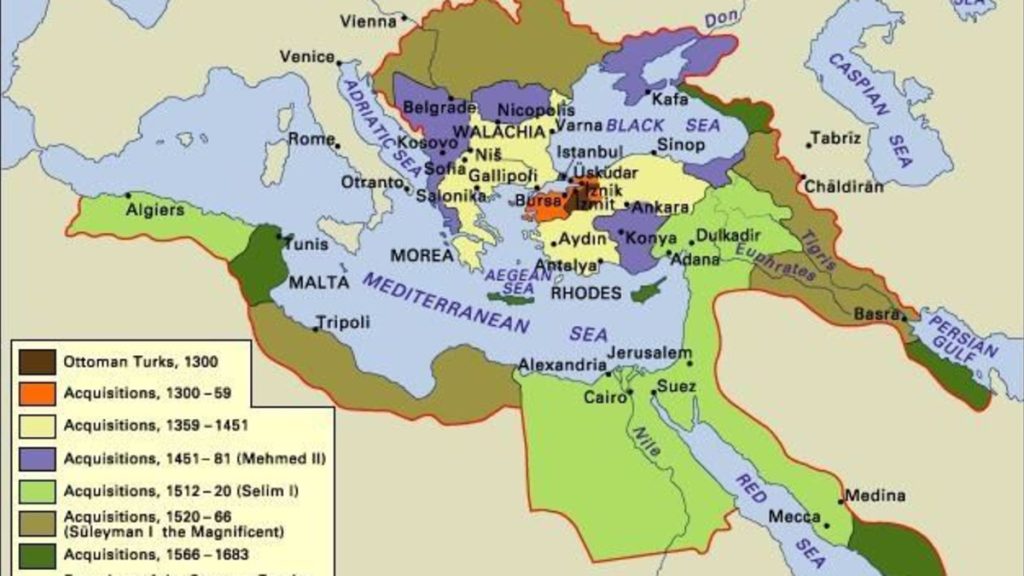
The Ottoman Empire grew steadily over many centuries. It began as a small state in Anatolia in the late 13th century. Through war, diplomacy, and strategic marriages, it expanded its territory. This growth turned the empire into one of the most powerful forces in the world. The lands it controlled spread across three continents: Europe, Asia, and Africa.
Each phase of expansion brought new cultures, peoples, and challenges. The empire adapted its rule to manage diverse regions. Its borders shifted with the rise and fall of neighboring powers. Understanding the empire’s growth helps explain its complex history and influence.
The Early Conquests In Anatolia And The Balkans
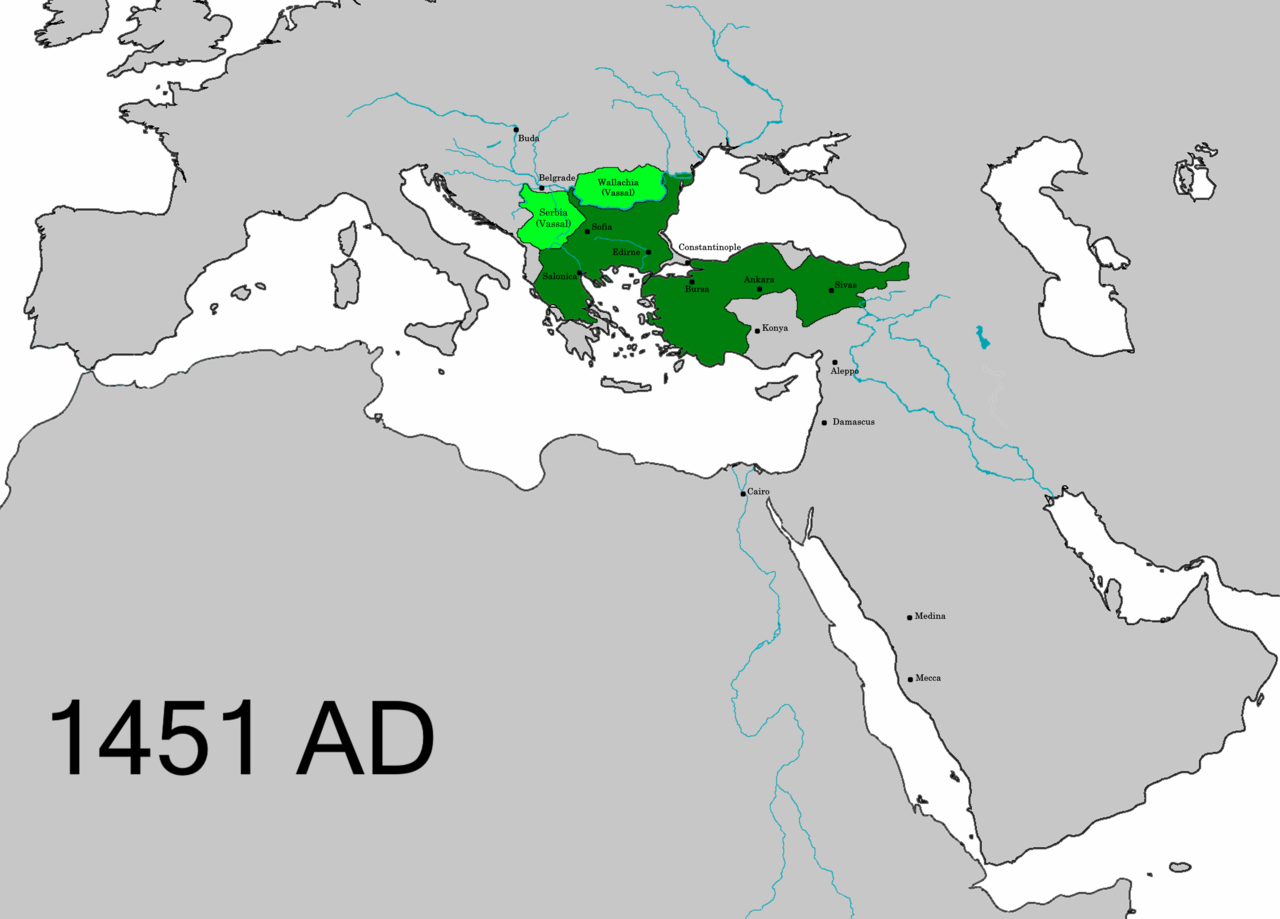
The Ottomans started by taking control of small Turkish principalities. They conquered parts of the Byzantine Empire in Anatolia. Soon, they crossed into Europe, capturing lands in the Balkans. Key victories included the Battle of Kosovo and the capture of Adrianople. These wins secured their foothold in Europe.
Expansion Into The Middle East And North Africa
In the 16th century, the empire moved east and south. It took over the Mamluk Sultanate, gaining Egypt, Syria, and the Hejaz. Control of the holy cities of Mecca and Medina gave religious prestige. The Ottomans also expanded along the North African coast. Cities like Algiers, Tunis, and Tripoli became part of the empire.
Control Over Southeastern Europe And The Mediterranean
The Ottomans continued to push deeper into Europe. They controlled large parts of Greece, Bulgaria, and Hungary. The empire dominated the eastern Mediterranean Sea. Naval power helped them hold islands and coastal towns. This control lasted until European powers challenged their rule.
Territorial Changes In The Later Centuries
By the 17th century, the empire faced new rivals. Wars with Austria, Russia, and Persia reshaped its borders. Some lands were lost, but others were regained temporarily. The empire’s size fluctuated through treaties and conflicts. These changes marked the gradual decline of Ottoman power.
Core Regions Of The Empire
The Ottoman Empire included parts of modern Turkey, Greece, Egypt, and the Balkans. These core regions shaped its culture and power for centuries. Many countries today trace their history back to this vast empire.
The Ottoman Empire, at its height, was a vast and diverse empire that connected different continents and cultures. Understanding its core regions helps us appreciate its historical impact. These regions were the heart of the empire, each contributing uniquely to its strength and legacy.Anatolia And Asia Minor
Anatolia, often referred to as Asia Minor, was the birthplace of the Ottoman Empire. It was here that the Ottomans established their first stronghold. The region’s strategic location served as a bridge between Europe and Asia, facilitating trade and cultural exchange. The rich lands of Anatolia provided essential resources. This area was not only a political center but also a cultural melting pot, influencing the empire’s art and architecture.The Balkans
The Balkans were a crucial part of the Ottoman Empire, bringing in a mix of European influences. This region offered diverse cultures and traditions that enriched the empire’s social fabric. The Balkans were also vital for military campaigns due to their proximity to Europe. Think about the complex history and vibrant cultures of countries like Greece, Bulgaria, and Serbia. These nations’ legacies are interwoven with Ottoman history, creating a rich tapestry of shared heritage.The Middle East
The Middle East was a significant core region, deeply tied to the empire’s Islamic identity. Cities like Baghdad and Damascus were centers of learning and religion. These cities helped the Ottomans maintain religious leadership among the Muslim world. Have you ever wondered how the Ottomans managed to govern such a diverse empire? The Middle East’s inclusion showcased the Ottomans’ ability to blend different cultures and religious practices.North Africa
North Africa expanded the Ottoman Empire’s reach into the African continent. Regions like Egypt and Libya were key for trade routes and military strategy. The Ottomans controlled major ports, influencing Mediterranean trade significantly. The blending of African and Ottoman cultures in this region is fascinating. Consider the vibrant markets and diverse architecture that still reflect Ottoman influence today. How did these interactions shape modern North African societies? Each core region of the Ottoman Empire added its unique flavor, creating a rich mosaic of cultures and traditions. Understanding these regions helps us grasp the empire’s complexity and enduring legacy.
Credit: seunonigbinde.medium.com
Modern Countries Within Ottoman Borders
The Ottoman Empire was vast, spanning three continents at its height. Many modern countries today were once under its rule, shaping their history, culture, and borders. Understanding these countries helps you see the empire’s lasting impact on today’s world.
Turkey
Turkey was the heart of the Ottoman Empire. Istanbul, formerly Constantinople, served as the empire’s capital for centuries. The country’s rich blend of European and Asian influences reflects its Ottoman past.
Greece
Greece spent nearly 400 years under Ottoman control. This period deeply influenced Greek architecture, cuisine, and customs. Have you noticed Ottoman touches in Greek cities like Thessaloniki?
Bulgaria
Bulgaria was part of the empire for over five centuries. Ottoman rule affected its religious landscape and administrative systems. The legacy is visible in Bulgarian folklore and traditional crafts.
Serbia
Serbia’s history is intertwined with the Ottomans through battles and cultural exchange. Ottoman influence is still present in Serbian music and cuisine, especially in dishes like ćevapi.
Bosnia And Herzegovina
This region was a key Ottoman province, known for its religious diversity. The Ottomans introduced Islamic architecture and education here, which you can still explore today in Sarajevo.
Croatia
Parts of Croatia were under Ottoman rule, mainly in the eastern regions. This period left marks in local fortresses and folk traditions. It shaped Croatia’s defensive strategies against future invasions.
Albania
Albania’s Ottoman period shaped its religious makeup, with Islam becoming a major faith. The empire also influenced Albanian language and cultural identity. You can see Ottoman-era castles dotting the landscape.
North Macedonia
North Macedonia’s Ottoman heritage is visible in its bazaars and mosques. Skopje’s old town is a living museum of this era. The empire’s trade routes helped the city flourish.
Montenegro
Montenegro resisted Ottoman rule but still experienced cultural exchanges. Ottoman influence appears in its architecture and some culinary traditions. The rugged landscape helped shape its unique defense history.
Romania
Romania was a vassal state to the Ottomans, influencing its political and social structures. Ottoman customs blended with local traditions, especially in Wallachia and Moldavia. This mix shaped Romanian folklore and festivals.
Hungary
Parts of Hungary were under Ottoman control for about 150 years. Ottoman baths and fortresses remain as historical reminders. This period introduced new foods and spices to Hungarian cuisine.
Iraq
Iraq was a vital province, with Baghdad as an important Ottoman city. The empire influenced its urban planning and trade systems. Ottoman-era buildings still stand in major Iraqi cities.
Syria
Syria’s cities like Aleppo and Damascus thrived under Ottoman rule. The empire’s governance helped preserve ancient cultural sites. Ottoman architecture is a key feature of these historic cities.
Lebanon
Lebanon was part of the empire’s Syrian province. Ottoman rule affected its religious communities and trade. You can find Ottoman palaces and mosques in Beirut and Tripoli.
Israel And Palestine
This region was under Ottoman control for centuries. The empire managed important pilgrimage routes and trade hubs. Ottoman walls and gates in Jerusalem still draw many visitors.
Jordan
Jordan’s Ottoman past shaped its tribal alliances and administrative divisions. The empire’s influence is evident in traditional dress and local crafts. Ruins from the Ottoman era can be found in towns like Amman.
Egypt
Egypt was a crucial Ottoman territory with Cairo as a major center. Ottoman architecture and culture blended with ancient Egyptian heritage. This mix created a unique cultural identity you can still experience today.
Libya
Libya was under Ottoman rule for centuries, impacting its coastal cities. The empire’s control helped shape local governance and trade. Ottoman forts and mosques remain key historical sites.
Tunisia
Tunisia’s Ottoman period influenced its legal system and urban development. The medinas of Tunis showcase Ottoman architectural styles. Ottoman culinary influences are also present in Tunisian dishes.
Algeria
Algeria was part of the empire, especially along the coast. Ottoman naval power was significant here. The empire left behind forts and cultural ties that still influence Algerian society.
Saudi Arabia
Saudi Arabia’s western regions, including the holy cities, were under Ottoman protection. The empire managed pilgrimage routes to Mecca and Medina. Ottoman-era mosques and caravanserais reflect this history.
Cultural And Political Influence
The Ottoman Empire shaped much of the world’s culture and politics for centuries. Its vast reach included many regions, each adding to the empire’s rich diversity. The cultural and political influence of the empire still echoes today in art, language, and governance.
Cultural Diversity Across Regions
The empire included parts of Europe, Asia, and Africa. This mix created a unique blend of traditions and customs. People spoke many languages and followed different religions. Art and architecture showed this diversity in beautiful ways. Mosques, palaces, and bazaars revealed a mix of styles from many cultures.
Political Structure And Governance
The Ottoman government was a complex system. It balanced local traditions with central control from Istanbul. The sultan held supreme power but allowed local leaders some freedom. This helped manage the vast empire efficiently. Laws combined Islamic principles with local customs to maintain order.
Legacy On Modern Nations
Many modern countries once belonged to the empire. Its political borders influenced today’s map. Some legal and administrative systems still reflect Ottoman rules. Cultural traditions, cuisine, and language borrow from the empire’s heritage. The Ottoman influence remains a part of daily life in these regions.
Legacy Of The Ottoman Empire Today
The Ottoman Empire shaped the history and culture of many countries. Its influence still appears in architecture, language, and traditions. The empire’s legacy affects modern borders and political relations. Understanding this legacy helps us see the empire’s lasting impact on today’s world.
Architectural Heritage And Monuments
The empire built beautiful mosques, palaces, and bridges. Many of these structures still stand in Turkey and beyond. They attract tourists and inspire modern architects. Ottoman design blends Islamic art with local styles. Cities like Istanbul showcase this rich architectural past.
Cultural And Culinary Influences
Ottoman culture mixed many traditions from Europe, Asia, and Africa. This mix created unique music, dance, and art forms. Food is a major part of the legacy. Dishes like baklava, kebabs, and coffee remain popular today. They reflect the empire’s diverse cultural roots.
Languages And Literature
The Ottoman Empire used Turkish, Arabic, and Persian languages. These languages influenced each other and local dialects. Ottoman literature includes poetry, history, and religious texts. Some works are still studied and admired. The empire helped spread Islamic culture and education.
Political Borders And Modern Nations
The empire’s fall shaped the borders of many countries. Nations in the Middle East, Balkans, and North Africa emerged from Ottoman lands. Conflicts and alliances today trace back to this history. The empire’s legacy affects regional politics and identities.
Religious And Social Impact
The empire ruled many religious groups with tolerance. It allowed diverse communities to live together. This policy influenced modern ideas about coexistence. Ottoman social systems affected family, law, and governance. Their impact remains visible in some communities.

Credit: uk.news.yahoo.com
Frequently Asked Questions
Which Countries Were Part Of The Ottoman Empire?
The Ottoman Empire included modern Turkey, Greece, Bulgaria, Egypt, Syria, Iraq, and parts of the Balkans. It spanned three continents: Europe, Asia, and Africa.
When Did The Ottoman Empire Control These Countries?
The Ottoman Empire controlled these regions roughly between the 14th century and 1922, when it officially dissolved after World War I.
How Did The Empire Influence Its Countries?
The empire influenced architecture, language, law, and culture. It spread Islam and integrated diverse ethnic groups under Ottoman rule.
What Happened To Ottoman Territories After 1922?
After 1922, the empire’s territories became modern nation-states. Turkey emerged as a republic, and other regions gained independence or joined new countries.
Conclusion
The Ottoman Empire covered many lands and cultures. It included parts of Europe, Asia, and Africa. Countries like Turkey, Greece, Egypt, and Iraq were once inside its borders. This empire shaped history and influenced many people. Understanding these countries helps us see the empire’s wide reach.
The Ottoman legacy still affects these regions today. History shows how empires rise and fall over time. It reminds us that borders can change. The story of the Ottoman Empire is a story of connection and change.



