
Have you ever wondered how automatic lights turn on just when you enter a room? Or how security systems detect movement without cameras?
The secret often lies in a small but powerful device called a PIR motion sensor. Understanding what a PIR motion sensor is can change how you think about home security, energy savings, and smart technology. You’ll discover how this simple gadget works, why it matters to your daily life, and how it can make your home smarter and safer.
Keep reading to unlock the mystery behind PIR motion sensors and see how they can benefit you.
How Pir Sensors Work
Understanding how PIR sensors work can help you appreciate their role in everyday security and automation. These sensors detect motion by sensing changes in infrared radiation emitted by objects around them. Let’s break down the process so you can see how these devices pick up movement and trigger alerts.
Detecting Infrared Radiation
PIR sensors focus on detecting infrared radiation, which is a type of heat energy emitted by all living beings and warm objects. Your body naturally gives off infrared radiation, and the sensor is designed to notice any changes in this heat signature.
Think about walking past a sensor in a dark room. Even if the room’s temperature stays the same, your moving body creates a change in infrared radiation that the sensor can detect instantly. This ability to “see” heat makes PIR sensors very effective in motion detection without relying on visible light.
Motion Detection Mechanism
The sensor works by comparing the amount of infrared energy in two or more zones. When you move, the sensor sees a sudden difference between these zones. This change triggers the sensor to send a signal indicating motion.
It’s like watching two adjacent areas and noticing when one suddenly becomes warmer. Have you ever wondered how your automatic lights turn on right as you enter a room? That’s the PIR sensor spotting your movement through these infrared shifts.
Sensor Components
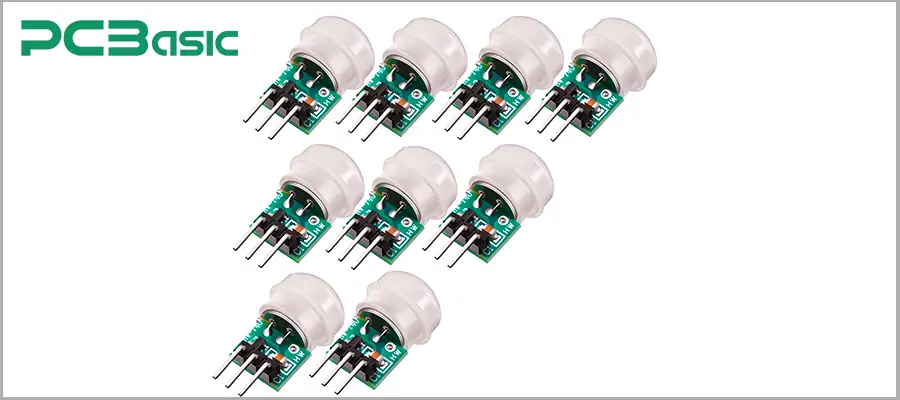
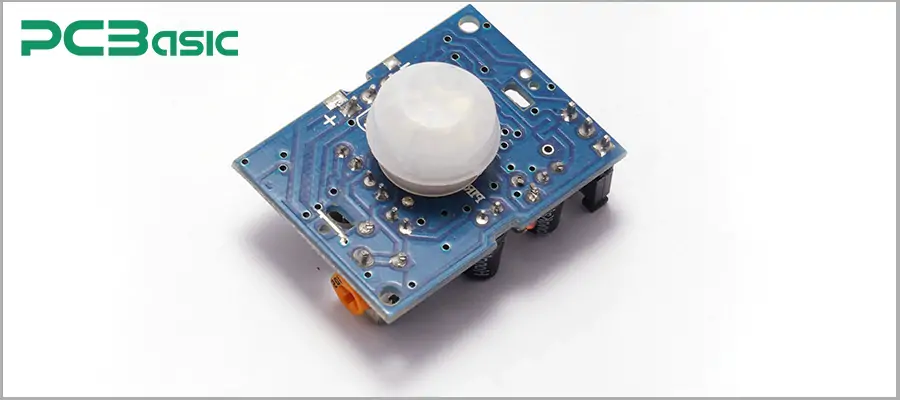
A typical PIR sensor contains a pyroelectric sensor, which detects changes in infrared radiation. This sensor is paired with a set of lenses called Fresnel lenses that help focus the infrared signals onto the detector.
- Pyroelectric sensor:Converts infrared radiation into an electrical signal.
- Fresnel lens:Increases the sensor’s field of view, allowing it to cover a wider area.
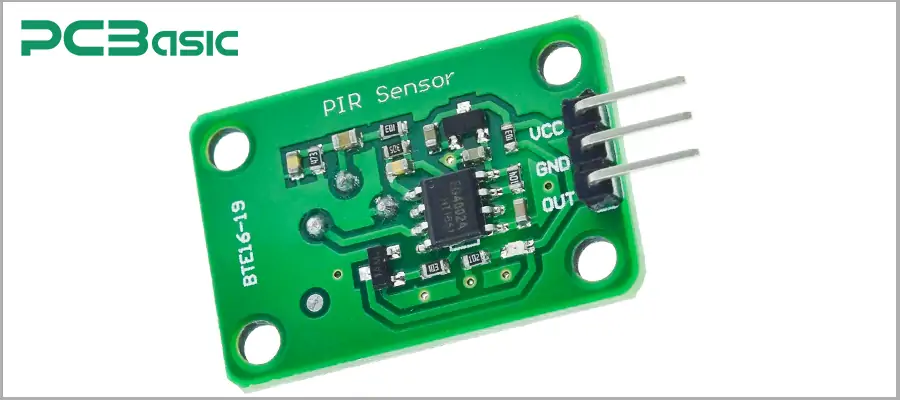
- Signal processing circuit:Interprets the signals and decides if the detected change is significant enough to indicate motion.
Have you noticed how some sensors can cover entire rooms while others only sense movement in narrow paths? The difference often lies in these components and how they are arranged within the sensor.
Credit: www.pcbasic.com
Types Of Pir Motion Sensors
PIR motion sensors come in different types for various uses. Each type has unique features and functions. Understanding these helps in choosing the right sensor for your needs.
Passive Vs Active Sensors
Passive Infrared (PIR) sensors detect heat from objects, especially humans. They do not emit any energy. Active sensors send out signals and measure reflections to detect movement. Passive sensors use less power and are common in home security. Active sensors work well in complex environments but use more energy.
Single Vs Dual Element Sensors
Single element PIR sensors have one sensor element to detect heat changes. They are simple and cost-effective. Dual element sensors have two elements that compare signals. This reduces false alarms by detecting real motion more accurately. Dual element sensors are preferred for outdoor and sensitive areas.
Wide-angle Vs Narrow-angle Sensors
Wide-angle sensors cover a broad area, ideal for large rooms or open spaces. They can detect movement from many directions. Narrow-angle sensors focus on a smaller area, perfect for hallways or specific zones. Choosing the right angle depends on the area size and detection needs.
Applications In Smart Security
PIR motion sensors detect movement using infrared technology. These sensors play a crucial role in smart security systems. They are a key component in enhancing safety for both homes and businesses.
Home Security Systems
PIR motion sensors are vital for home security systems. They detect unauthorized movement around your property. This triggers alarms and alerts homeowners instantly. Placing sensors at entry points enhances protection. They offer peace of mind when you’re away from home. Many sensors now integrate with smart home systems.
Commercial Security Solutions
Businesses use PIR motion sensors for robust security. These sensors guard against unauthorized access. They are placed in sensitive areas to detect intruders. PIR sensors help in reducing false alarms. They are efficient in large commercial spaces. Their integration ensures comprehensive security coverage.
Integration With Smart Devices
PIR motion sensors easily integrate with smart devices. They connect with smart lights and cameras seamlessly. This integration enhances automated responses. For example, lights can turn on when motion is detected. Cameras can start recording instantly. This smart integration provides an added layer of security. It makes monitoring more efficient and effective.
Credit: www.pcbasic.com
Installation Tips
Installing a PIR motion sensor correctly makes all the difference between reliable security and constant frustration. Proper setup ensures your sensor detects movement accurately without triggering false alarms. Here are some practical tips to help you get the best performance from your PIR motion sensor.
Optimal Placement
Position your PIR sensor where it has a clear view of the area you want to monitor. Corners often work well because they cover a wide angle, but avoid spots that face windows directly to prevent sunlight interference.
Mount the sensor at a height of about 6 to 8 feet for ideal detection range. Think about common paths people take and place the sensor accordingly to catch movement effectively.
Avoiding False Alarms
False alarms can be frustrating and reduce your trust in the sensor. To prevent this, keep the sensor away from heat sources like air vents, radiators, or direct sunlight.
Also, avoid placing it near objects that move in the wind, such as curtains or plants. These can trick the sensor into thinking there’s motion when there isn’t.
Maintenance Best Practices
Regular cleaning helps your PIR sensor perform well over time. Dust and spider webs can block the sensor’s lens, so wipe it gently with a soft cloth every few months.
Test your sensor periodically to ensure it’s still detecting motion accurately. If you notice frequent false alarms or missed movements, recheck the placement and clean the lens again.
Benefits Of Pir Sensors
PIR (Passive Infrared) sensors offer several benefits that make them a popular choice for motion detection in homes and businesses. Understanding these advantages can help you decide if a PIR sensor fits your needs. These sensors not only save resources but also improve security and convenience.
Energy Efficiency
PIR sensors detect movement by sensing heat changes from people or animals. This allows lights or devices to turn on only when needed, reducing unnecessary power use. Imagine leaving a room and the lights automatically switching off—this simple action cuts down your electricity bills.
Using PIR sensors in your home or office means you don’t have to worry about forgetting to turn off lights. This saves energy without you having to constantly monitor switches.
Cost-effectiveness
PIR sensors are generally affordable and require minimal maintenance. Installing them can reduce energy costs, which adds up to significant savings over time. The upfront investment quickly pays off as you use less electricity.
Think about how much you spend on lighting every month. Wouldn’t it be great to lower those bills without changing your lifestyle? PIR sensors make that possible.
Reliability And Accuracy
PIR sensors are highly reliable because they detect actual body heat, not just movement or light changes. This reduces false alarms caused by pets or shadows, giving you peace of mind. You can trust your security system to alert you only when there’s real motion.
Have you ever been annoyed by a motion sensor that triggers unnecessarily? PIR sensors help avoid that frustration by being more precise in what they detect.
Common Challenges
Understanding the common challenges of PIR motion sensors can save you from a lot of frustration. These sensors are sensitive devices, and their performance can be affected by several factors. Knowing what can go wrong helps you set realistic expectations and troubleshoot effectively.
Environmental Interference
One major challenge is environmental interference. PIR sensors detect heat changes, so sudden temperature shifts like direct sunlight or heating vents can cause false alarms.
Reflective surfaces like windows or mirrors might confuse the sensor by bouncing infrared signals. Have you noticed your sensor triggering when the sun shines through a window? That’s a classic example of this issue.
Sensor Range Limitations
Every PIR sensor has a limited detection range. If your sensor is too far from the monitored area, it won’t detect motion effectively.
Walls, furniture, and other obstacles can also block the sensor’s view. Think about whether your sensor placement covers all entry points—are you relying on a single sensor for a large room?
Dealing With Pets
Pets can cause frequent false alarms because they emit heat and move unpredictably. Many standard PIR sensors don’t differentiate between a human and a small animal.
Some sensors offer pet immunity or adjustable sensitivity to reduce this problem. Have you tried lowering the sensitivity or positioning the sensor higher to avoid pet triggers? These small adjustments can make a big difference.
Future Trends In Pir Technology
The future of PIR motion sensor technology is shaping up to be both exciting and practical. As you consider upgrading your home or workspace security, it’s worth knowing what advances are coming your way. These developments promise to make sensors smarter, more responsive, and easier to use than ever before.
Enhanced Sensitivity
Imagine a sensor that detects even the slightest movement without false alarms. Enhanced sensitivity means PIR sensors will pick up on smaller heat changes and subtle motions.
This improvement reduces missed detections and increases reliability. You’ll get alerts only when it truly matters, avoiding the frustration of constant false triggers.
Integration With Ai
AI integration allows PIR sensors to learn patterns of movement over time. Your sensor can distinguish between a pet wandering around and an intruder entering your space.
This smarter detection saves you from unnecessary alerts and helps tailor security to your lifestyle. Could your home become truly intuitive, reacting only when needed?
Wireless Connectivity
Wireless PIR sensors remove the hassle of complex wiring. You can place them anywhere, even in hard-to-reach spots, with ease.
Plus, they connect seamlessly to your smartphone or home automation system. This makes monitoring and control straightforward, whether you’re home or away.

Credit: www.ebay.ca
Frequently Asked Questions
What Does A Pir Motion Sensor Detect?
A PIR motion sensor detects infrared radiation emitted by warm objects, mainly humans and animals. It senses movement by measuring changes in heat levels within its range.
How Does A Pir Motion Sensor Work?
It uses pyroelectric sensors to detect heat changes. When a warm body moves, the sensor triggers an electrical signal, activating the connected device or alarm.
Where Are Pir Motion Sensors Commonly Used?
They are widely used in security systems, automatic lighting, and home automation. PIR sensors help enhance safety and energy efficiency by detecting presence and movement.
What Are The Advantages Of Pir Motion Sensors?
PIR sensors are cost-effective, energy-efficient, and reliable. They have low power consumption and can detect motion without physical contact, making them ideal for various applications.
Conclusion
A PIR motion sensor detects movement by sensing body heat. It helps save energy by turning devices on only when needed. Many homes and businesses use these sensors for security and convenience. They are easy to install and cost-effective. Understanding how PIR sensors work can help you choose the right one.
Simple, smart technology that makes life safer and easier. A small device with big benefits.



