
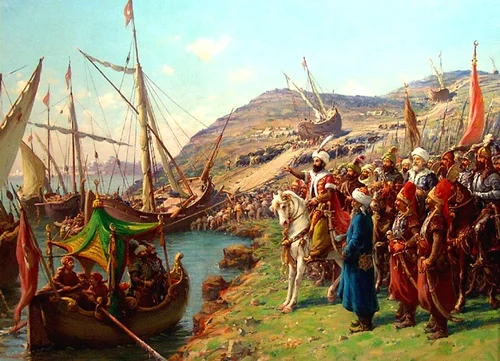
Have you ever wondered how one of history’s greatest cities, Constantinople, fell after standing strong for over a thousand years? The fall of Constantinople wasn’t just a battle; it was a turning point that changed the course of history forever.
If you want to understand the secrets behind the Ottoman Empire’s powerful strategy and the bold moves that led to their stunning victory, you’re in the right place. Keep reading, and discover how clever tactics, groundbreaking technology, and fearless leadership came together to conquer a seemingly unstoppable fortress.
Your curiosity about this epic conquest is about to be fully satisfied.
Ottoman Rise To Power
The rise of the Ottoman Empire was not an overnight event but a series of calculated moves and strong leadership. Their journey toward conquering Constantinople was built on solid foundations laid during their early years. Understanding how the Ottomans grew from a small principality to a dominant force reveals the secrets behind their eventual success.
Early Expansion Strategies
The Ottomans started as a small group on the edge of the Byzantine Empire. Their early strategy focused on expanding territory through both military action and alliances. They often targeted weaker neighbors, gradually increasing their land without facing major resistance.
One key tactic was their use of light cavalry for quick raids. This allowed them to control large areas and gather resources efficiently. They also adapted to different battlefields, showing flexibility that many empires lacked.
Did you know the Ottomans often integrated local populations rather than displacing them? This approach helped them maintain stability in newly conquered areas and boosted their manpower.
Key Leaders Before The Siege
Strong leadership played a crucial role in the Ottoman rise. Leaders like Osman I, the empire’s founder, and his successors laid the groundwork for future conquests. Osman’s vision gave the empire a clear sense of purpose and direction.
Murat I expanded the empire into the Balkans, setting the stage for further advances. His use of disciplined infantry and cavalry units made the Ottoman army a formidable force. Later, Mehmed I reunited the empire after a civil war, showing how leadership could restore strength even in difficult times.
These leaders didn’t just fight battles; they built institutions and improved administration. This helped the Ottomans maintain control over diverse territories and prepare for the massive challenge of Constantinople.

Credit: medium.com
Constantinople’s Strategic Importance
Constantinople stood as a key prize for empires over centuries. Its position made it a vital city for defense and control. The Ottomans aimed to capture it to secure their empire’s future. Understanding why Constantinople was so important helps explain their determined efforts. The city’s strategic value came from its geography and its role as an economic and cultural hub.
Geographical Advantages
Constantinople sat on a narrow strip of land between two seas. This location controlled the passage from the Black Sea to the Mediterranean. It acted as a natural gateway for trade and military movement.
The city’s walls were strong and well-built, protecting it from many attacks. Its position on a peninsula made it hard to surround fully by enemy forces.
Control over Constantinople meant control over major sea routes and land paths. It allowed the Ottomans to expand their reach into Europe and Asia easily.
Economic And Cultural Significance
Constantinople was a center for trade connecting Europe and Asia. Merchants from different regions met there to exchange goods.
The city thrived on its markets, drawing wealth from silk, spices, and other valuable items.
It was also a cultural beacon, hosting churches, libraries, and schools. Its rich history and diversity made it a symbol of power and prestige.
The Ottomans sought to inherit this legacy and strengthen their empire’s influence.
Preparations For The Siege
The siege of Constantinople was not a sudden attack. The Ottomans spent months preparing carefully. These preparations ensured they had the strength and tools needed. Every detail mattered to break the city’s strong defenses. The following sections explore the army’s size and the weapons used.
Building The Massive Army
The Ottoman army grew to an enormous size. Sultan Mehmed II gathered soldiers from many regions. The army included infantry, cavalry, and elite Janissaries. Support troops managed supplies and logistics. The total force numbered around 80,000 men. This large army created pressure on the city walls.
- Infantry: Skilled archers and foot soldiers.
- Cavalry: Fast horsemen for quick attacks.
- Janissaries: Elite troops trained from childhood.
- Engineers and laborers for construction work.
- Supply teams to maintain food and weapons.
Engineering Marvels And Weaponry
The Ottomans used advanced technology for the siege. They built massive cannons to break the walls. These cannons could fire giant stone balls over long distances. Engineers designed special siege towers and battering rams. Ships were prepared to block sea access. The army combined old and new tactics effectively.
- Large cannons: Could destroy thick city walls.
- Siege towers: Protected soldiers as they approached.
- Battering rams: Used to smash gates.
- Ships: Controlled access through the Golden Horn.
- Mining teams: Dug tunnels under walls.
The Role Of Artillery
The fall of Constantinople marked a pivotal moment in history. One key factor was the use of artillery. The Ottomans used advanced technology to breach the city’s defenses. This changed the course of warfare forever.
The Giant Cannons
The Ottomans constructed massive cannons for the siege. These were not ordinary weapons. They were designed to destroy the toughest fortifications. The most famous was the “Basilica” cannon. It was a massive piece of artillery, built by a Hungarian engineer named Orban. Its size and power were unprecedented. It could fire large stone balls over a mile away. This firepower was crucial in the assault.
Impact On City Walls
The city walls of Constantinople were legendary. They had protected the city for centuries. But the new artillery changed the game. The giant cannons caused significant damage. Walls that seemed invincible crumbled under the bombardment. The defenders were overwhelmed by the constant shelling. Each blast weakened their resolve. The artillery’s power broke down the mighty walls. It paved the way for the Ottomans to storm the city. The fall of the walls signaled the end for Constantinople.
Naval Tactics And Blockades
Naval tactics and blockades played a key role in the Ottoman conquest of Constantinople. The Ottomans aimed to control the seas and cut off supplies to the city. Their strategy combined clever maneuvers and new technologies to weaken the Byzantine defenses. These actions helped isolate Constantinople and made the land assault more effective.
Controlling The Bosporus
The Bosporus Strait was vital for trade and military movement. The Ottomans aimed to block all ships from reaching Constantinople by sea. They positioned their navy to control both ends of the strait. This prevented reinforcements and supplies from reaching the city. The blockade pressured the city’s defenders and reduced their resources over time.
To strengthen control, the Ottomans placed heavy artillery on the shores. This stopped enemy ships from breaking the blockade. The siege lasted for weeks, with the Ottoman navy patrolling constantly. Their presence forced the Byzantines to rely solely on limited land routes for support.
Naval Innovations
The Ottomans used new naval technology to gain an edge. They built stronger, faster ships to outmaneuver the Byzantine fleet. Their ships carried powerful cannons that could fire at enemy vessels and city walls alike.
One major innovation was the use of a massive chain across the Golden Horn. This chain blocked ships from entering the harbor. The Ottomans also dragged ships overland to bypass this barrier and attack from unexpected angles. This tactic surprised the defenders and weakened their naval defense.
These innovations helped the Ottomans dominate the sea and tighten their siege. Their navy was a critical force in breaking Constantinople’s defenses.

Credit: medium.com
Defenders’ Strategies
The defenders of Constantinople had to use every possible strategy to hold back the formidable Ottoman forces. Their efforts combined strong physical defenses with political and military alliances. Understanding these strategies gives you a clearer picture of the city’s resilience and the challenges faced during the siege.
Byzantine Fortifications
The walls of Constantinople were legendary for their strength. The Theodosian Walls, built centuries earlier, consisted of multiple layers including a moat, an outer wall, and a massive inner wall. These fortifications were designed to absorb and repel attacks from both siege engines and infantry.
However, these walls were not just static barriers. Defenders actively manned towers and battlements, using archers and cannons to target the Ottomans. Have you ever considered how the design of a city’s defenses can influence the outcome of a siege? In this case, the walls provided a critical advantage but required constant vigilance.
Alliances And Reinforcements
The Byzantine defenders sought help beyond their own ranks. They reached out to Western European powers, hoping for military aid and reinforcements. Despite religious and political tensions, some support arrived in the form of ships and soldiers.
These alliances, though limited, boosted morale and delayed the Ottoman advance. Yet, coordinating these reinforcements posed challenges due to distance and differing interests. Think about your own experiences—how important is teamwork when facing a tough challenge? The defenders’ reliance on allies reflected the difficulty of standing alone against a powerful enemy.
Key Battles And Turning Points
The conquest of Constantinople was marked by fierce battles and pivotal moments that shaped the outcome of this historic siege. Understanding these key battles and turning points reveals how determination and strategy played crucial roles. You’ll see how the Ottomans overcame formidable defenses through a combination of innovation and relentless pressure.
Initial Assaults
The Ottomans began their attack with heavy artillery bombardments, using massive cannons to target the city’s thick walls. These early assaults tested the defenders’ resolve and exposed weak points in the ancient fortifications. Despite the defenders’ valiant efforts, the relentless cannon fire gradually wore down their defenses.
One surprising tactic was the use of a naval blockade combined with land-based attacks. This dual pressure cut off supplies and reinforcements, putting Constantinople in a vulnerable position. How would you react if your city faced such a multi-front siege?
Final Breach
The turning point came when the Ottomans managed to transport their ships overland to bypass the chain-blocked harbor. This unexpected move allowed them to attack from a less defended angle. It’s a reminder that creative problem-solving can change the course of any challenge.
With the walls weakened and defenders exhausted, the Ottomans launched a decisive assault. The final breach was swift but brutal, leading to the fall of the city. This moment shows how persistence and adaptability can overcome even the most daunting obstacles.

Credit: kashmirreader.com
Aftermath Of The Conquest
The conquest of Constantinople in 1453 marked a pivotal moment in history, but what happened immediately after reshaped the region and the world. The city’s fall was not just a military victory; it triggered profound changes in culture, politics, and society. Understanding the aftermath helps you see how this event still influences modern cities and governments.
Transformation Of Constantinople
After the Ottomans took control, Constantinople quickly became Istanbul, the new heart of the Ottoman Empire. The city was transformed from a Christian Byzantine capital into a vibrant Islamic metropolis.
The Ottomans restored and repurposed many churches into mosques, with the Hagia Sophia being the most famous example. This change reflected a shift in religious and cultural identity that you can still observe in Istanbul’s architecture today.
To repopulate the city, the Ottomans encouraged people from different parts of their empire to settle in Istanbul. This created a diverse community with various ethnic and religious groups living side by side, making the city a melting pot of cultures.
Legacy Of The Siege
The siege of Constantinople left a lasting legacy that extends beyond the city’s walls. It marked the end of the Byzantine Empire and signaled a new era of Ottoman dominance in southeastern Europe and the Mediterranean.
This victory also changed global trade routes. With the Ottomans controlling the city, European powers started looking for alternative paths to Asia, eventually leading to the Age of Exploration. Have you ever wondered how one city’s fall could redirect the course of global history?
Moreover, the success of the siege inspired military innovations. The use of massive cannons and new siege tactics influenced warfare for decades. These developments remind you that technological advancements can turn the tide in conflict situations.
Frequently Asked Questions
How Did The Ottomans Breach Constantinople’s Walls?
The Ottomans used massive cannons, like the Basilica, to break the walls. They combined artillery with strategic land and sea attacks to overwhelm defenders.
What Role Did Mehmed Ii Play In The Conquest?
Mehmed II led the Ottoman forces with brilliant strategy. His leadership inspired troops and coordinated the siege that ultimately captured Constantinople in 1453.
Why Was Constantinople’s Location Important To The Ottomans?
Constantinople controlled key trade routes between Europe and Asia. Capturing it gave the Ottomans economic power and strategic dominance in the region.
How Long Did The Siege Of Constantinople Last?
The siege lasted about seven weeks, from April 6 to May 29, 1453. It ended with the Ottomans successfully entering the city.
Conclusion
The Ottomans won by using smart planning and strong weapons. They built huge cannons to break the city walls. Their navy blocked help from other countries. The soldiers worked together with great courage. This victory changed history and made the Ottoman Empire very powerful.
It showed how new ideas and teamwork can win big battles. Constantinople became Istanbul and grew into a great city. The fall of Constantinople marks an important moment in world history. It teaches us about strategy, strength, and change.



