
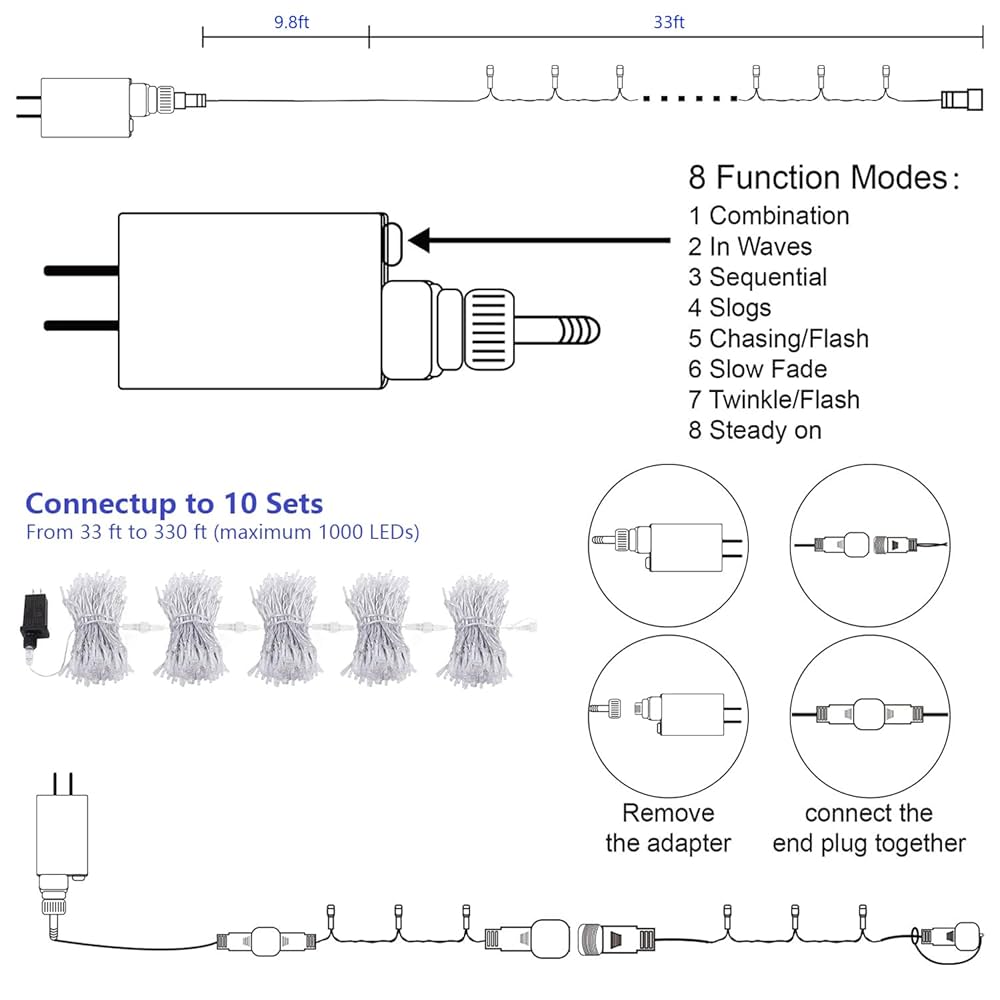
Have you ever wondered how many string lights you can safely connect together without causing problems? Whether you’re decorating for a party, brightening up your backyard, or creating a cozy indoor atmosphere, knowing the right number of lights to link is crucial.
Connecting too many can lead to flickering, blown fuses, or even fire hazards. But don’t worry—this guide will help you understand the limits and keep your lights shining bright all night long. Keep reading to learn exactly how to connect your string lights safely and effectively.
:strip_icc()/the-best-outdoor-string-lights-tout-38e2c433bddc4e13866b23731a8d56c5.jpg)
Credit: www.bhg.com
Types Of String Lights
String lights come in various types, each designed for specific uses and effects. Choosing the right type can affect how many strands you can safely connect. Understanding these differences helps you create the perfect lighting setup without risking damage or fire hazards.
Incandescent Vs Led
Incandescent string lights use traditional bulbs that generate heat and consume more power. Because of this, you can connect fewer strands together—usually up to 3 to 5 sets—before the circuit overloads.
LED string lights are energy-efficient and stay cool to the touch. You can safely connect more LED strands, often 10 or more, depending on the manufacturer’s guidelines. Have you noticed how LED lights last longer and save electricity?
Indoor Vs Outdoor
Indoor string lights are designed for dry environments and typically have less durable wiring. They aren’t safe for outdoor use, especially in wet conditions, which limits how many you can connect due to safety concerns.
Outdoor string lights have waterproof casings and sturdier wires. They are built to handle weather exposure and usually allow for more connections in a series. Are you planning to light up your patio or garden? Outdoor-rated lights are essential.
Battery Operated Vs Plug-in
Battery-operated string lights offer mobility but have limited power capacity. You can connect fewer strands because batteries drain faster with added load.
Plug-in string lights draw continuous power from an outlet, allowing for longer runs. You need to check the wattage limits on the packaging to avoid overloading your circuits. Which option fits your space better—flexibility or longer reach?

Credit: www.vevor.ca
Power Limits And Safety
Understanding the power limits and safety concerns of connecting string lights is crucial. Ignoring these can lead to blown fuses, tripped breakers, or even fire hazards. Let’s break down what you need to know to keep your lights glowing safely and beautifully.
Maximum Wattage Per String
Each string of lights comes with a maximum wattage rating, often found on the packaging or product label. This rating tells you the total amount of power the string can safely handle without overheating.
For example, if your string lights are rated for 60 watts, you shouldn’t connect additional strings that push the total wattage beyond this limit. Exceeding this can cause the wire insulation to melt, leading to dangerous situations.
Circuit Capacity
Your home’s electrical circuit has a limited capacity, usually measured in amps, and it’s important to stay within this limit. Typical household circuits can handle 15 or 20 amps, which equals 1800 to 2400 watts at 120 volts.
Think about all the devices plugged into the same circuit as your string lights. If you overload the circuit, the breaker will trip, turning off your lights and other appliances. Knowing the wattage of your lights and other devices helps you avoid this problem.
Overheating Risks
Connecting too many strings can cause wires to overheat, especially if the lights are old or damaged. Overheating not only damages the lights but also increases the risk of fire.
Always inspect your string lights for frayed wires or broken bulbs before use. If you notice any damage, replace the lights immediately to keep your setup safe.
Have you ever experienced a blown fuse or tripped breaker when decorating? It’s usually a sign to step back and check the power limits before adding more strings. Your safety and the longevity of your lights depend on it.
Connecting Multiple Strings
String lights can be linked, but each set has a limit on how many you can join. Exceeding this limit may cause electrical problems or dim lights. Always check the product instructions to ensure safe and proper connection.
Connecting multiple strings of lights can transform your space into a magical wonderland. Whether you’re decorating for the holidays or adding ambiance to your backyard, understanding how to safely connect string lights is essential. You don’t want a tangled mess or a blown fuse ruining your festive mood.Manufacturer Recommendations
Each string light manufacturer provides guidelines on how many strings you can safely connect together. These recommendations are crucial to prevent electrical overloads and potential hazards. Always check the packaging or the manufacturer’s website for this information. Using the manufacturer’s advice can save you from the headache of dealing with electrical issues. For example, some LED string lights allow up to 20 sets to be connected, while others may only support 3 to 5.Series Vs Parallel Wiring
Understanding the difference between series and parallel wiring is key. In series wiring, if one bulb goes out, the entire string can fail. This can be frustrating, especially if you’re midway through decorating. Parallel wiring, on the other hand, ensures that if one bulb burns out, the rest stay lit. This method is more reliable and often preferred for longer runs of lights.Connector Types
Different string lights come with various connector types, impacting how many you can connect. Two-prong plugs are common in household use, but for outdoor setups, three-prong plugs with ground wires offer added safety. Consider using extension cords with multiple outlets or Y-connectors to expand your connectivity options. Always ensure that all connectors are weatherproof if you’re setting up lights outdoors. The next time you’re preparing your lighting display, ask yourself: Are you maximizing the potential of your string lights safely? Understanding these elements could make all the difference in your decorating experience.Calculating Maximum Connections
Calculating the maximum number of string lights you can connect helps keep your decorations safe and bright. Overloading can cause bulbs to burn out or create fire hazards. Understanding how to read product labels, estimate total electrical load, and use extension cords properly is key. This knowledge ensures your setup works well without risks.
Reading Product Labels
Every string light product label shows important details. Look for the maximum number of sets allowed to connect. It often appears as “Max Connect” or “Max Sets.” Also, check the voltage and wattage ratings. These values tell you the power each string light needs. Labels may include safety certifications like UL or ETL. These confirm the product meets safety standards.
Estimating Total Load
Calculate the total electrical load by adding wattage of each string light. For example, if one string uses 40 watts, five strings use 200 watts. Compare this total to the maximum wattage your outlet or circuit can support. Most home circuits support 1,500 watts or 15 amps. Staying under this limit avoids overheating and tripping breakers.
- Check wattage per string on product label
- Multiply wattage by number of strings
- Ensure total is below circuit limit (usually 1,500 watts)
Using Extension Cords Safely
Extension cords help reach distant outlets but must be used carefully. Use cords rated for outdoor use if lights are outside. Check the cord’s amperage rating and do not exceed it. Avoid connecting multiple extension cords together. Keep cords away from water and walkways. Inspect cords regularly for damage or frays. Proper use prevents electrical hazards and keeps lights shining.
Common Mistakes To Avoid
Connecting string lights is fun but comes with risks. Many make simple mistakes that cause accidents or damage. Avoid these common errors to keep your lights bright and safe. Understanding these pitfalls helps you enjoy your lighting setup without worry.
Overloading Circuits
Plugging too many lights into one outlet can cause circuit overload. This may trip your breaker or start a fire. Each string has a limit on how many can be safely connected. Check the manufacturer’s guidelines before adding more strands. Use multiple outlets or power sources to spread the load evenly.
Ignoring Weather Conditions
Outdoor lights face rain, snow, and wind. Using indoor-only lights outside can damage them quickly. Water can cause short circuits or electric shocks. Always choose weatherproof lights for outside use. Secure connections well to prevent moisture entry. Protect plugs and sockets with covers or waterproof tape.
Using Damaged Lights
Broken bulbs, frayed wires, or loose plugs increase risks. Damaged lights can cause sparks or electrical shorts. Inspect each string before connecting. Replace any faulty parts or entire strands if needed. Keeping lights in good condition ensures safety and longer use.

Credit: havenlighting.com
Tips For Safe Installation
Installing string lights safely is crucial to avoid electrical hazards and ensure your decorations last through the season. You want your space to look inviting without risking damage or injury. Here are practical tips to keep your setup secure and reliable.
Proper Securing Methods
Always attach your string lights firmly to prevent sagging or accidental falls. Use insulated hooks, clips, or cable ties designed for outdoor use instead of nails or staples that can damage the wiring.
Think about the weight and length of your lights. Are you supporting them evenly across the space? Uneven tension can cause wires to snap or connectors to loosen.
Regular Inspections
Check your string lights before and during use for frayed wires, broken bulbs, or loose connections. Small damages can escalate quickly into fire hazards.
Make it a habit to inspect after bad weather or if lights have been stored for a long time. Have you noticed any dark spots or flickering bulbs that might signal a problem?
Using Gfci Outlets
Plug your string lights into Ground Fault Circuit Interrupter (GFCI) outlets to reduce the risk of electric shock. These outlets automatically shut off power if they detect a short circuit or water exposure.
If your outdoor area lacks GFCI outlets, consider using a portable GFCI adapter. Safety doesn’t have to be complicated, but it does require the right equipment.
Troubleshooting Connection Issues
Connection issues with string lights can spoil the festive mood. Troubleshooting helps restore the glow quickly. Understanding common problems and fixes makes the process simple.
Check each part of the string to find the source of trouble. Use the tips below to solve typical issues. Keep the lights shining bright all season long.
Identifying Faulty Bulbs
Faulty bulbs often cause the entire string to fail. Look for bulbs that are dark or broken. Replace any damaged bulbs with ones that match the set. Use a bulb tester if available to check each bulb. This step ensures the lights work smoothly.
Dealing With Flickering Lights
Flickering lights may mean a loose connection or bad bulb. Gently press each bulb to secure it in its socket. Clean any dirt or corrosion from the connections. Check the plug and wiring for damage. Fixing these small issues stops flickering and saves the string.
Resetting Circuit Breakers
A tripped circuit breaker can cut power to the lights. Find the breaker box and look for switches in the off position. Flip the breaker back on to restore power. Avoid overloading the circuit by connecting too many strings. This keeps the lights safe and steady.
Frequently Asked Questions
How Many String Lights Can Be Safely Connected?
Typically, you can connect 3 to 5 string light sets safely. Exceeding this risks overheating and power overload. Always check the manufacturer’s guidelines for maximum connections.
What Determines The Max Number Of String Lights?
The wattage, voltage, and plug type determine the max connections. Higher wattage or improper plugs reduce safe connections. Following product instructions ensures safe and optimal use.
Can I Connect Different Brands Of String Lights?
Mixing brands is not recommended due to varied voltage and design. This can cause electrical issues or damage. Stick to the same brand for compatibility and safety.
How To Prevent String Lights From Overheating?
Avoid connecting too many sets and use lights rated for outdoor use. Regularly inspect for damage and replace faulty bulbs promptly. Proper use reduces overheating risks.
Conclusion
Knowing how many string lights you can connect keeps your decorations safe. Too many lights can cause wires to overheat and break. Always check the manufacturer’s instructions before linking strings. Use proper outlets and avoid overloading circuits. Proper setup helps your lights shine bright and last longer.
Enjoy your festive space without worry or risk. Safety first, light up your home with care.



