
Do you ever wonder how your body keeps up with the air you breathe every minute? Understanding how to calculate minute ventilation is key to grasping how your lungs work to supply oxygen and remove carbon dioxide.
Whether you’re a student, healthcare professional, or just curious about your breathing, knowing this simple calculation can give you valuable insight into your respiratory health. You’ll learn exactly what minute ventilation is, why it matters, and how to calculate it step by step—no complicated jargon, just clear and easy explanations.
Keep reading to discover how this small number reveals big things about your breathing!

Credit: www.youtube.com
What Is Minute Ventilation
Minute ventilation is a key concept in understanding how your lungs work to keep your body supplied with oxygen. It refers to the total volume of air you breathe in or out in one minute. Knowing this measurement helps you gauge your respiratory health and adjust breathing techniques during exercise or medical treatments.
Definition Of Minute Ventilation
Minute ventilation is the amount of air moved in and out of your lungs every minute. It combines two factors: how many breaths you take per minute and the amount of air you breathe in each time. This means if either your breathing rate or breath size changes, your minute ventilation will too.
Understanding minute ventilation gives you insight into your body’s oxygen needs. If you exercise or have a lung condition, tracking this helps ensure you’re breathing enough to meet your body’s demands. It can also guide healthcare professionals in setting ventilator settings or assessing lung function.
How Minute Ventilation Relates To Your Breathing
Your breathing rate (how fast you breathe) and tidal volume (how much air you take in each breath) directly affect minute ventilation. For example, during intense exercise, your breaths become deeper and faster, increasing minute ventilation. This adjustment keeps your muscles well oxygenated and removes carbon dioxide efficiently.
Practical Example To Visualize Minute Ventilation
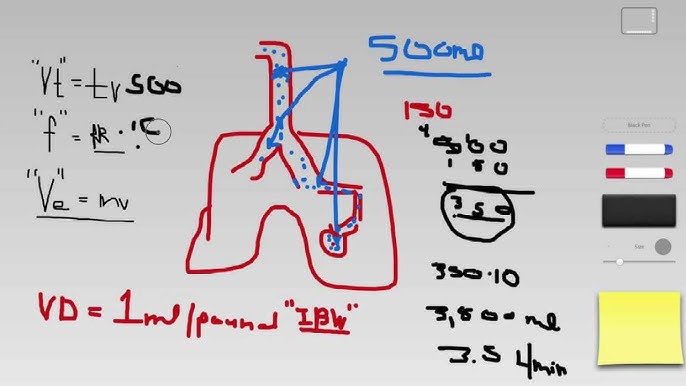
- If you take 12 breaths per minute and each breath brings in 500 milliliters of air, your minute ventilation is 6 liters per minute (12 x 0.5 L).
- During exercise, if your rate rises to 20 breaths per minute and tidal volume increases to 1 liter, your minute ventilation jumps to 20 liters per minute.
Does knowing your minute ventilation change how you think about your breathing during physical activity?
Credit: www.youtube.com
Why Minute Ventilation Matters
Minute ventilation shows how much air moves in and out of the lungs each minute. It is a key measure of how well the lungs work. This value helps doctors understand breathing efficiency and detect problems early. Monitoring minute ventilation supports proper care and treatment decisions.
Knowing minute ventilation can guide oxygen therapy and ventilator settings. It helps avoid breathing difficulties and ensures the body gets enough oxygen. This measure is also crucial during surgery and in critical care.
Understanding Lung Function
Minute ventilation reflects lung health and function. It shows how effectively lungs exchange oxygen and carbon dioxide. Abnormal values may indicate lung diseases or airway blockages.
Assessing Respiratory Health
Doctors use minute ventilation to assess breathing problems. It helps detect conditions like asthma, COPD, or respiratory failure early. Tracking changes over time reveals if treatment works.
Guiding Medical Treatment
Minute ventilation guides oxygen delivery and ventilator support. It helps set correct breathing rates and volumes. This prevents lung injury and improves patient safety.
Monitoring During Exercise And Stress
Minute ventilation rises with exercise or stress. Measuring it tracks fitness levels and respiratory response. It helps trainers and doctors evaluate endurance and recovery.
Key Terms To Know
Understanding how to calculate minute ventilation starts with knowing some key terms. These terms help you grasp the basics of how air moves in and out of your lungs. Getting comfortable with these concepts makes the calculation clearer and more practical for real-life situations.
Tidal Volume
Tidal volume is the amount of air you breathe in or out with each breath. It’s usually measured in milliliters (mL) or liters (L). Think of it as the size of each breath—whether you’re taking a deep breath or a quick, shallow one, tidal volume changes accordingly.
Knowing your tidal volume matters because it directly influences how much air reaches your lungs. If you have a tidal volume of 500 mL, that means every breath moves half a liter of air. Simple, right? But don’t underestimate its importance in calculating total ventilation.
Respiratory Rate
Respiratory rate is how many breaths you take per minute. It’s easy to count—you can simply watch or feel your chest rise and fall. This number varies depending on activity, stress, or health conditions.
For example, if you breathe 12 times a minute, that’s your respiratory rate. Pairing this with tidal volume tells you how much air you move each minute. What happens if your respiratory rate doubles but your tidal volume stays the same? You’ll move twice as much air.
Alveolar Ventilation
Alveolar ventilation refers to the air that actually reaches the alveoli—the tiny air sacs in your lungs where gas exchange happens. Not all the air you breathe in participates in oxygen exchange; some fills dead space, like your nose and windpipe.
This means alveolar ventilation is a bit less than the total air you breathe in. It’s calculated by subtracting dead space volume from tidal volume, then multiplying by respiratory rate. Understanding this helps you see how efficient your breathing truly is.
Simple Formula For Calculation
Minute ventilation is a key measure of breathing efficiency. It shows the total volume of air a person breathes per minute. Understanding this value helps in many health and medical settings.
The calculation is simple and involves just two numbers. Knowing the formula makes it easy to find minute ventilation quickly. This section explains the basic formula and how to use it.
What Is Minute Ventilation?
Minute ventilation is the amount of air moved in and out of the lungs each minute. It helps assess lung function and breathing rate.
Basic Formula For Calculation
The formula is easy to remember. It multiplies the tidal volume by the respiratory rate.
| Minute Ventilation (VE) | = | Tidal Volume (VT) × Respiratory Rate (RR) |
|---|
Understanding The Components
- Tidal Volume (VT):The amount of air inhaled or exhaled in one breath, usually in liters.
- Respiratory Rate (RR):The number of breaths taken per minute.
Example Calculation
For instance, if tidal volume is 0.5 liters and respiratory rate is 12 breaths per minute:
| Minute Ventilation (VE) | = | 0.5 L × 12 breaths/min | = | 6 liters per minute |
This means the person breathes 6 liters of air every minute.
Step-by-step Calculation Guide
Calculating minute ventilation helps understand how much air moves in and out of the lungs each minute. This measure is vital for assessing breathing efficiency. Follow this clear guide to calculate minute ventilation accurately.
Measure Tidal Volume
Tidal volume is the amount of air inhaled or exhaled in one breath. Use a spirometer or other measuring tool to find this value. The result is usually in milliliters (mL) or liters (L). Record this number carefully for the next step.
Count Respiratory Rate
Respiratory rate is the number of breaths taken per minute. Count breaths by observing the chest rise and fall. Use a timer to ensure accuracy. Write down the total breaths counted during one minute.
Multiply Values
Multiply tidal volume by respiratory rate to get minute ventilation. Use the formula:
| Minute Ventilation (L/min) | = | Tidal Volume (L) | × | Respiratory Rate (breaths/min) |
This multiplication gives the total air volume moved per minute. The result helps assess lung function and breathing health.
Common Measurement Tools
Calculating minute ventilation is a crucial aspect of understanding respiratory health, and using the right tools can make the process more accurate and efficient. Several measurement tools are commonly used, each with its unique features and applications. Knowing how to use these tools effectively can enhance your ability to monitor and assess your respiratory function.
Spirometer
A spirometer is a popular tool for measuring minute ventilation. It’s widely used in clinical settings to assess lung function. By breathing into the device, you can measure the volume of air inhaled and exhaled.
Spirometers are not just for healthcare professionals; portable versions are available for personal use. These tools provide instant feedback, helping you track changes in your respiratory health over time. Imagine having a device that gives you real-time data on your lung capacity right at your fingertips.
Respirometer
Respirometers are another tool used to measure respiratory volumes. They are particularly useful for tracking breathing patterns. With this device, you can monitor both the rate and depth of your breaths.
Respirometers offer a simple way to observe how your breathing changes with different activities. Have you ever noticed how your breath quickens during a workout? This tool can quantify those changes, offering insights into your respiratory efficiency.
Manual Counting
Manual counting is a straightforward method to calculate minute ventilation. It’s as simple as counting your breaths over a minute and multiplying by the average tidal volume.
This method requires no special equipment, making it accessible to everyone. While it may not provide the precision of digital tools, it’s an excellent way to get a quick estimate of your ventilation rate. Have you ever tried counting your breaths while relaxing or meditating? It can be quite enlightening.
Factors Affecting Minute Ventilation
Minute ventilation measures the air a person breathes per minute. Various factors influence this crucial respiratory metric. Understanding these factors helps in assessing respiratory health.
Physical Activity
Physical activity greatly impacts minute ventilation. During exercise, the body demands more oxygen. This increases breathing rate and depth. More intense activities elevate these parameters further. Athletes may naturally have higher minute ventilation even at rest.
Health Conditions
Certain health conditions affect minute ventilation. Respiratory diseases like asthma restrict airflow, lowering ventilation. Chronic obstructive pulmonary disease (COPD) also impacts breathing efficiency. In contrast, anxiety can increase ventilation due to rapid breathing.
Environmental Factors
Environmental factors play a role in minute ventilation. High altitudes have thinner air, requiring deeper breaths. Pollution can also affect lung function, altering ventilation. Extreme temperatures may impact respiratory rate and depth.
Tips For Accurate Results
Accurate calculation of minute ventilation depends on careful technique and attention to detail. Small mistakes can lead to wrong results that affect patient care or research. Following simple tips ensures measurements are reliable and consistent over time. Consistency helps track changes and compare data correctly.
Consistent Measurement
Use the same tools and methods each time you measure. Measure at the same time of day if possible. Ensure the patient is calm and in a steady state before recording. Avoid rushing through the process. Repeat measurements help confirm accuracy and detect any unusual results.
Avoiding Common Errors
- Check equipment calibration regularly to avoid faulty readings.
- Make sure the breathing apparatus fits well and does not leak.
- Watch for irregular breathing patterns and note them.
- Do not estimate respiratory rate; count breaths carefully for a full minute.
- Prevent distractions that may cause miscounting or timing errors.
Recording Data Properly
Write down values immediately after measurement to prevent forgetting. Use a clear format with date, time, respiratory rate, tidal volume, and calculated minute ventilation. Store data in an organized log or digital record for easy access. Review entries periodically to spot errors or trends.
Applications In Clinical Settings
Minute ventilation is a key measurement used in many clinical settings. It helps healthcare providers understand how well a patient breathes. This value shows the total amount of air moved in and out of the lungs each minute. Knowing how to calculate and use minute ventilation improves patient care and treatment decisions.
Monitoring Respiratory Health
Minute ventilation helps track lung function in patients with breathing problems. It shows if the patient is breathing too fast or too slow. Doctors use this data to detect early signs of respiratory distress. It also guides treatment for conditions like asthma, COPD, and pneumonia. Regular monitoring helps prevent complications and improves recovery.
Adjusting Ventilator Settings
In critical care, minute ventilation guides ventilator adjustments. It ensures the patient receives the right amount of air per minute. Healthcare staff use it to balance oxygen and carbon dioxide levels. Proper settings reduce lung injury risk and improve oxygen delivery. Calculating minute ventilation allows safe, effective mechanical ventilation tailored to each patient’s needs.

Credit: www.youtube.com
Frequently Asked Questions
What Is Minute Ventilation In Respiratory Terms?
Minute ventilation is the total volume of air inhaled or exhaled per minute. It helps assess lung function and breathing efficiency.
How Do You Calculate Minute Ventilation Accurately?
Multiply tidal volume (air per breath) by respiratory rate (breaths per minute). The formula is: Minute Ventilation = Tidal Volume × Respiratory Rate.
Why Is Minute Ventilation Important In Healthcare?
It monitors respiratory status, guides ventilator settings, and detects breathing problems. It’s vital for patient care and treatment adjustments.
What Units Are Used For Minute Ventilation Measurement?
Minute ventilation is measured in liters per minute (L/min). This unit shows the air volume moved through the lungs each minute.
Conclusion
Calculating minute ventilation helps understand breathing better. It shows how much air moves in and out each minute. Knowing this helps doctors check lung health. Use the formula: tidal volume times breaths per minute. Practice with examples to get comfortable.
Keep measurements accurate for the best results. Simple steps lead to clear insights. Breathing is vital—knowing its details matters. Stay curious and keep learning about your body.



