
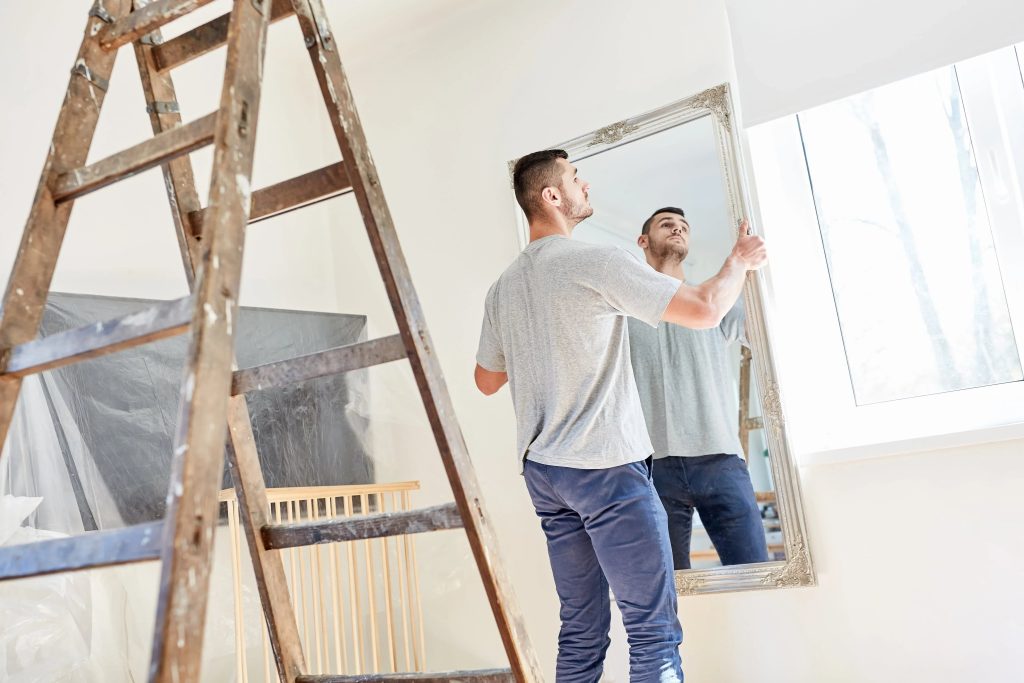
Hanging a heavy mirror on your wall might seem tricky, but you don’t have to be an expert to do it right. If you’re worried about it falling or damaging your wall, you’re not alone.
The good news is, with the right tools and simple steps, you can securely attach your mirror and add a stunning touch to your space. Keep reading, and you’ll learn exactly how to handle this task safely and confidently—no guesswork, no stress.
Your wall deserves it, and so do you.

Credit: hellohomegirl.com
Choosing The Right Mirror
Choosing the right mirror is crucial before you start attaching it to your wall. A mirror that is too heavy or awkward in size can create challenges during installation and may not be safe on certain walls. Understanding the mirror’s weight and frame type will guide you in selecting the correct mounting hardware and location.
Assessing Mirror Weight And Size
Start by checking the exact weight of your mirror. Heavy mirrors often require sturdy anchors like toggle bolts or molly bolts, especially if your walls are drywall. If the mirror weighs more than 20 pounds, you’ll need to secure it into studs or use specialized hardware designed for heavy loads.
Size also matters. A large mirror demands more support points to distribute the weight evenly. Think about the wall space—will your mirror fit comfortably, or will it overwhelm the area? Asking yourself these questions helps avoid costly mistakes and safety hazards.
Selecting Suitable Mirror Frame
The frame affects both the mirror’s weight and how you hang it. Metal frames tend to be heavier but offer strong durability. Wooden frames can vary widely in weight depending on the type of wood used.
Consider the frame’s design too. A thick frame might limit your choice of hooks or brackets. Meanwhile, frameless mirrors often come with adhesive or mounting clips, which might not support heavy mirrors safely. Knowing your frame type helps you pick the right hanging method and keeps your mirror secure over time.

Credit: www.yahoo.com
Gathering Necessary Tools
Gather tools like a drill, screws, wall anchors, a level, and measuring tape before starting. Having everything ready makes the job easier and safer. Choose strong tools to hold the heavy mirror securely on the wall.
Gathering the necessary tools is crucial before hanging a heavy mirror. Proper preparation ensures a smooth and secure installation process. You’ll need specific hardware and safety gear to complete this task. Let’s dive into the essential items required for a successful mirror installation.Essential Hardware And Equipment
For a heavy mirror, you’ll need strong and reliable hardware. Here’s a list of essential items:- Wall anchors: Choose heavy-duty ones for solid support.
- Screws: Ensure they’re long enough to grip the wall securely.
- Drill: A power drill speeds up the process.
- Level: Keeps your mirror straight and even.
- Measuring tape: Accurate measurements prevent mistakes.
- Pencil: For marking positions on the wall.
Safety Gear For Installation
Safety gear protects you during the installation. Here’s what you need:- Safety glasses: Shield your eyes from debris.
- Gloves: Protect your hands from sharp edges.
- Dust mask: Prevent inhalation of dust particles.
- Non-slip shoes: Ensure stability while working.
Preparing The Wall
Preparing the wall is a key step before hanging a heavy mirror. It ensures safety and prevents damage. Knowing the wall’s structure helps you choose the right tools and anchors. This preparation makes the installation steady and long-lasting.
Locating Wall Studs
Wall studs provide the strongest support for heavy items. Use a stud finder to locate them. Move the finder slowly across the wall. It will beep or light up when it finds a stud. Mark the spot lightly with a pencil. Studs are usually 16 or 24 inches apart. Hanging your mirror on a stud reduces the risk of it falling.
Checking Wall Material
Identify the wall type before drilling. Common walls include drywall, plaster, and concrete. Each needs different anchors and screws for heavy mirrors.
- Drywall:Use toggle bolts or molly bolts for strength.
- Plaster:Drill slowly to avoid cracks; anchors must be strong.
- Concrete or brick:Use a masonry bit and anchors made for stone.
Matching the anchor to the wall material ensures the mirror stays secure. This step protects your wall and your mirror from damage.

Credit: www.yahoo.com
Selecting Proper Anchors
Choosing the right anchors is crucial for safely hanging a heavy mirror on your wall. The wrong anchor can lead to damage or even cause the mirror to fall. Understanding the types of anchors and matching them to your wall type and mirror weight will give you peace of mind and a secure hold.
Types Of Wall Anchors
There are several types of wall anchors, each designed for different materials and weight loads. Here’s a quick look at the most common ones:
- Plastic Expansion Anchors:Best for light to medium loads in drywall; they expand as you insert the screw.
- Molly Bolts:These metal anchors expand behind the wall for a stronger grip, ideal for medium loads.
- Toggle Bolts:Perfect for heavy loads; the toggle spreads the load across a larger area behind drywall or hollow walls.
- Concrete or Masonry Anchors:Designed for brick, concrete, or stone walls, these anchors require a drill and provide a very strong hold.
- Self-Drilling Anchors:Easy to install in drywall without pre-drilling, suitable for medium weights.
Choosing Based On Wall Type And Weight
First, identify your wall type—drywall, plaster, concrete, or brick. Drywall anchors won’t work well on concrete or brick, and masonry anchors won’t fit drywall.
Next, consider the mirror’s weight. A small mirror might only need plastic anchors, but anything over 20 pounds requires stronger anchors like toggle bolts or molly bolts. For mirrors above 50 pounds, masonry anchors or heavy-duty toggle bolts are safer bets.
Ask yourself: How confident are you in your wall’s strength? If you’re unsure, test the anchor’s grip before hanging the mirror. It’s better to spend a few extra minutes upfront than to deal with a fallen mirror later.
Marking And Measuring
Marking and measuring are crucial steps to hang a heavy mirror safely. Accurate marks prevent errors and ensure the mirror fits perfectly. Taking time here saves effort later and protects your wall.
Determining Placement Height
Decide how high the mirror should hang. Consider the room’s purpose and who will use the mirror most. A good rule is to place the mirror’s center at eye level, usually between 57 and 65 inches from the floor.
Use a tape measure to find the exact height. Mark the wall lightly with a pencil where the top or center of the mirror will go. This helps visualize the space and avoids guesswork.
Ensuring Level Alignment
Check that your marks are level before drilling. Use a bubble level or a laser level to draw a straight, horizontal line at the desired height. This line guides you to hang the mirror evenly.
Double-check the line by measuring from the floor or ceiling to both ends. Both sides must be the same distance to avoid a crooked mirror. Make small adjustments to the marks as needed.
Drilling And Installing Anchors
Drilling and installing anchors is a key step to hang a heavy mirror securely. Proper drilling ensures the wall holds the weight. Anchors provide extra support, preventing damage or accidents.
Follow careful drilling and anchor installation to keep the mirror stable and safe.
Correct Drilling Techniques
Choose the right drill bit size that matches the anchor diameter. Use a drill with steady pressure to avoid cracking the wall.
Mark the drill spots clearly with a pencil. Drill straight into the wall for a clean hole.
Drill slowly at first, then increase speed once the bit grips the surface. Remove dust from the hole using a brush or vacuum.
Securing Anchors Firmly
Insert the anchor into the hole until it is flush with the wall. Tap gently with a hammer if needed to seat it fully.
Make sure anchors fit snugly and do not wobble. Loose anchors reduce holding strength.
Use anchors rated for the mirror’s weight. Tighten screws carefully to avoid stripping the anchor or wall.
Mounting The Mirror
Mounting a heavy mirror on your wall requires more than just a steady hand. It demands careful attention to the kind of hardware you use and how you distribute the mirror’s weight. Getting these details right keeps your mirror secure and your walls intact.
Using Proper Hanging Hardware
Choosing the right hardware is crucial for safely hanging a heavy mirror. Standard picture hooks won’t cut it here—you need strong anchors like wall studs, toggle bolts, or heavy-duty anchors designed for drywall.
Start by locating the studs in your wall using a stud finder. Attaching the mirror directly to studs provides the best support. If studs aren’t where you want to hang the mirror, use toggle bolts that expand behind the wall, giving you a firm grip.
Also, pick hanging hardware rated for more than your mirror’s weight. This extra margin adds safety and peace of mind. Have you ever had a mirror fall because the hardware wasn’t strong enough? Avoid that by investing in quality pieces.
Ensuring Balanced Support
Balance is key when mounting a heavy mirror. Uneven support can cause stress on the frame and mounting points, increasing the risk of damage or accidents. Use two or more hanging points spaced evenly to distribute the weight.
Measure and mark where each hook or anchor will go, making sure they line up perfectly. Using a level before drilling helps keep your mirror straight and balanced. Imagine how frustrating it is to fix a crooked mirror after mounting—it’s avoidable with proper planning.
For extra stability, consider using a French cleat system. This method locks the mirror securely in place and spreads the weight evenly across the wall. Have you tried this technique? It might be exactly what your heavy mirror needs.
Final Safety Checks
Before you step back and admire your handiwork, the final safety checks are crucial. Attaching a heavy mirror isn’t just about aesthetics; it’s about securing it firmly to protect your space and everyone in it. Taking a few extra minutes to verify stability and prevent accidents can save you from costly repairs and potential injuries.
Testing Stability
Once the mirror is hung, gently apply pressure at different points—top, sides, and bottom. Does it hold steady without any wobbling or shifting? If you notice any movement, it’s a clear sign to tighten the screws or check the anchors.
Try a slight push with your palm, but avoid forcing it. The mirror should feel solid and immovable. If it doesn’t, reconsider the type of wall anchors or hooks you used. You might need stronger hardware designed specifically for heavy loads.
Preventing Accidents
Ask yourself: could someone accidentally bump into the mirror? If your answer is yes, consider adding extra safety measures like adhesive strips or anti-tip kits. These small additions can keep the mirror secure, especially in busy households or homes with pets and children.
Double-check that all mounting points are firmly fastened and that no sharp edges or loose parts are exposed. It’s easy to overlook small details, but these can cause injury or damage over time.
Have you thought about the mirror’s placement relative to doorways and high-traffic areas? Sometimes repositioning the mirror slightly can reduce risks without compromising your room’s style.
Frequently Asked Questions
What Tools Do I Need To Hang A Heavy Mirror?
You need a stud finder, drill, screws, wall anchors, level, measuring tape, and heavy-duty mirror brackets for secure mounting.
How Do I Find The Best Wall Spot For A Heavy Mirror?
Use a stud finder to locate studs for maximum support. Choose a spot with good lighting and minimal moisture.
Can I Hang A Heavy Mirror On Drywall Alone?
No, drywall alone can’t support heavy mirrors. Use wall anchors or mount on studs for safety and stability.
What Weight Limit Can Typical Wall Anchors Hold?
Heavy-duty anchors hold between 50-100 pounds. Always check anchor specifications and use multiple anchors for heavier mirrors.
Conclusion
Attaching a heavy mirror to a wall takes care and the right tools. Choose strong anchors and measure carefully before drilling. Secure the mirror tightly to avoid accidents. Take your time and check each step. This will keep your mirror safe and your wall damage-free.
A well-hung mirror adds style and light to any room. You can do this yourself with patience and the right guide. Safety first, always.



