
Are you curious about how your lungs really work when you breathe? Understanding how to calculate your alveolar ventilation rate can give you powerful insight into your body’s oxygen exchange.
This simple yet important measurement can help you see how well your lungs supply oxygen to your bloodstream. You’ll discover easy steps to calculate your alveolar ventilation rate and why it matters for your health. Keep reading—you’ll soon have a clear, practical way to understand your breathing like never before.
Basics Of Alveolar Ventilation
Understanding the basics of alveolar ventilation is key if you want to grasp how your lungs supply oxygen to your body efficiently. Alveolar ventilation refers to the amount of air reaching the alveoli, the tiny air sacs in your lungs where gas exchange occurs. This process directly impacts how well oxygen enters your bloodstream and how carbon dioxide is removed.
What Is Alveolar Ventilation
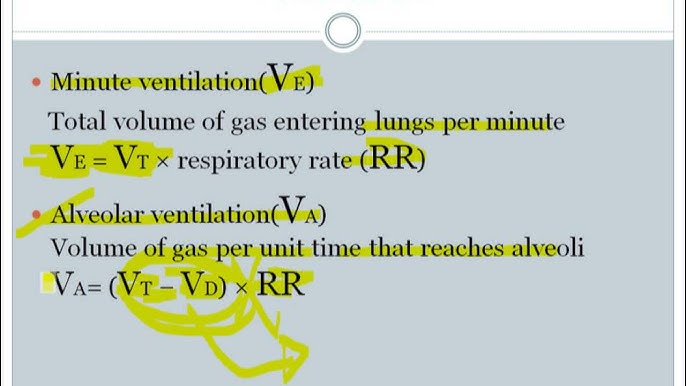
Alveolar ventilation is the volume of fresh air that reaches the alveoli each minute. Not all the air you breathe in reaches these air sacs; some stays in the dead space, like your nose, throat, and airways, where no gas exchange happens.
To calculate alveolar ventilation, you subtract the dead space volume from the tidal volume (the air you breathe in per breath) and multiply by your breathing rate. This gives you a clearer picture of how much air is actively participating in oxygen exchange.
Importance In Respiratory Health
Why should you care about alveolar ventilation? Because it directly affects your body’s oxygen supply and carbon dioxide removal, which are essential for all cellular functions.
If alveolar ventilation decreases, you might feel short of breath or fatigued, even if your overall breathing rate seems normal. This can happen in conditions like COPD or asthma, where the airflow to alveoli is limited.
Monitoring alveolar ventilation can help you understand your lung health better and adjust breathing techniques or treatments to improve oxygen intake. Have you ever noticed feeling out of breath despite taking deep breaths? That might be your alveolar ventilation at work.

Credit: www.osmosis.org
Key Components For Calculation
Calculating alveolar ventilation rate requires understanding several key components. Each part plays a vital role in measuring how much fresh air reaches the lungs. Knowing these elements helps in accurate and meaningful calculations.
Understanding the key terms makes the process easier. Let’s explore each component in detail.
Tidal Volume Explained
Tidal volume is the amount of air breathed in or out during normal breathing. It usually measures around 500 milliliters in adults. This volume includes both the air that reaches the lungs and the air that stays in the airways.
Tidal volume changes with activity level. It grows larger during exercise and decreases during rest. This variation affects how much air participates in gas exchange.
Dead Space Volume
Dead space volume is the air volume that does not take part in gas exchange. It stays in the airways, such as the nose, trachea, and bronchi. This air does not reach the alveoli, where oxygen and carbon dioxide exchange occurs.
Dead space volume remains fairly constant in healthy adults, around 150 milliliters. It reduces the effective air volume reaching the lungs and must be subtracted from tidal volume in calculations.
Respiratory Rate
Respiratory rate is the number of breaths taken per minute. It varies with age, activity, and health status. Normal adults breathe about 12 to 20 times per minute.
This rate directly affects alveolar ventilation rate. A faster breathing rate increases ventilation, while a slower rate decreases it. It is a crucial factor in the overall calculation.
Step-by-step Calculation Process
Begin by measuring the tidal volume and respiratory rate. Subtract dead space volume from tidal volume, then multiply by respiratory rate to get alveolar ventilation rate. This clear calculation shows how much air reaches the lungs for gas exchange.
Calculating the alveolar ventilation rate is essential for understanding how effectively your lungs are exchanging gases. This process involves several steps, ensuring each component of your respiratory system is functioning optimally. By following a detailed step-by-step calculation process, you can gain insight into your respiratory health and make informed decisions about your well-being.Measuring Tidal Volume
Begin by measuring your tidal volume, which is the amount of air you breathe in and out during a normal breath. This can be done using a spirometer. A typical adult’s tidal volume is around 500 milliliters. Knowing your tidal volume is crucial, as it forms the base of your calculation for alveolar ventilation.Determining Dead Space
Next, determine your physiological dead space, which is the portion of each breath that does not participate in gas exchange. This includes the air in your mouth, trachea, and bronchi. An average dead space is about 150 milliliters for an adult. Understanding your dead space helps in calculating the air effectively reaching the alveoli.Calculating Effective Ventilation
Subtract the dead space from the tidal volume to find your effective ventilation. This value represents the volume of air that actually reaches the alveoli and participates in gas exchange. For example, with a tidal volume of 500 milliliters and a dead space of 150 milliliters, your effective ventilation would be 350 milliliters.Applying The Formula
Finally, calculate the alveolar ventilation rate using the formula: [ text{Alveolar Ventilation Rate} = (text{Tidal Volume} – text{Dead Space}) times text{Respiratory Rate} ] Assuming a respiratory rate of 12 breaths per minute, and using our previous example: [ text{Alveolar Ventilation Rate} = (500 , text{ml} – 150 , text{ml}) times 12 , text{breaths/min} = 4200 , text{ml/min} ] This value reflects the volume of air effectively ventilating the alveoli per minute. Does this number align with your expectations or medical recommendations? Understanding your alveolar ventilation rate can provide crucial insights into your respiratory efficiency and overall health.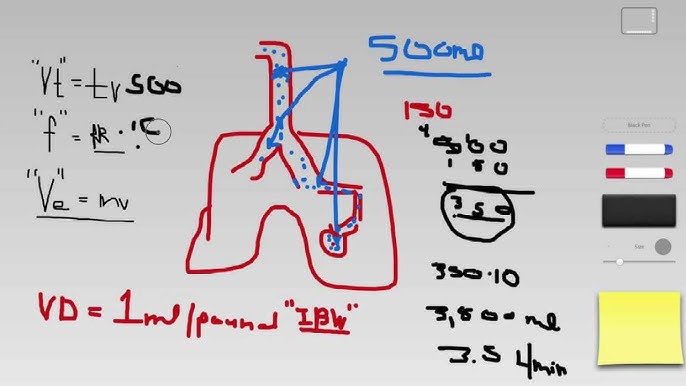
Credit: www.youtube.com
Common Mistakes To Avoid
Calculating alveolar ventilation rate might seem straightforward, but many stumble over common pitfalls that skew results. Avoiding these errors can make your calculations more precise and meaningful. Here’s what you should watch out for to get it right the first time.
Misestimating Dead Space
Dead space refers to the portion of each breath that does not participate in gas exchange. Many beginners assume a fixed dead space volume, but it actually varies based on body size and health conditions.
Using a generic value like 150 mL for everyone can lead to significant errors. Think about your own experience: have you ever measured or adjusted dead space based on the person’s anatomy? Tailoring this value ensures your alveolar ventilation rate reflects true physiological conditions.
Ignoring Respiratory Rate Variations
Respiratory rate isn’t a static number. It fluctuates with activity, stress, and illness. Relying on a single respiratory rate measurement can misrepresent alveolar ventilation.
Consider taking multiple readings over time or during different states (rest, exercise). Doing so helps you capture a more accurate average, improving the reliability of your calculations. Have you noticed your breathing rate change during daily activities? That variation matters more than you might think.
Practical Applications
Understanding how to calculate alveolar ventilation rate isn’t just a scientific exercise—it has real-world uses that can impact health and performance. Knowing this rate helps you see how effectively your lungs are exchanging gases, which can guide decisions in both medical and fitness contexts.
Clinical Settings
In hospitals, calculating alveolar ventilation rate helps doctors assess lung function accurately. It allows them to detect problems like hypoventilation or ventilation-perfusion mismatch early, which is crucial for patients with respiratory diseases.
For patients on mechanical ventilation, tracking this rate ensures the machine delivers the right amount of air without causing lung injury. Have you ever wondered how doctors decide the right settings on a ventilator? This calculation plays a key role.
Additionally, it aids in managing conditions like chronic obstructive pulmonary disease (COPD) and asthma by monitoring ventilation efficiency over time. This helps tailor treatments and prevent complications.
Fitness And Health Monitoring
If you’re serious about your fitness, knowing your alveolar ventilation rate can improve your training efficiency. It reveals how well your lungs supply oxygen during intense exercise, helping you adjust your workout intensity.
Athletes use this information to avoid overtraining and optimize recovery. For instance, monitoring ventilation rate during cardio sessions can show when your breathing is becoming inefficient, signaling the need to slow down or rest.
You might not realize how breathing techniques affect your performance until you measure this rate. Simple changes, like pacing your breath or using diaphragmatic breathing, can increase alveolar ventilation and boost endurance.

Credit: www.youtube.com
Tools And Resources
Calculating alveolar ventilation rate requires accurate data and proper tools. Using the right resources simplifies the process and reduces errors. These tools help you understand the breathing process better. They offer quick calculations and reliable references for learning and practice.
Calculation Apps
Several apps help calculate alveolar ventilation rate easily. They require input like tidal volume and respiratory rate. The apps perform calculations instantly and show results clearly. Some apps also explain the formula and factors involved. This makes them great for students and healthcare workers alike.
- Input tidal volume (ml) and respiratory rate (breaths/min)
- Automatically compute alveolar ventilation
- Save results for future reference
- Provide explanations and tips
Reference Charts
Reference charts offer quick access to standard values and formulas. They list tidal volume, dead space, and respiratory rates for different age groups. Charts help verify calculations and understand normal ranges. Printed or digital versions are available for easy use. Keep charts handy for fast consultation during studies or clinical work.
| Parameter | Typical Value | Notes |
|---|---|---|
| Tidal Volume | 500 ml | Average adult at rest |
| Dead Space Volume | 150 ml | Volume not used in gas exchange |
| Respiratory Rate | 12-20 breaths/min | Normal range for adults |
Frequently Asked Questions
What Is Alveolar Ventilation Rate?
Alveolar ventilation rate measures the air reaching the alveoli for gas exchange each minute. It excludes dead space air, reflecting effective lung ventilation.
How Do You Calculate Alveolar Ventilation?
Subtract dead space volume from tidal volume, then multiply by respiratory rate. Use: (Tidal Volume – Dead Space) × Respiratory Rate.
Why Is Alveolar Ventilation Important?
It indicates how well oxygen reaches the bloodstream and carbon dioxide is removed. Proper alveolar ventilation is vital for effective respiration.
What Affects Alveolar Ventilation Rate?
Factors like tidal volume, respiratory rate, and dead space volume impact alveolar ventilation. Changes in these alter oxygen delivery and carbon dioxide removal.
Conclusion
Calculating alveolar ventilation rate helps understand how well lungs work. It shows how much fresh air reaches the lungs for gas exchange. Use the formula carefully and check your values. Practicing this calculation improves your grasp of breathing mechanics. Keep it simple and take your time with each step.
This skill supports learning in health and science fields. Remember, clear numbers make the process easier to follow. Stay patient and review the basics often. Accurate calculations lead to better understanding and results.



