
Choosing the right chandelier size can transform your room from ordinary to stunning. But how do you know what size fits perfectly?
If your chandelier is too big, it can overwhelm the space. Too small, and it might go unnoticed. You want a fixture that balances your room’s size and style while adding the perfect touch of elegance. Keep reading, and you’ll discover simple, practical tips that make picking the ideal chandelier easy and stress-free.
Your home deserves that perfect glow—let’s find it together.

Credit: domelure.com
Measure Your Room
Choosing the right chandelier size begins with accurately measuring your room. This step is crucial because the chandelier should complement the space without overwhelming it or looking too small. Taking precise measurements helps you visualize how the fixture will fit and feel once installed.
Calculate Square Footage
Start by measuring the length and width of your room in feet. Multiply these two numbers to get the square footage.
- If your room is 12 feet by 14 feet, the square footage is 168.
- This number guides you on the chandelier diameter in inches. A common rule is to add the room’s length and width (in feet) and use that sum (in inches) as the ideal chandelier diameter.
For example, a 12×14 room means 12 + 14 = 26 inches for the chandelier width. Does your room feel spacious or tight? This calculation helps you avoid choosing a chandelier that feels too large or too small.
Consider Ceiling Height
Ceiling height plays a major role in chandelier size and placement. If your ceiling is low (around 8 feet), opt for a smaller chandelier or one that sits flush or semi-flush.
For higher ceilings (9 feet or more), you can select larger chandeliers or those with longer drops. Remember to keep at least 7 feet of clearance between the floor and the bottom of the chandelier to avoid any head bumps.
Think about the room’s function: Is it a dining room where you want the chandelier closer to the table? Or a foyer where the fixture can hang lower to make a statement? These details influence the right chandelier height and size.
Determine Chandelier Diameter
Determining the right chandelier diameter is crucial for balancing your room’s style and function. A chandelier that’s too big can overwhelm the space, while one that’s too small might get lost. Getting this measurement right ensures your lighting becomes a focal point without disrupting the room’s flow.
Use Room Dimensions Formula
To find the ideal chandelier diameter, add your room’s length and width in feet.
- If your room is 12 feet by 14 feet, add 12 + 14 = 26.
- Convert this number to inches: 26 inches is your chandelier diameter.
This simple formula helps you avoid guesswork. It also gives you a size that fits well within the room’s proportions. Have you ever seen a chandelier that looked oddly small or too large? This method can help prevent that.
Account For Furniture Placement
Think about where your main furniture pieces are placed, especially in dining or living rooms.
For example, if you’re hanging a chandelier over a dining table, the fixture’s width should be about half to two-thirds the width of the table.
- A 36-inch wide table works best with an 18 to 24-inch diameter chandelier.
- Ensure the chandelier doesn’t hang too low or block sightlines across the room.
Does your furniture arrangement create a natural center for the chandelier? Aligning your fixture with key pieces enhances the overall harmony and usability of the space.
Choose The Right Drop Length
Choosing the right drop length for your chandelier is key to both style and function. The drop length is the distance from the ceiling to the bottom of the chandelier. It affects how the light fills the room and how comfortable the space feels.
Adjust For Ceiling Height
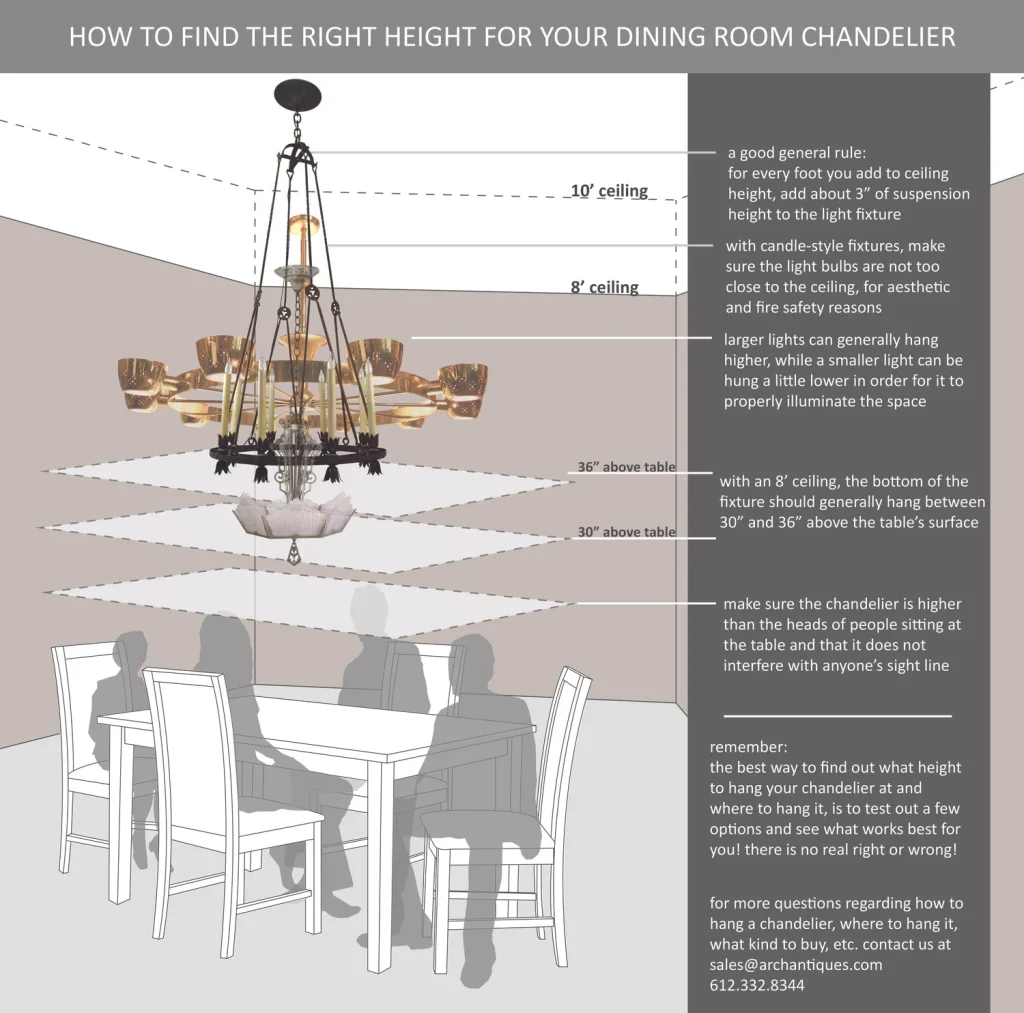
Ceiling height plays a major role in deciding your chandelier’s drop length. For standard 8-foot ceilings, keep the chandelier about 7 feet above the floor. This prevents the fixture from feeling too low or blocking views.
If your ceilings are higher, add about 3 inches of drop length for each extra foot of ceiling height. For example, a 10-foot ceiling would allow a chandelier drop of roughly 3 feet from the ceiling. This adjustment keeps the light source at eye level without overcrowding the room.
Have you ever walked into a room where the chandelier was too low and felt like you had to duck? Proper drop length avoids that problem and lets your space breathe.
Placement Over Tables
When hanging a chandelier over a dining table, the drop length needs to be just right. The bottom of the chandelier should hang between 30 and 36 inches above the table surface. This height provides enough light for meals and conversations without blocking sightlines.
If your table is longer than 6 feet, consider multiple smaller chandeliers spaced evenly instead of one large fixture. This approach helps balance the light and adds visual interest.
Think about how you use your table. Do you host dinners often? Or is it mainly for casual meals? Adjusting the drop length based on your lifestyle makes the chandelier both beautiful and practical.
Credit: www.lightsonline.com
Match Style With Room Design
Choosing the right chandelier size goes beyond measurements. It’s about matching the fixture’s style with your room’s design to create a harmonious look. Your chandelier should feel like a natural part of the space, not an afterthought or a distraction.
Coordinate With Existing Decor
Look closely at the furniture, colors, and textures in your room. A sleek, modern chandelier might clash with a rustic or vintage interior. Instead, pick a chandelier that complements your existing decor elements.
If your room features clean lines and minimalism, consider a simple, geometric chandelier. For rooms with rich textures or antique furniture, a chandelier with intricate details or classic materials like crystal or wrought iron fits better.
Think about the mood you want to create. Would a bold statement piece or a subtle, elegant fixture suit your space? Matching your chandelier style with your room’s vibe ensures a cohesive design.
Balance Scale And Proportion
Size matters, but style influences how your chandelier fits the room’s scale. A large chandelier in a small room can overwhelm the space, while a tiny fixture in a large room may look lost.
Pay attention to ceiling height and room dimensions when choosing style and size. For tall ceilings, taller or tiered chandeliers add drama without crowding the space. Lower ceilings call for flush or semi-flush mounts with simpler designs.
Ask yourself: Does your chandelier feel balanced with the furniture below it? For example, a grand dining table pairs well with a chandelier that matches its length and style. This balance creates visual harmony and draws the eye naturally.
Consider Lighting Needs
Choosing the right chandelier size depends greatly on your lighting needs. The chandelier should provide enough light to brighten the space comfortably. It should also match the room’s function and style. Understanding these lighting needs helps pick the perfect fixture.
Assess Brightness Levels
Consider how much light the room requires. Different rooms need different brightness levels. Dining rooms and living areas often need warm, moderate light. Kitchens and workspaces need brighter, clear light. Measure the room size to estimate the needed brightness. A larger room requires more light to fill the space.
Use lumens to measure brightness. More lumens mean brighter light. For example:
- Small rooms: 1,000 to 2,000 lumens
- Medium rooms: 2,000 to 4,000 lumens
- Large rooms: Over 4,000 lumens
This helps balance the chandelier size and its light output.
Select Bulb Types
Choose bulb types that fit your lighting style and needs. LED bulbs save energy and last longer. They offer bright, clear light. Incandescent bulbs create warm light but use more energy. CFL bulbs balance energy efficiency and brightness. Consider the bulb’s shape and size to fit your chandelier. Dimmable bulbs give control over light intensity. This adds flexibility for different moods and times of day.

Credit: showsun-lighting.com
Check Installation Requirements
Measure the room’s height and width before choosing a chandelier size. Ensure there is enough space for installation and safe clearance. Consider the ceiling type and electrical setup for proper fitting.
When selecting a chandelier, consider installation requirements. Proper installation ensures safety and functionality. This involves checking the electrical capacity and reviewing mounting options. These steps will guide you to a suitable chandelier choice.Evaluate Electrical Capacity
Ensure your space can handle the chandelier’s electrical load. Check your circuit’s capacity in amps. Compare it with the chandelier’s requirements. This prevents overloads and electrical issues. Always consult with an electrician if unsure. Safety first.Review Mounting Options
Consider where you will mount the chandelier. Check the ceiling’s strength. Ensure it can support the chandelier’s weight. Some chandeliers require special brackets. Know what your ceiling can accommodate. Proper mounting prevents accidents and ensures stability.Budget And Quality
Choosing the right chandelier size means balancing budget and quality. Both impact how the light fixture looks and lasts. A good plan helps you buy a chandelier that fits your space and your wallet.
Set A Realistic Budget
Decide how much money you can spend before shopping. This stops overspending and narrows your choices. Remember, a higher price often means better design and durability. But good chandeliers can fit smaller budgets too. Think about what matters most to you:
- Style and appearance
- Size and brightness
- Material quality
- Brand reputation
Setting a clear budget helps focus on chandeliers that match your needs and price range.
Choose Durable Materials
Materials affect how long your chandelier lasts. Strong materials stay beautiful even with daily use. Metals like brass, bronze, and stainless steel resist rust and damage. Glass and crystal add sparkle but check for sturdy construction. Avoid cheap plastics that break easily. Durable materials may cost more at first but save money over time. They keep your chandelier safe and attractive for years.
Frequently Asked Questions
How Do I Measure Room Size For Chandelier?
Measure your room’s length and width in feet. Add these two numbers to get a recommended chandelier diameter in inches. This ensures the chandelier fits proportionally in your space without overwhelming or looking too small.
What Chandelier Size Suits A Dining Table?
Choose a chandelier about half to two-thirds the width of your dining table. This balance highlights the table and provides sufficient light without blocking views or crowding the space.
How High Should A Chandelier Hang?
Hang chandeliers 30 to 36 inches above the table surface. For rooms without tables, keep the chandelier 7 feet above the floor to allow comfortable clearance and proper lighting.
Can Chandelier Size Affect Room Lighting?
Yes, a larger chandelier provides more light and suits bigger rooms. Smaller chandeliers work well in compact spaces, preventing excessive brightness and maintaining aesthetic balance.
Conclusion
Choosing the right chandelier size makes a big difference in any room. It balances the space and adds style. Measure your room carefully before buying. Think about ceiling height and room shape too. A well-sized chandelier feels just right, never too small or too large.
It brightens the space and fits your needs. Trust your eyes and take your time. This helps you pick a light that looks great and works well. Enjoy your beautiful new chandelier every day!



