
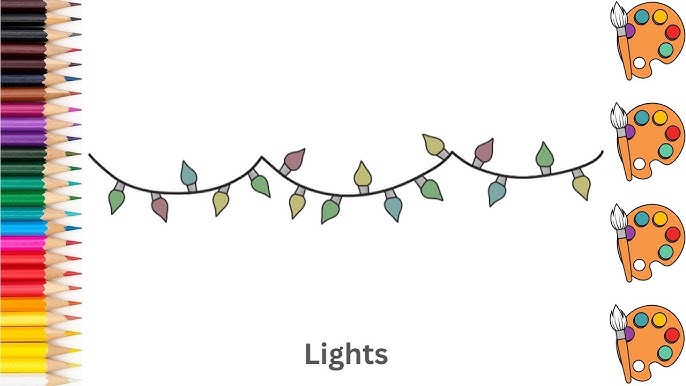
Are you ready to add a splash of festive cheer to your drawings? Learning how to draw a string of Christmas lights is easier than you think—and it can instantly brighten up your artwork.
Whether you want to create a cozy holiday card or decorate your sketchbook, this simple guide will show you step-by-step how to bring those glowing bulbs to life. Keep reading, and you’ll discover tips that make your lights look vibrant and magical, even if you’re just starting out.
Let’s make your holiday art shine!

Credit: www.freepik.com
Materials Needed
Gathering the right materials sets the foundation for drawing a string of Christmas lights that truly shine. Having everything ready before you start makes the process smoother and more enjoyable. Plus, knowing your tools well can spark creativity and help you add unique touches to your artwork.
Drawing Tools
- Pencils:Use a range of pencils, like HB for sketching and 2B or 4B for shading and darker lines.
- Eraser:A soft eraser helps clean up mistakes without damaging your paper.
- Fine-tip pens or markers:These are perfect for outlining the lights and adding sharp details.
Paper Choices
Choose a paper that matches your preferred medium. Smooth drawing paper works well with pencils and pens, while textured paper can add character if you plan to color your drawing later.
Consider the size of your paper too. A larger sheet gives you room to add more detail and play with composition.
Coloring Supplies
- Colored pencils:They offer control and allow you to blend colors smoothly on your Christmas lights.
- Markers:Great for vibrant, bold colors but be mindful of bleeding through the paper.
- Watercolors (optional):If you enjoy painting, watercolors can create beautiful light effects and subtle color changes.
Additional Accessories
- Ruler:Helps you draw straight lines for the wire string.
- Sharpener:Keep your pencils sharp for precise details.
- Blending tools:Use blending stumps or cotton swabs to soften pencil shading.
Have you thought about how the materials you choose can affect the final look of your string of lights? Experimenting with different tools can reveal surprising results and make your drawing uniquely yours.
Sketching The Basic Shape
Start by sketching the basic shape of your Christmas lights. This stage sets the foundation for your drawing. Focus on simple lines and shapes to guide your work. Keep the lines light so you can adjust them later. Aim for a natural, flowing shape that mimics how real lights hang.
Drawing The Wire
Begin with a curved line to represent the wire. Make it wavy or slightly curved to show it hanging naturally. Avoid straight lines; they look stiff and unrealistic. Keep the wire’s thickness thin but visible. This line acts as the backbone of your drawing.
Adding Bulb Outlines
Sketch small oval or round shapes along the wire for bulbs. Space them evenly but allow slight variation for a casual look. Each bulb should connect lightly to the wire line. Keep the shapes simple and clear. These outlines will help you add color and detail later.
Detailing The Bulbs
Detailing the bulbs on a string of Christmas lights can transform a simple drawing into a vibrant display of holiday cheer. By focusing on the details, you can bring life to your artwork, making the bulbs appear as though they are twinkling right off the page. Let’s dive into how you can shape different bulb styles and add realistic highlights and shadows.
Shaping Different Bulb Styles
Christmas bulbs come in a variety of shapes, each adding a unique touch to your drawing. Consider the classic round bulbs, which are a staple in many holiday decorations. To draw these, start with small circles and ensure they are evenly spaced along the string.
If you’re feeling adventurous, try drawing teardrop-shaped bulbs. They add a touch of elegance and are perfect for creating a more sophisticated look. Remember, the shape of your bulbs can set the tone of your entire piece.
Adding Highlights And Shadows
Highlights and shadows are key to making your bulbs look realistic. Think about how light hits the surface of each bulb. A small highlight can create the illusion of a shiny surface.
Don’t forget about shadows. They give depth and make your bulbs pop. Experiment with different shadow placements to see how it changes the look of your drawing.
Have you ever noticed how a small tweak in shadow can change the mood of an entire drawing? Try it out and watch your bulbs come to life.

Credit: www.dreamstime.com
Drawing The Socket And Wire Details
Drawing the socket and wire details brings your string of Christmas lights to life. These small elements add realism and depth, making your artwork stand out. Paying attention to these details can transform a simple sketch into a festive masterpiece.
Creating Socket Shapes
Start by drawing the basic shape of the socket where the bulb attaches. Think of a small cylinder or a rounded rectangle that fits snugly around the base of the bulb. Keep the shapes simple but consistent across each light to maintain uniformity.
Adding small notches or grooves can make the socket look more authentic. These details mimic the real plastic or metal parts you see on actual Christmas lights. Try varying the size slightly to give each socket a unique touch without losing the overall flow.
Adding Wire Texture
The wire is not just a line—it carries movement and connects the entire string. Instead of a flat line, add slight curves and kinks to suggest flexibility. This makes the wire look more natural and less like a rigid drawing.
Texture can be introduced by drawing thin parallel lines along the wire to suggest its roundness and material. You might also add tiny shadows or highlights to indicate light reflection. Think about how the wire twists around the sockets and let your lines follow that path.
Have you noticed how even small details like these can change the feel of your drawing? Try focusing on these elements next time you sketch and see how much more alive your lights become.
Coloring The Lights
Coloring the lights is where your drawing truly comes to life. The right colors can make your string of Christmas lights pop and create a festive mood. It’s not just about filling in spaces with color; it’s about making each bulb look vibrant and glowing.
Choosing Bright Colors
Pick colors that catch the eye immediately. Think of classic Christmas colors like red, green, blue, and yellow. These colors stand out and give your lights a joyful feeling.
Try mixing in some unexpected shades like bright purple or neon orange to make your design unique. If you want a softer look, pastel versions of these colors work well. Ask yourself: What mood do you want your lights to set? Bright and bold or calm and cozy?
Blending And Shading
Adding shading gives each bulb a rounded, three-dimensional look. Use a darker tone of the same color at the edges to create depth. This simple trick makes the lights look more realistic and less flat.
Blending colors smoothly between light and dark areas mimics how real light reflects. You can use colored pencils or digital tools to gently blend hues. Don’t forget to leave a small spot white or very light to show the light’s shine. Have you noticed how a tiny highlight can change the entire feel of a bulb?
Final Touches
Final touches make your drawing stand out and look polished. This stage brings life to your string of Christmas lights. Small details create a vibrant and festive effect. Focus on enhancing the glow and cleaning the lines for a neat appearance.
Adding Glow Effects
Glow effects make each bulb appear lit and radiant. Use a soft brush or blur tool around each light bulb. Choose colors that match the bulb’s shade, like warm yellow or cool blue.
Apply glow in layers to control brightness. Start with a subtle glow, then add stronger light in the center. This technique adds depth and realism to the lights.
Cleaning Up Lines
Clear lines improve the drawing’s clarity and style. Erase any stray marks or overlapping lines gently. Use a fine-tip pen or brush to redraw any uneven edges.
Keep the wire smooth and consistent in thickness. This simple step helps your drawing look professional and tidy. Neat lines guide the viewer’s eyes along the string of lights.

Credit: www.freepik.com
Frequently Asked Questions
How Do I Start Drawing Christmas Lights?
Begin by sketching a simple string line. Add small bulb shapes evenly along the string. Use light pencil strokes for easy corrections.
What Colors Work Best For Christmas Light Drawings?
Use bright, festive colors like red, green, blue, yellow, and white. These colors make your lights look vibrant and realistic.
How Can I Make Christmas Lights Look Realistic?
Add small highlights and shadows on each bulb. Vary bulb sizes slightly and use glowing effects for a lifelike appearance.
What Materials Are Ideal For Drawing Christmas Lights?
Use pencils for initial sketches and colored markers or pencils for vibrant colors. White gel pens help add glowing highlights.
Conclusion
Drawing a string of Christmas lights can be fun and simple. Follow the steps carefully and take your time. Use bright colors to make your lights look real. Practice a few times to feel more confident. Soon, you will enjoy creating festive drawings for the holidays.
Keep your drawing tools ready and start again whenever you like. Creativity grows with each sketch you make. Enjoy the process and share your artwork with friends and family. Let your holiday spirit shine through your colorful lights.



