
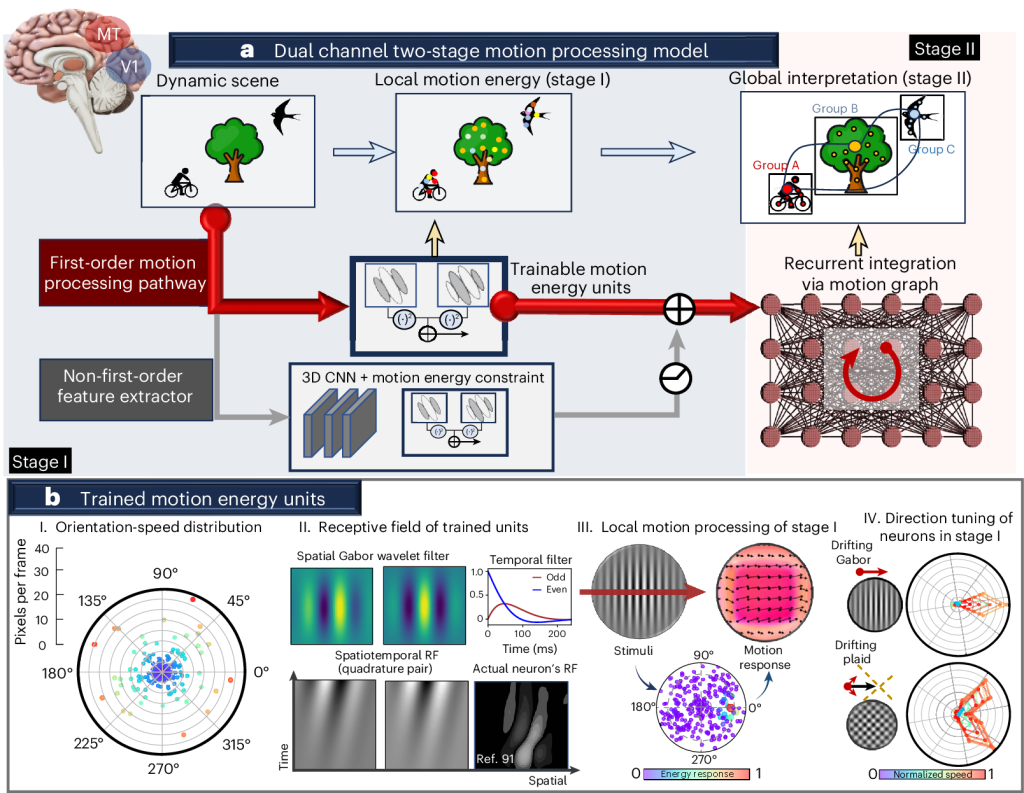
Have you ever wondered how your eyes help you notice movement around you? Whether you’re catching a ball or crossing the street, your vision plays a huge role in sensing motion.
But did you know that the type of vision you use can change how well you detect movement? Understanding this can sharpen your awareness and even improve how you react in everyday situations. Keep reading to discover how different kinds of vision work when it comes to sensing motion—and why it matters for you.
Credit: www.nature.com
Types Of Vision Systems
Understanding the types of vision systems is key to grasping how motion sensing works. Each system offers unique advantages and challenges that affect how motion is detected and interpreted. Knowing these differences can help you choose the right setup for your needs or improve your existing system’s performance.
Monocular Vision
Monocular vision relies on a single camera or eye to perceive the environment. It’s simpler and often cheaper but has limitations in depth perception. Without two viewpoints, estimating the distance of moving objects becomes tricky.
Despite this, monocular systems use clever techniques like motion parallax and changes in object size to sense movement effectively. Have you noticed how your phone’s camera can track movement using just one lens? That’s monocular vision in action, proving it can be surprisingly capable.
Binocular Vision
Binocular vision uses two cameras or eyes spaced apart to create a 3D view of the scene. This setup mimics human vision and significantly improves depth perception and motion detection accuracy. It allows you to judge how fast and how far an object is moving with much greater precision.
Robots and drones often use binocular vision to navigate complex environments. If you want sharper motion sensing for tasks like obstacle avoidance or tracking, binocular vision could be worth the extra hardware complexity.
Omnidirectional Vision
Omnidirectional vision systems capture a 360-degree view around the sensor. They often use specialized lenses or multiple cameras to cover all angles simultaneously. This wide field of view is perfect for detecting motion anywhere in your surroundings without needing to move the sensor itself.
Think of security cameras that monitor an entire room or robots that need full situational awareness. Omnidirectional vision helps you catch motion in blind spots and react quickly to changes happening all around you.
Motion Sensing Techniques
Understanding how motion is sensed through vision involves exploring various techniques that interpret changes in the visual scene. These methods analyze how objects move, change position, or shift relative to the observer. The type of vision system you use can significantly impact which motion sensing technique works best for your needs.
Optical Flow Analysis
Optical flow analysis measures the pattern of apparent motion of objects, surfaces, or edges in a visual scene caused by the relative movement between an observer and the scene. It captures how pixels shift from one frame to the next, giving a detailed map of motion across the entire image.
This technique helps you detect movement even when objects are small or partially obscured. Imagine tracking a bird flying against a complex background—optical flow can reveal its trajectory by analyzing subtle changes in pixel positions.
Feature Tracking
Feature tracking focuses on identifying and following specific points or features in consecutive frames. Instead of analyzing the entire image, it tracks distinct elements like corners, edges, or textures over time.
This approach is useful when you want to monitor a few key objects precisely, such as tracking a soccer ball during a game. You can save computational power by focusing only on important features, making it faster and often more reliable in cluttered scenes.
Depth Perception Methods
Depth perception methods add a third dimension to motion sensing by estimating the distance of objects from the observer. Techniques like stereo vision use two cameras to mimic human eyes, allowing you to calculate how far moving objects are.
This is especially helpful in robotics or autonomous driving, where understanding how close or far objects move is critical. When you combine depth information with motion data, you get a richer picture of the environment and can make smarter decisions about movement and safety.
Impact Of Vision Type On Motion Detection
The type of vision plays a crucial role in motion detection. Different vision types offer varying levels of effectiveness in sensing movement. This impacts many aspects of how motion is perceived and processed. Understanding these differences can improve motion sensing technology and applications.
Accuracy And Precision
Different vision types provide varying accuracy and precision in motion detection. Some can detect fine movements with high precision. Others might only capture larger, more obvious motions. This difference affects how well motion can be tracked and recorded.
Response Time
Vision type affects how quickly motion is detected. Some types offer faster response times, capturing quick movements instantly. Others may lag, causing delays in motion detection. Faster response times are crucial in dynamic environments.
Environmental Adaptability
Vision types vary in their adaptability to different environments. Some perform well in low light conditions, while others excel in bright environments. Adaptability ensures reliable motion detection across various settings. This makes vision technology versatile in real-world applications.
Applications In Robotics And Ai
Vision plays a key role in sensing motion for robotics and AI. Different types of vision help machines understand their surroundings. This ability improves how robots and AI systems react to changes and move safely. Many applications rely on accurate motion sensing to work well. These range from simple tasks to complex operations in various fields.
Autonomous Navigation
Robots use vision to detect moving objects and obstacles. This helps them plan safe paths without collisions. Cameras and sensors capture real-time data about the environment. AI processes this information to guide robots smoothly. Vision types like stereo and infrared improve depth perception. This allows robots to navigate even in low light or crowded spaces.
Surveillance Systems
Motion sensing vision enhances security and monitoring systems. Cameras detect unusual movements and alert the system instantly. AI analyzes patterns to reduce false alarms. Different vision types support day and night surveillance. Thermal vision helps spot motion in complete darkness. These systems protect homes, businesses, and public places effectively.
Gesture Recognition
AI uses vision to read hand and body movements. This enables touchless control of devices and machines. Cameras track gestures in real-time with high accuracy. Machine learning interprets these movements into commands. Vision types like depth cameras help distinguish gestures from background motion. Gesture recognition improves user interaction in gaming and smart homes.
Challenges And Limitations
Detecting motion through vision systems faces several challenges. These limitations affect accuracy and reliability. Understanding these obstacles helps improve sensor design and application.
Lighting Conditions
Lighting greatly impacts motion sensing performance. Low light reduces image clarity. Bright light causes glare and shadows. Changing light conditions confuse vision sensors. Sensors often struggle to adapt quickly.
Occlusions And Noise
Objects blocking the view create occlusions. Occlusions hide moving parts and distort data. Background noise, like moving leaves, adds errors. Noise makes it harder to detect true motion. Removing noise requires complex filtering techniques.
Computational Requirements
Processing vision data demands high computing power. Real-time motion detection needs fast calculations. Complex algorithms consume more memory and energy. Limited hardware slows down response times. Efficient coding and hardware help overcome this.

Credit: www.sciencedirect.com
Future Trends In Vision-based Motion Sensing
Future trends in vision-based motion sensing show great promise. New technologies aim to improve accuracy and speed. These trends focus on combining vision with other tools and smarter algorithms. Real-time data handling also gets a big boost. These developments will enhance motion detection across many fields.
Integration With Other Sensors
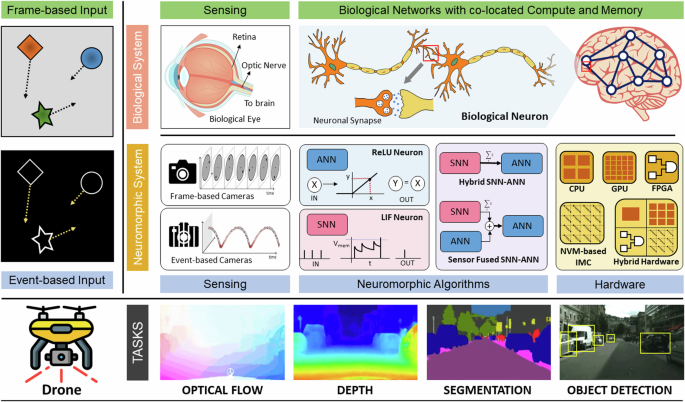
Combining vision systems with sensors like radar and lidar improves motion sensing. Each sensor type adds unique data. This mix creates a clearer picture of movement. It helps in complex environments and low light. Integration makes systems more reliable and versatile.
Advancements In Machine Learning
Machine learning enhances how motion is detected and understood. Algorithms learn to recognize patterns in visual data. They adapt to new conditions quickly. This reduces errors and false alarms. Smarter models enable better prediction of motion paths.
Real-time Processing Enhancements
Faster processors allow real-time analysis of motion data. Systems can now track movement instantly without delays. This is vital for applications like robotics and security. Improvements in hardware and software make this possible. Real-time processing increases system responsiveness and safety.
Credit: www.nature.com
Frequently Asked Questions
What Types Of Vision Help In Sensing Motion?
Motion sensing relies mainly on peripheral and central vision. Peripheral vision detects movement around the edges. Central vision helps identify details and track moving objects precisely.
How Does Peripheral Vision Aid Motion Detection?
Peripheral vision is sensitive to motion and changes in light. It alerts the brain to nearby movement quickly. This helps in detecting fast or unexpected motion outside the direct line of sight.
Can Different Vision Types Affect Motion Perception Speed?
Yes, peripheral vision detects motion faster than central vision. This quick detection enables faster reactions to moving objects or threats in the environment.
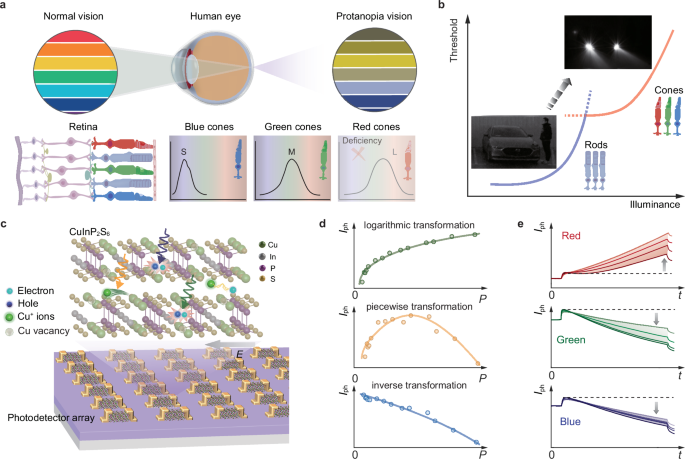
Does Color Vision Impact Sensing Motion?
Color vision plays a minor role in motion detection. Motion is primarily detected through contrast and brightness changes, not color differences.
Conclusion
Different types of vision affect how well we sense motion. Some vision types catch movement faster and clearer. This helps in daily tasks like driving or playing sports. Our brain uses these signals to understand the world around us. Choosing the right vision support can improve motion detection.
It matters for safety and better reactions. Studying vision types helps scientists and doctors too. They find ways to help people with vision problems. Motion sensing depends on more than just sight. It is a mix of eyes and brain working together.



