
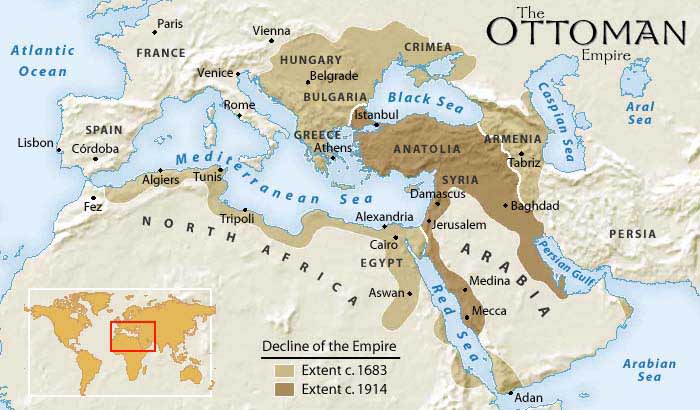
Have you ever wondered how vast the Ottoman Empire really was at its peak? In 1683, the empire controlled a wide and diverse region that shaped much of history.
Understanding which areas were under Ottoman rule at that time can give you a clearer picture of how powerful and influential the empire was. If you want to uncover the exact regions and learn why 1683 was such a pivotal year, keep reading.
This will change how you see the map of the past and the forces that shaped today’s world.

Credit: medium.com
Ottoman Empire At Its Peak
The Ottoman Empire at its peak in 1683 was a vast and powerful realm stretching across three continents. It stood as a dominant force in the Mediterranean, the Middle East, and Eastern Europe. Understanding its extent and governance helps you see how it managed such diversity and control.
Territorial Expansion Before 1683
Before 1683, the Ottoman Empire expanded rapidly through military conquest and strategic alliances. It controlled most of Southeast Europe, including modern-day Greece, Bulgaria, and Hungary.
Its reach extended into the Middle East, covering parts of Syria, Iraq, and the Arabian Peninsula. North Africa was also under Ottoman rule, from Egypt to Algeria.
- Key cities like Istanbul, Cairo, and Baghdad were major centers of power.
- The empire’s control of important trade routes boosted its economy and influence.
- Its navy dominated the eastern Mediterranean, challenging European powers.
Have you ever considered how managing such a vast territory required more than just military might? The empire’s ability to govern diverse peoples was crucial to its success.
Political Structure And Governance
The Ottoman political system combined centralized authority with local autonomy. The Sultan held supreme power but relied on a complex bureaucracy to run the empire day-to-day.
Governors, called Beylerbeys or Pashas, managed provinces and collected taxes. They had to balance loyalty to the Sultan with the needs of their local populations.
| Role | Responsibility |
|---|---|
| Sultan | Supreme ruler, commander-in-chief |
| Grand Vizier | Chief minister, led the imperial council |
| Beylerbey/Pasha | Provincial governors, tax collection |
| Janissaries | Elite military corps, loyal to Sultan |
This system allowed for flexibility. It enabled the empire to maintain control without excessive force, adapting to different cultures and traditions.
Thinking about your own leadership or management style, could you adopt a similar balance of central control and local freedom? The Ottoman model shows the power of trust combined with clear authority.
Key Regions Under Ottoman Control
The Ottoman Empire in 1683 stretched across a vast and diverse landscape. Understanding the key regions under its control reveals the empire’s strategic importance and cultural richness. These territories shaped the political and economic dynamics of the time, influencing trade routes, military campaigns, and cultural exchanges.
Anatolia And The Middle East
Anatolia served as the empire’s heartland, offering a strong base for administration and military power. This region included modern-day Turkey and was vital for controlling trade between Asia and Europe.
The Middle East portion extended over parts of present-day Syria, Iraq, and Palestine. These areas were rich in history and resources, connecting the Ottomans to important religious sites and bustling trade centers.
Balkans And Southeastern Europe
The Balkans were a crucial frontier for the Ottomans, covering much of modern Greece, Bulgaria, Serbia, and Albania. Control here allowed the empire to influence European politics and maintain strong military presence.
Many cities in this region were cultural melting pots, where different religions and ethnic groups lived under Ottoman rule. This diversity often led to complex governance but also enriched the empire’s cultural fabric.
North Africa Territories
The Ottoman Empire ruled significant parts of North Africa, including Egypt, Libya, Tunisia, and Algeria. These coastal territories provided access to Mediterranean trade routes and naval dominance.
North Africa’s resources and strategic ports helped the Ottomans project power westward and protect their maritime interests. It also made them a key player in Mediterranean politics and commerce.
Parts Of The Arabian Peninsula
The Ottomans controlled important sections of the Arabian Peninsula, including the Hejaz region, home to the holy cities of Mecca and Medina. This control boosted the empire’s religious legitimacy in the Muslim world.
Managing these desert territories was challenging, but it allowed the Ottomans to oversee pilgrimage routes and maintain influence over the Arabian tribes. How do you think controlling such a sacred region affected the empire’s standing?
Strategic Importance Of Captured Lands
The lands controlled by the Ottoman Empire in 1683 held immense strategic value. These regions were not just vast territories but key areas that influenced trade, military power, and political control. The empire’s strength came from controlling important locations that linked continents and protected its borders. Understanding why these lands mattered helps explain the empire’s power and ambitions during that period.
Trade Routes And Economic Centers
The Ottoman Empire controlled vital trade routes connecting Europe, Asia, and Africa. These paths allowed the flow of goods like spices, silk, and precious metals. Cities such as Istanbul became bustling economic hubs. They attracted merchants and traders from many regions. Control over these routes meant wealth and influence. It also allowed the empire to tax goods passing through their lands. This income supported the empire’s military and administration. The location of these routes made the empire a key player in global trade.
Military Fortifications And Strongholds
The empire’s captured lands included many strong military fortresses. These fortifications protected important borders and trade routes. Castles and walled cities like Belgrade stood as barriers against enemy attacks. The Ottomans built and maintained these forts with skilled engineers. They served as bases for launching military campaigns. These strongholds also helped control local populations and maintain order. Holding these military points was essential to defend the empire’s vast territory. They allowed quick responses to any threats or invasions.

Credit: www.wikiwand.com
Challenges To Ottoman Control
The Ottoman Empire controlled large parts of Southeast Europe, Western Asia, and North Africa in 1683. Challenges to their control included resistance from local groups and pressure from European powers. These struggles made it difficult to maintain their vast territories.
The Ottoman Empire in 1683 faced various challenges in maintaining control. These challenges were both internal and external. The vast empire stretched across many regions, which led to numerous conflicts and governance issues. These hurdles threatened the stability and dominance of the empire.Conflicts With European Powers
The Ottoman Empire clashed with several European powers. The Habsburg Monarchy was a significant rival. Battles such as the Siege of Vienna in 1683 marked intense conflicts. These clashes strained the empire’s resources. The Ottoman military faced strong European forces. This led to losses and territorial retreats. European alliances also posed a challenge. They united to counter Ottoman expansion. This further complicated the empire’s military strategies.Internal Rebellions And Governance Issues
Internal strife weakened the Ottoman Empire’s hold. Local rulers often resisted central authority. These rebellions disrupted governance and stability. The vastness of the empire led to management difficulties. Communication across regions was slow and inefficient. This resulted in delayed responses to issues. Corruption within the administration was rampant. This further weakened the central government’s control. Local populations were sometimes dissatisfied. This dissatisfaction fueled uprisings and resistance. The empire struggled to maintain order and loyalty among its diverse subjects.Impact Of The 1683 Siege Of Vienna
The 1683 Siege of Vienna marked a turning point in European history. The Ottoman Empire aimed to expand further into Central Europe. The siege lasted for two months but ended in a decisive defeat for the Ottomans. This event impacted the empire’s control and changed the power balance in the region.
Territorial Consequences
The Ottoman Empire lost significant ground after the failed siege. Their advance into Central Europe was stopped permanently. Territories in Hungary and parts of Austria slipped from Ottoman control. The Habsburg Monarchy gained strength and reclaimed lost lands. This shift weakened the Ottoman hold on Europe.
Shift In Regional Power Dynamics
The defeat altered power dynamics in Eastern Europe. The Ottoman Empire’s influence began to decline. European states, especially the Habsburgs, grew stronger. Alliances formed against the Ottomans to limit their expansion. The siege marked the start of Ottoman retreat in the region.
Credit: owlcation.com
Frequently Asked Questions
Which Regions Did The Ottoman Empire Control In 1683?
In 1683, the Ottoman Empire controlled large parts of Southeast Europe, Western Asia, and North Africa. Key regions included modern-day Turkey, the Balkans, parts of Hungary, the Middle East, and Egypt. Their territory was vast, stretching from the Arabian Peninsula to Central Europe.
What Was The Significance Of Ottoman Control In 1683?
Ottoman control in 1683 marked a peak in their territorial expansion. It influenced trade routes, culture, and politics across Europe and Asia. The empire acted as a major power between East and West, controlling key cities and strategic locations.
How Did Ottoman Rule Impact Central Europe In 1683?
Ottoman rule extended into Central Europe, especially Hungary and the Balkans. This control led to cultural exchanges and military conflicts. The 1683 Siege of Vienna was a turning point that halted Ottoman expansion into Europe.
Which Major Cities Were Under Ottoman Rule In 1683?
Major cities under Ottoman control included Istanbul, Belgrade, Budapest, Damascus, and Cairo. These cities were administrative and cultural centers, vital for maintaining the empire’s influence and governance across its vast territories.
Conclusion
The Ottoman Empire controlled vast lands in 1683. It included parts of Southeast Europe, Western Asia, and North Africa. The empire stretched from Hungary in the north to Egypt in the south. Cities like Istanbul, Belgrade, and Damascus were under Ottoman rule.
This control shaped the region’s history and culture deeply. Understanding this helps us learn about past conflicts and alliances. The empire’s reach influenced trade, religion, and politics. Its legacy still affects these regions today. The year 1683 marks a key moment in Ottoman history.
It shows their strength and the limits of their expansion.



