
Choosing the right coffee table size can change the entire feel of your living room. You want something that fits perfectly, looks great, and works well with your space.
But how do you know what size coffee table you need? If you’ve ever stood in front of a showroom display wondering if a table is too big or too small, you’re not alone. This guide will help you find the ideal coffee table size for your room, so you can create a cozy and stylish space that feels just right.
Keep reading to discover simple tips that make picking the perfect table easy and stress-free.

Credit: www.rjliving.com.au
Choosing The Right Coffee Table Size
Choosing the right coffee table size is key to balancing style and function. The right size helps your room feel open and welcoming. It also makes your space easier to move around. Small mistakes can make a room look crowded or empty. Focus on three main points to find the perfect fit.
Measuring Your Space
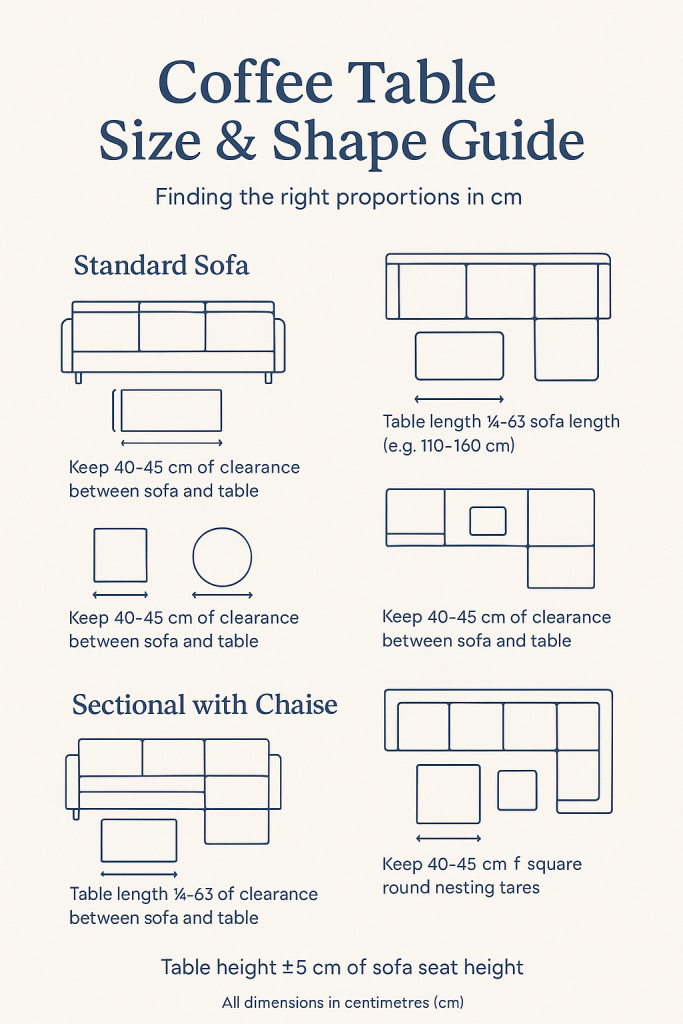
Start by measuring the area where the coffee table will go. Use a tape measure to get the length and width. Leave enough space for walking around the table. At least 18 inches of clearance is ideal. This prevents bumping into furniture and keeps the room comfortable.
Considering Room Layout
Think about how the room is arranged. Place the table where it fits naturally with other furniture. Avoid blocking doors or pathways. A well-placed coffee table can anchor the seating area. It should complement the room’s flow and design.
Matching Sofa Dimensions
Match the coffee table size to your sofa. The table length should be about two-thirds of the sofa’s length. Height is important too. The table should be level with the sofa seat or slightly lower. This makes it easy to reach drinks and snacks.
Standard Coffee Table Dimensions
Standard coffee table dimensions help find the right size for your space. A well-sized table balances comfort and style in your living room. It fits perfectly with your sofa and leaves enough room to move around. Knowing these dimensions makes shopping easier and avoids awkward choices.
Common Lengths And Widths
Most coffee tables range between 36 and 48 inches in length. Widths usually fall between 18 and 24 inches. These sizes work well in medium to large living rooms. Small spaces may need tables closer to 36 inches long and 18 inches wide. Bigger rooms can handle tables up to 48 inches long and 24 inches wide.
Typical Heights
The height of a coffee table usually matches the sofa seat height. This means tables are about 16 to 18 inches tall. A table this height makes reaching drinks or books easier. Too tall or too short can feel uncomfortable. Aim for a height that sits just below or equal to your sofa seat.
Shapes And Their Impact On Size
Rectangle tables suit long sofas and narrow rooms. Square tables fit well in square rooms or group seating. Round tables soften corners and improve flow in tight spaces. Oval tables combine length with smooth edges. Shape affects how much space the table occupies and how it fits with furniture.
Coffee Table Sizes For Different Rooms
Choosing the right coffee table size can transform your living space. It should blend seamlessly with the room’s layout and furniture. Each room has its unique requirements. Understanding these can enhance both aesthetics and functionality.
Small Living Rooms
In small living rooms, space is limited. A compact coffee table is ideal. Look for tables that are 36 to 48 inches long. This size provides enough surface area without overwhelming the room. Consider round tables for better flow. They reduce the chance of bumping into corners. Nesting tables can be a great option too. They offer flexibility and can be tucked away when not in use.
Large Living Areas
Large living areas allow for bigger coffee tables. Look for tables that are 48 to 60 inches long. These tables can fill the space without looking lost. Ensure there’s a balance with other furniture. A rectangular or oval table can work well. It provides ample surface for decorative items and drinks. A large table can also become a focal point. Choose a design that complements your décor style.
Open Concept Spaces
Open concept spaces need versatile furniture. A coffee table should connect different areas smoothly. Opt for tables that are 48 to 54 inches long. This size can work between a seating area and a kitchen or dining space. Consider materials that match both areas. Glass or metal tables can blend well. They also add a modern touch without being too heavy. Adjustable-height tables are a smart choice. They provide flexibility for various activities.
Functional Needs And Table Size
Choosing the right coffee table size goes beyond fitting your living room’s dimensions. Your daily needs and lifestyle play a big role in deciding what size works best. A table that’s too small might not serve your activities well, while one that’s too large can overwhelm the space and limit movement.
Storage Options
If you often find yourself needing extra space to stash magazines, remote controls, or blankets, consider a coffee table with built-in storage. Tables with drawers or shelves add functionality without taking up more floor space. Have you ever noticed how clutter disappears when everything has a designated spot? That’s the power of smart storage in your coffee table.
Multi-purpose Tables
Think about how you use your coffee table daily. Do you eat meals there, work on a laptop, or play board games? Choosing a table that adapts to multiple functions can save space and add convenience. Some tables come with adjustable heights or extendable surfaces, which can transform your living area instantly.
Child-friendly Sizes
If you have young children, the size and shape of your coffee table should prioritize safety and accessibility. Lower tables with rounded edges reduce the risk of injury during playtime. Also, a smaller table placed within a child’s reach encourages independence and creativity, making your living room more family-friendly.
Style And Proportion Tips
Choosing the right coffee table size involves more than measurements. Style and proportion play a key role in creating a balanced and inviting space. This section covers tips that help you pick a coffee table that fits well with your room’s design and furniture.
Balancing Visual Weight
Visual weight means how heavy or light an object looks in a room. A large, bulky coffee table can overpower smaller sofas or chairs. On the other hand, a tiny table might get lost in a big seating area. Choose a coffee table that feels balanced with your other pieces.
Consider materials and shapes. Glass or open-frame tables look lighter. Solid wood or metal tables appear heavier. Match the table’s visual weight to your sofa and chairs for harmony.
Complementing Furniture Styles
Keep your furniture styles consistent. Modern sofas pair well with sleek, simple coffee tables. Traditional furniture fits best with classic or ornate tables. Mixing very different styles can create a confusing look.
Think about colors and finishes. A coffee table should blend or contrast nicely. For example, dark wood tables look great with neutral sofas. Light tables brighten dark furniture.
Avoiding Overcrowding
Space around the coffee table matters. Leave at least 18 inches between the table and seating. This space allows easy movement and comfort.
Too many pieces in one area make the room feel cramped. Avoid adding extra side tables or decor that clutter the space. A well-chosen coffee table keeps the room open and inviting.
Adjusting Size For Traffic Flow
Adjusting the size of your coffee table to fit the traffic flow in your living space is key to creating a comfortable and functional environment. It’s not just about picking a table that looks good but one that fits well with how people move around the room. You want to avoid awkward bumps and cramped walking paths while still keeping the table accessible and stylish.
Ensuring Comfortable Movement
Think about how many people use the space and how they move through it daily. A coffee table that’s too big can block natural walkways and force people to squeeze past, which quickly becomes frustrating. On the other hand, a very small table might leave the area feeling empty or impractical.
Ask yourself: Can you easily walk around the table without turning sideways or stepping over it? If not, it’s time to reconsider the size. Your goal is smooth, easy movement that makes the room feel open and inviting.
Clearance Around The Table
Clearance is the space between the coffee table and surrounding furniture or walls. A good rule of thumb is to leave at least 18 inches (about 45 cm) of space on all sides. This gives enough room to walk comfortably and to sit down or get up without bumping into the table.
Measuring this space before buying your table saves you from later frustration. If your room is tight, consider a narrower or oval-shaped table to maximize clearance while still providing surface area.
Adapting To Room Shape
Every room has its own shape and layout challenges. A square or rectangular room might handle a larger, rectangular coffee table well, while an odd-shaped or narrow space might benefit from a round or elliptical table that fits naturally without interrupting flow.
Look at your room’s corners and entry points closely. Does a particular shape or size create pinch points? Adjust your table choice to complement the shape, ensuring it guides movement rather than blocks it.
Custom And Unusual Table Sizes
Choosing the right coffee table size can be tricky, especially when your space or style doesn’t fit the usual dimensions. Custom and unusual table sizes offer a chance to match your coffee table perfectly to your room and your taste. This approach can create a unique focal point that reflects your personality and meets your practical needs.
When To Go Custom
Think about custom tables if your room has odd dimensions or unusual furniture arrangements. Maybe your seating area is unusually shaped, or you want a table that fits snugly into a corner. Custom sizes also make sense when you want a statement piece that stands out from standard options.
Ask yourself: is the available space too tight or too wide for typical tables? Have you struggled to find a table that balances well with your sofa height and seating layout? If yes, a custom table could be the solution.
Unique Shape Considerations
Unusual shapes like oval, triangular, or asymmetrical tables can add visual interest and better fit your room’s flow. But these shapes come with practical questions: Will the shape allow easy movement around the table? Does it provide enough surface area for your needs?
Consider how the table will be used daily. For example, a triangular table might save space in a small room but could limit the number of drinks or snacks you can place on it. Measure your space carefully and think about how different shapes affect both function and style.
Budgeting For Custom Pieces
Custom tables often cost more than ready-made ones due to the extra design and craftsmanship involved. You’ll want to set a clear budget before starting your search or design process.
Keep in mind these factors that impact cost:
- Materials chosen (wood, metal, glass)
- Complexity of the shape or design
- Time required for production
Sometimes spending a bit more on a custom piece saves money in the long run by avoiding multiple replacements or awkward compromises. What’s your budget limit for a piece that truly fits your space and style?

Credit: www.zmhome.store

Credit: sohnne.com
Frequently Asked Questions
What Size Coffee Table Fits A Small Living Room?
Choose a coffee table no wider than two-thirds of your sofa’s length. Keep it narrow to maintain walking space. Opt for lighter designs to avoid crowding the room. This ensures comfort and balance in smaller spaces.
How To Measure For The Perfect Coffee Table Size?
Measure the length and width of your seating area first. The coffee table should be about two-thirds the sofa’s length. Keep 18 inches distance from the sofa for easy movement. Height should match or be slightly lower than sofa cushions.
What Is The Ideal Height For A Coffee Table?
The coffee table height should be equal to or slightly lower than the sofa seat height. Typically, 16 to 18 inches works well. This ensures comfortable reach from the couch for placing drinks or books.
How Much Space Should Be Around A Coffee Table?
Leave 18 to 24 inches of space around the coffee table for easy walking. This distance prevents crowding and allows chairs to move freely. Adequate spacing improves flow and safety in the living room.
Conclusion
Choosing the right coffee table size makes your space feel balanced. Measure your room and seating area first. Keep enough space around the table for easy movement. Think about how you use the table daily. A well-sized coffee table adds comfort and style.
It fits your needs without crowding the room. Small or large, the right table improves your living area. Take time to pick one that works best for you. Your perfect coffee table awaits.



