
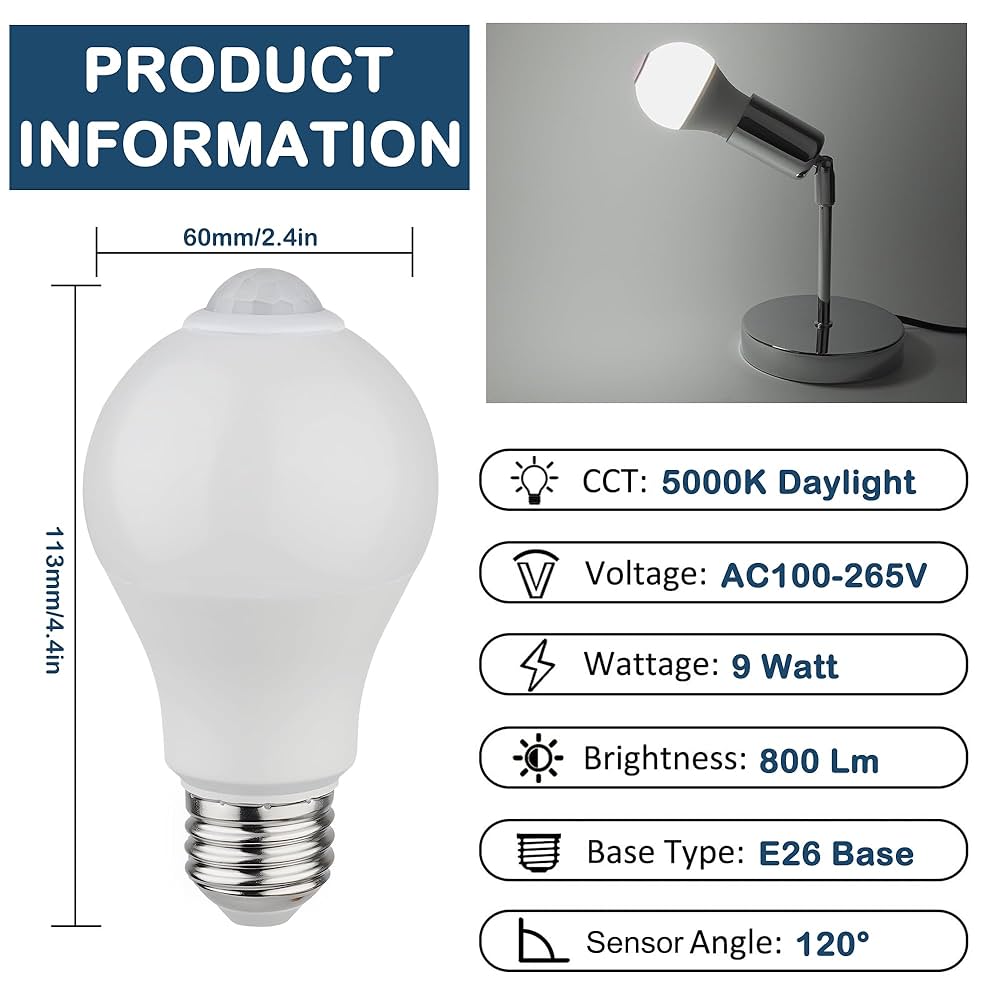
Have you ever wondered how motion sensor light bulbs turn on the moment you walk into a room? Imagine never fumbling for a switch again, or having your lights greet you automatically when you step outside at night.
Understanding how these smart bulbs work can change the way you think about lighting in your home or office. You’ll discover the simple technology behind motion sensor light bulbs and how they can make your life easier, safer, and more energy-efficient.
Keep reading to unlock the secret behind this clever lighting solution!
Basics Of Motion Sensor Lights
Motion sensor light bulbs turn on automatically when they detect movement. They save energy by lighting only when needed. These bulbs are perfect for areas like hallways, garages, and outdoor spaces. Understanding their basics helps you choose the right one and use it well.
Types Of Motion Sensors
Motion sensors detect movement using different technologies. Each type works in its own way:
- Passive Infrared (PIR) Sensors:Detect body heat from people or animals. Common in most motion sensor bulbs.
- Ultrasonic Sensors:Use sound waves that bounce off objects. They sense movement by changes in the waves.
- Microwave Sensors:Send microwave signals and detect movement through changes in reflection. These sensors cover a larger area.
- Dual-Technology Sensors:Combine two types, often PIR and microwave, to reduce false alarms.
Key Components Of Sensor Bulbs
Several parts work together in a motion sensor bulb to detect movement and control lighting:
- Sensors:Detect motion and trigger the light to turn on.
- Light Source:Usually an LED, it provides bright and energy-efficient lighting.
- Control Circuit:Manages sensor signals and controls the bulb’s on/off function.
- Power Supply:Provides electricity to both the sensor and the light.
- Timer:Keeps the light on for a set time after motion stops.
How Motion Detection Works
Understanding how motion detection works can change the way you think about lighting in your home or workspace. Motion sensor light bulbs don’t just turn on randomly—they rely on smart technologies to detect movement accurately. Let’s break down the main ways these sensors spot motion so you can see which one fits your needs best.
Infrared Sensing Technology
Infrared sensors detect heat emitted by living beings. When you walk into a room, your body heat causes a change in the infrared energy detected by the sensor. This triggers the light bulb to switch on instantly.
These sensors are especially good at distinguishing between people and inanimate objects. That means your light won’t turn on just because a curtain moves due to a breeze. Have you noticed how quickly these lights react when you enter a dark hallway? That’s the infrared sensor at work.
Microwave And Ultrasonic Sensors
Microwave sensors send out radio waves and measure how they bounce back. When something moves, it changes the pattern of the waves, signaling the sensor to activate the light. These sensors cover a larger area compared to infrared but can be more sensitive to movement through walls.
Ultrasonic sensors use sound waves above the range of human hearing to detect motion. They work by emitting pulses and listening for echoes that shift when something moves. This technology can detect even small movements, like a pet walking by, which might be too subtle for other sensors.
Which type of sensor do you think would work best in your space? If you want precise activation without false alarms, infrared might be your choice. But if you need broader coverage, microwave or ultrasonic sensors could be better options.
Activation And Light Control
Motion sensor light bulbs are efficient and convenient for any home. They automatically light up when they detect movement. Let’s explore how these bulbs activate and control light.
Trigger Mechanisms
Motion sensor bulbs use different technologies to detect movement. Common types include infrared, microwave, and ultrasonic sensors. Infrared sensors detect heat changes from moving objects. Microwave sensors send out waves and detect changes in their reflection. Ultrasonic sensors emit sound waves, sensing movement by the bounce back. Each method has its benefits based on the environment.
Adjusting Sensitivity And Range
Most motion sensor bulbs let you adjust their sensitivity. This determines how easily they trigger. You can set the range to control how far the sensor detects motion. Adjust these settings to avoid false triggers from pets or traffic. Properly adjusted settings ensure efficient energy use. Each adjustment depends on bulb placement and your specific needs.
Power Sources And Efficiency
Motion sensor light bulbs need power to operate and detect movement. Their power source affects how long they last and how efficient they are. Choosing the right power source helps save energy and reduces maintenance.
Battery-powered Vs Wired Bulbs
Battery-powered bulbs are easy to install. They do not need wiring or electrical outlets. These bulbs work well in places without power access. Batteries need regular changing or recharging, though.
Wired bulbs connect directly to home power. They offer constant energy without interruption. Installation may require professional help. Wired bulbs usually last longer and need less upkeep.
Energy-saving Features
Motion sensor bulbs turn on only when needed. This reduces wasted electricity. Many bulbs use LED technology, which uses less power than traditional bulbs.
Some bulbs have adjustable sensitivity and timer settings. You can set how long the light stays on after motion stops. This helps save more energy by avoiding unnecessary light.
Energy-efficient bulbs lower electricity bills and last longer. They are good for both the environment and your wallet.
Common Applications
Motion sensor light bulbs are more than just a cool tech feature. They have practical uses that can make your daily life safer and more convenient. Understanding their common applications helps you see where they fit best and how you can benefit from them.
Home Security
Have you ever felt uneasy about leaving your home unattended at night? Motion sensor light bulbs can be a simple yet effective way to enhance your home security. They automatically turn on when someone approaches, startling potential intruders and alerting you to movement around your property.
Installing these bulbs near entry points like doors and windows can deter unwanted guests. Plus, they save energy by lighting only when needed, so you’re not wasting electricity keeping lights on all night.
Outdoor Lighting
Outdoor spaces often need lighting that is both practical and energy-efficient. Motion sensor bulbs are perfect for this because they provide light only when someone is outside. This is ideal for pathways, gardens, and driveways where you need visibility but don’t want constant illumination.
Imagine coming home late and your porch lights turning on automatically, guiding your way safely. It’s not just about convenience; it’s about preventing accidents and increasing your comfort in the dark.
Commercial Use
Businesses can also gain from motion sensor light bulbs. In offices, warehouses, and retail spaces, these bulbs reduce energy costs by lighting only occupied areas. This is especially useful in places with intermittent activity, such as storage rooms or restrooms.
Moreover, they improve workplace safety by ensuring employees have light when moving through less frequented parts of a building. Could your business save money and improve security by switching to motion sensor lighting?
Credit: blog.1000bulbs.com
Installation Tips
Installing motion sensor light bulbs correctly ensures they work well and last longer. Proper setup helps the sensor detect movement clearly. It also prevents the light from turning on by mistake. Follow simple tips for best results and fewer problems.
Best Placement For Sensors
Place sensors where they can see a wide area. Corners of rooms or outdoor walls work well. Keep sensors away from objects that block their view. Avoid placing sensors near windows or heat sources. Mount sensors 6 to 10 feet high for best detection. Make sure they face the area where people move most.
Avoiding False Triggers
False triggers waste energy and cause annoyance. Keep sensors away from trees or bushes that move in the wind. Avoid pointing sensors at busy streets or sidewalks. Do not place sensors near heating vents or air conditioners. Adjust sensor sensitivity if possible to reduce mistakes. Regularly clean the sensor lens to keep it clear.
Troubleshooting Issues
Troubleshooting motion sensor light bulbs can save you time and money. When these bulbs don’t work as expected, pinpointing the exact cause helps you fix the problem quickly. Let’s look at common issues related to sensor malfunctions and light bulb problems, so you can get your lighting back on track.
Sensor Malfunctions
Sometimes, the motion sensor stops detecting movement properly. This could be due to dirt or dust covering the sensor lens. Try cleaning it gently with a soft cloth to remove any buildup.
Another common issue is incorrect sensor placement. If the sensor faces a heat source like a heater or direct sunlight, it might trigger false alarms or fail to activate. Adjust the sensor angle to avoid these heat sources.
Have you checked the sensor’s sensitivity settings? Many models let you adjust how much motion it detects. If the sensor is too sensitive, it may turn on unnecessarily. If it’s not sensitive enough, it might miss movement completely.
Light Bulb Problems
Your motion sensor light bulb might not turn on because the bulb itself is faulty. Test the bulb in a regular socket to see if it works without the sensor. If it doesn’t light up, replacing the bulb is the next step.
Wiring issues can also cause problems. Loose connections or incompatible fixtures may prevent the bulb from functioning. Make sure the bulb is screwed in tightly and check for any visible damage to the socket or wiring.
If your bulb flickers or turns off quickly, it could be a compatibility issue. Some motion sensor bulbs don’t work well with dimmer switches or certain types of fixtures. Confirm that your bulb matches your fixture’s requirements to avoid these problems.

Credit: www.amazon.com
Future Trends In Sensor Lighting
Sensor lighting is evolving fast, and the future promises exciting changes that will make your home smarter and more energy-efficient. Imagine lights that not only react to your movement but also learn your habits and adjust automatically. These advancements will redefine how you interact with lighting every day.
Smart Home Integration
Sensor light bulbs are becoming key players in smart home systems. You can control them through apps, voice commands, or automation routines that fit your lifestyle.
Think about your lights turning on as you enter a room without you lifting a finger, or dimming gradually when it’s bedtime. Integration with devices like Alexa, Google Home, or Apple HomeKit makes this seamless.
Have you tried setting up scenes where your lights adjust based on the time of day or your mood? This level of control not only adds convenience but also helps save energy by using lights only when needed.
Advancements In Sensor Technology
Sensor technology is becoming more sensitive and accurate. New motion detectors can distinguish between pets and people, reducing false triggers that used to annoy many users.
Light sensors are improving too, allowing bulbs to adjust brightness based on natural light levels. This means your room stays perfectly lit without wasting electricity.
Energy efficiency is another focus, with bulbs consuming less power while providing better performance. Imagine a sensor bulb that lasts longer and reacts faster—this is already happening.

Credit: www.amazon.ca
Frequently Asked Questions
How Do Motion Sensor Light Bulbs Detect Movement?
Motion sensor light bulbs use infrared sensors to detect heat and movement. When motion is sensed, the bulb automatically turns on. This technology helps save energy and enhances security by illuminating areas only when needed.
What Types Of Sensors Are Used In These Bulbs?
Most motion sensor bulbs use passive infrared (PIR) sensors. PIR sensors detect body heat changes in their range. Some bulbs may also combine microwave sensors for improved accuracy in motion detection.
Can Motion Sensor Bulbs Save Energy Effectively?
Yes, motion sensor bulbs save energy by switching on only when motion is detected. They reduce electricity use by avoiding unnecessary lighting. This makes them eco-friendly and cost-effective for home and outdoor use.
Are Motion Sensor Light Bulbs Easy To Install?
Yes, motion sensor bulbs are designed for easy installation. They fit standard light sockets like regular bulbs. No special wiring or tools are typically required, making them convenient for quick upgrades.
Conclusion
Motion sensor light bulbs turn on when they detect movement. They use sensors to sense heat or motion nearby. This helps save energy by lighting only when needed. You can use them for safety and convenience at home. They are easy to install and work well in many places.
Understanding how they work helps you choose the right one. Smart lighting can make your space safer and more efficient. Motion sensor bulbs offer simple, automatic lighting solutions.



