

Have you ever wondered how doctors and therapists measure the amount of air you breathe in a minute? Understanding how minute ventilation is calculated can give you a clearer picture of your lung health and breathing efficiency.
Whether you’re curious about your own respiratory system or studying to improve your medical knowledge, this simple concept plays a big role. Keep reading, and you’ll discover exactly what minute ventilation is, why it matters, and how to calculate it easily—no complicated jargon, just straightforward facts that make sense to you.

Credit: www.youtube.com
Basics Of Minute Ventilation
Understanding the basics of minute ventilation is essential if you want to grasp how your body manages breathing and oxygen supply. Minute ventilation measures the total volume of air you breathe in and out each minute. It reflects how well your lungs and respiratory system are working together to meet your body’s oxygen needs.
Definition And Importance
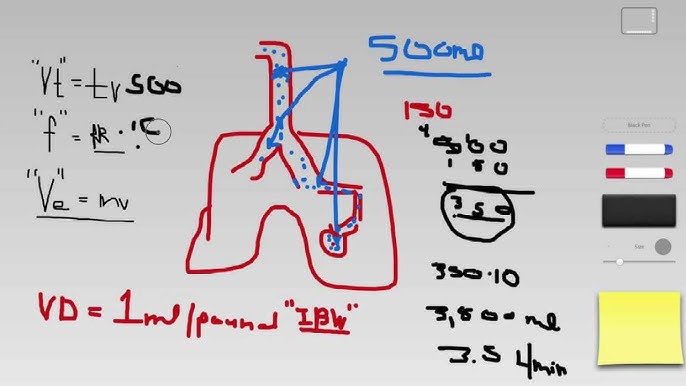
Minute ventilation, often abbreviated as VE, is the total amount of air moved in and out of your lungs every minute. It’s calculated by multiplying the number of breaths you take per minute by the volume of air in each breath.
This measurement is crucial in clinical settings and everyday health monitoring. It helps assess lung function, detect breathing problems, and guide treatments for respiratory conditions. Have you ever noticed how your breathing changes during exercise or stress? That’s your minute ventilation adapting to your body’s demands.
Key Components Involved
Minute ventilation depends on two main factors:
- Respiratory Rate (RR):The number of breaths you take each minute.
- Tidal Volume (TV):The amount of air inhaled or exhaled in a single breath.
For example, if your respiratory rate is 12 breaths per minute and your tidal volume is 500 milliliters, your minute ventilation would be:
| Formula | Calculation | Result |
|---|---|---|
| Minute Ventilation (VE) = RR × TV | 12 breaths/min × 500 ml/breath | 6000 ml/min or 6 liters per minute |
Both components can change based on your activity or health. For instance, during exercise, your body increases the respiratory rate and tidal volume to supply more oxygen. Understanding these components helps you see how your body manages breathing under different conditions.
Formula For Minute Ventilation
Understanding how minute ventilation is calculated helps you grasp how your lungs supply oxygen to your body and remove carbon dioxide. The formula is straightforward but reveals a lot about your breathing efficiency. It combines two key factors—tidal volume and respiratory rate—to give you the total air moved in one minute.
Tidal Volume Role
Tidal volume is the amount of air you breathe in or out with each breath. Think of it as the size of each breath you take. If your tidal volume is too low, even a high breathing rate might not supply enough oxygen to your body.
For example, when you’re resting, your tidal volume might be around 500 milliliters. But during exercise, it can increase significantly as your body demands more oxygen. This change directly affects your minute ventilation, showing how adaptable your respiratory system is.
Respiratory Rate Impact
Respiratory rate is how many breaths you take per minute. Even if your tidal volume stays the same, increasing your respiratory rate raises your minute ventilation. This means you are moving more air in and out of your lungs every minute.
Imagine you’re nervous before a presentation. Your breathing rate might speed up, increasing your minute ventilation without changing your tidal volume. This shows how your body automatically adjusts to different situations to meet oxygen needs.
So, the formula for minute ventilation is:
| Minute Ventilation (VE) | = Tidal Volume (VT) × Respiratory Rate (RR) |
|---|
Knowing this formula helps you understand how small changes in either factor impact your overall breathing. Have you ever noticed how your breathing changes during stress or exercise? That’s minute ventilation adjusting to keep you balanced.
Step-by-step Calculation
Understanding how to calculate minute ventilation is essential for anyone involved in respiratory care or fitness monitoring. It’s a straightforward process once you know the key components involved. Let’s break down each part so you can confidently perform the calculation yourself.
Measuring Tidal Volume
Tidal volume is the amount of air you breathe in or out during a normal breath. It’s usually measured in milliliters (mL) or liters (L). To get an accurate reading, you can use a spirometer or a similar device designed to measure lung volumes.
If you don’t have a spirometer, you can estimate tidal volume based on typical values: about 500 mL for an average adult at rest. Keep in mind, this value changes with activity level and health conditions.
Counting Respiratory Rate
Respiratory rate is how many breaths you take per minute. You can count this by observing the rise and fall of the chest or abdomen. Simply count the number of breaths over 60 seconds, or for 30 seconds and multiply by two for a quick estimate.
Try this yourself right now. How many breaths do you take in one minute while sitting quietly? Your answer will be key to calculating your minute ventilation accurately.
Performing The Calculation
The formula for minute ventilation is simple:
| Minute Ventilation (L/min) | = Tidal Volume (L) × Respiratory Rate (breaths/min) |
|---|
For example, if your tidal volume is 0.5 L and your respiratory rate is 12 breaths per minute, your minute ventilation would be:
- 0.5 L × 12 = 6 L/min
This means you are moving 6 liters of air in and out of your lungs every minute. How does this number change when you’re exercising or feeling stressed? Tracking these changes can give you valuable insight into your respiratory health.
Common Units And Conversions
Minute ventilation is often measured in specific units to ensure clarity and accuracy. Understanding these common units helps in proper calculation and interpretation. It also makes communication between healthcare providers easier. Units often vary between milliliters and liters, depending on the context.
Converting between these units is essential for accurate data recording. The correct unit choice depends on the scale of measurement needed. Medical devices and charts may display values in different units. Knowing how to convert these units quickly improves workflow and reduces errors.
Liters Per Minute
Minute ventilation is commonly expressed in liters per minute (L/min). This unit shows the total volume of air breathed in one minute. It combines tidal volume (air per breath) with respiratory rate (breaths per minute). For example, if tidal volume is 0.5 liters and respiratory rate is 12 breaths, minute ventilation equals 6 L/min.
This unit is easy to understand and widely used in clinical settings. It helps track breathing efficiency and lung function quickly. L/min values provide a clear picture of how much air moves in and out of the lungs.
Milliliters To Liters Conversion
Minute ventilation can also be measured in milliliters per minute (mL/min). Since 1 liter equals 1000 milliliters, converting between them is simple. Divide milliliters by 1000 to get liters. Multiply liters by 1000 to get milliliters.
For instance, 500 mL equals 0.5 liters. This conversion is important when tidal volume is given in milliliters but minute ventilation is needed in liters. Accurate conversion ensures correct calculations and meaningful results.
- 1000 mL = 1 L
- To convert mL to L: mL ÷ 1000 = L
- To convert L to mL: L × 1000 = mL
Factors Affecting Minute Ventilation
Minute ventilation, the volume of air inhaled or exhaled per minute, is crucial for assessing respiratory health. Several factors can influence this measurement, affecting how efficiently our bodies manage oxygen and carbon dioxide exchange. Understanding these factors helps in analyzing respiratory functions effectively.
Physical Activity Influence
Physical activity significantly impacts minute ventilation. During exercise, muscles need more oxygen. The body responds by increasing breathing rate and depth. This change boosts oxygen intake and carbon dioxide removal. Even simple activities like walking can alter minute ventilation.
Health Conditions Impact
Health conditions also affect minute ventilation. Respiratory diseases like asthma or COPD can reduce lung efficiency. This leads to altered breathing patterns. Heart diseases can influence how the body circulates oxygen. Obesity might change breathing because of added pressure on the lungs. Each condition requires careful monitoring of minute ventilation.
Credit: www.youtube.com
Practical Examples
Understanding how to calculate minute ventilation becomes clearer with practical examples. These examples show how breathing rate and volume affect total air movement. Minute ventilation is the total air breathed in or out per minute. It is the product of tidal volume and respiratory rate. This calculation helps in assessing lung function in different situations.
Normal Breathing Scenario
Imagine a person at rest with a tidal volume of 500 milliliters (ml) per breath. Their breathing rate is 12 breaths per minute. To find the minute ventilation, multiply tidal volume by breathing rate.
| Tidal Volume (ml) | Breathing Rate (breaths/min) | Minute Ventilation (ml/min) |
|---|---|---|
| 500 | 12 | 6000 |
This means the person moves 6000 ml (or 6 liters) of air per minute. This is typical for calm, normal breathing.
Exercise Condition Scenario
During exercise, both tidal volume and breathing rate increase. Suppose tidal volume rises to 2000 ml per breath. Breathing rate also increases to 30 breaths per minute. Multiply these values to get minute ventilation.
| Tidal Volume (ml) | Breathing Rate (breaths/min) | Minute Ventilation (ml/min) |
|---|---|---|
| 2000 | 30 | 60000 |
The minute ventilation here is 60000 ml or 60 liters per minute. This shows how the lungs work harder to meet oxygen demand during exercise.
Clinical Relevance
Understanding how minute ventilation is calculated is crucial beyond just numbers on a monitor. It directly impacts patient care and outcomes. Knowing its clinical relevance helps you grasp why healthcare professionals pay close attention to this measurement.
Monitoring In Healthcare
Minute ventilation gives real-time insight into a patient’s respiratory status. It helps detect breathing problems early, especially in critical care settings. For example, a sudden drop may signal respiratory distress or airway obstruction.
Healthcare teams track this value during surgeries, in the ICU, and when managing chronic lung conditions. It acts as a vital sign that can guide immediate interventions. Have you ever wondered how nurses decide when to alert a doctor about breathing issues? Minute ventilation often plays a key role.
Adjusting Ventilation Support
When patients need mechanical ventilation, minute ventilation guides the settings on the ventilator. If the value is too low, it indicates inadequate air exchange, requiring adjustments to increase breath rate or volume.
Conversely, too high a minute ventilation might cause lung injury or discomfort. Clinicians use this data to find a balance that matches the patient’s needs without causing harm. This delicate tuning is critical—you wouldn’t want your breathing assistance to either underperform or overwork your lungs.
Understanding minute ventilation can also empower you to ask informed questions about respiratory care, whether for yourself or a loved one in a healthcare setting. It’s not just a number; it’s a vital clue to breathing health and treatment effectiveness.

Credit: www.youtube.com
Frequently Asked Questions
What Is The Formula For Calculating Minute Ventilation?
Minute ventilation is calculated by multiplying tidal volume (VT) by respiratory rate (RR). The formula is: Minute Ventilation = VT × RR. This gives the total volume of air breathed in one minute, usually expressed in liters per minute (L/min).
Why Is Minute Ventilation Important In Respiratory Care?
Minute ventilation helps assess lung function and breathing efficiency. It indicates how well a patient ventilates and exchanges gases. Monitoring it guides treatment in respiratory diseases and mechanical ventilation settings.
How Does Tidal Volume Affect Minute Ventilation?
Tidal volume directly impacts minute ventilation since it represents the air per breath. Higher tidal volume increases minute ventilation if respiratory rate stays constant, improving oxygen intake and carbon dioxide removal.
What Units Are Used To Measure Minute Ventilation?
Minute ventilation is typically measured in liters per minute (L/min). This unit reflects the total air volume moved in and out of the lungs per minute during normal breathing.
Conclusion
Minute ventilation shows how much air you breathe each minute. It helps doctors understand breathing health. To find it, multiply breathing rate by air per breath. This simple math gives a clear picture of lung function. Knowing this number guides proper treatment and care.
Keep this calculation in mind for better health understanding. It’s a basic yet important tool in respiratory care.



