
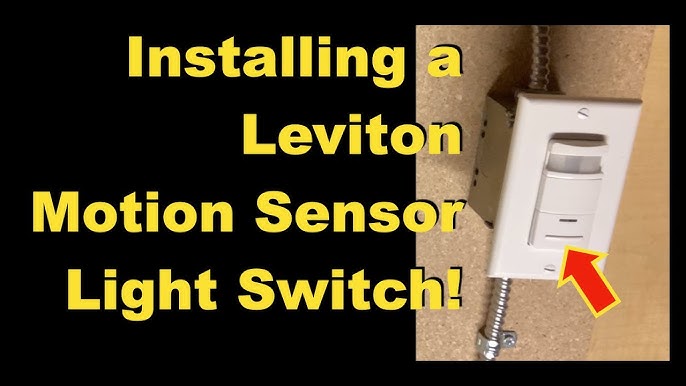
Imagine never having to fumble for a light switch in the dark again. Setting up a motion sensor light switch can make your home smarter, safer, and more energy-efficient—all without complicated tools or expensive help.
If you want to know exactly how to install one yourself, you’re in the right place. This guide will walk you through simple, clear steps so you can enjoy hands-free lighting in no time. Ready to transform your space with just a few easy moves?
Let’s get started!

Credit: www.youtube.com
Benefits Of Motion Sensor Light Switches
Motion sensor light switches offer many benefits for homes and offices. They improve convenience, safety, and energy efficiency. These switches automatically turn lights on or off based on movement in the room. This simple technology makes life easier and saves money.
Using motion sensor light switches means lights only work when needed. This reduces electricity waste and lowers utility bills. They also help prevent accidents by lighting dark areas instantly. Many people find them useful in hallways, bathrooms, and garages.
Energy Savings
Motion sensor switches save energy by turning off lights automatically. They prevent lights from staying on in empty rooms. This cuts down on electricity use and reduces costs. Energy-efficient homes also help the environment.
Improved Security
Lights that activate with motion can deter intruders. Sudden illumination alerts homeowners and neighbors. These switches make outdoor spaces safer at night. They provide peace of mind for families.
Convenience And Comfort
Hands-free lighting is convenient in many situations. No need to search for switches in the dark. Lights turn on as you enter and off when you leave. This adds comfort to everyday life.
Longer Bulb Life
Motion sensors reduce the time lights stay on. This extends the lifespan of bulbs. Fewer replacements save money and effort. It also reduces waste from discarded bulbs.
Easy Installation
Most motion sensor switches fit standard wall boxes. They replace regular switches without complex wiring. Homeowners can install them quickly and easily. This makes upgrading simple and affordable.

Credit: www.youtube.com
Choosing The Right Motion Sensor Switch
Choosing the right motion sensor switch is key to a smooth installation and effective lighting control. Picking a sensor that fits your space and needs saves time and energy. Consider the type, wiring compatibility, and detection settings before buying.
Types Of Motion Sensors
Motion sensor switches come in different types. Passive infrared (PIR) sensors detect body heat. They work well in rooms with clear views.
Ultrasonic sensors use sound waves to detect movement. They perform better in spaces with obstacles. Some switches combine both types for better accuracy.
Compatibility With Existing Wiring
Check your home wiring before choosing a switch. Most motion sensor switches need a neutral wire. Older homes may lack this wire, limiting options.
Look for switches that match your voltage and wiring setup. This avoids extra work and costs during installation.
Sensitivity And Range Considerations
Sensitivity controls how easily the sensor detects movement. Higher sensitivity catches small motions but may cause false triggers. Lower sensitivity avoids false alarms but might miss small movements.
Range is the distance the sensor covers. Measure your room size and pick a sensor with a suitable range. Adjust settings to avoid lighting up unwanted areas.
Tools And Materials Needed
Essential tools include a screwdriver, voltage tester, and wire stripper. Materials like the motion sensor switch and electrical tape are also needed for installation.
Setting up a motion sensor light switch can enhance your home’s efficiency and security. Before starting, gather the right tools and materials. This ensures a smooth installation process. Here’s a list of what you’ll need.Basic Tools
- Flathead screwdriver
- Phillips screwdriver
- Wire stripper
- Voltage tester
Essential Materials
- Motion sensor light switch
- Wire connectors
- Electrical tape
- Wall plate (if needed)
Safety Gear
- Insulated gloves
- Safety goggles
Optional Tools
- Multimeter
- Drill (for new installations)
Preparing For Installation
Preparing for installation is key to a smooth setup of your motion sensor light switch. It ensures safety and prevents damage to electrical parts. Take time to gather tools and understand the steps before starting.
Safety is the top priority. Cutting off power avoids shocks and accidents. Knowing how to remove the old switch carefully helps protect wiring and wall fixtures.
Turning Off Power Safely
Locate your home’s circuit breaker panel. Find the switch that controls the light circuit you will work on. Flip the breaker to the off position. Use a voltage tester to confirm power is off. Test the switch or light to be sure no electricity flows. Never skip this step.
Removing The Existing Switch
Use a screwdriver to remove the switch cover plate. Keep screws in a safe place. Unscrew the mounting screws holding the switch in the box. Gently pull the switch out, exposing the wires. Note how wires connect to the switch. Take a picture or label wires if needed. Carefully disconnect wires from the old switch. Avoid damaging wire ends or insulation.
Step-by-step Installation Guide
Installing a motion sensor light switch can enhance your home’s security and save energy. Follow this clear guide to complete the installation safely and correctly. Each step is simple to follow, even for beginners.
Wiring The Motion Sensor Switch
Turn off the main power at the circuit breaker before starting any wiring. Remove the existing switch plate and unscrew the old switch. Carefully pull the switch out to expose the wires.
Identify the wires: typically, black is live, white is neutral, and green or bare copper is ground. Connect the motion sensor switch wires to the corresponding house wires using wire nuts. Secure the connections tightly to avoid loose contacts.
Double-check each wire connection to ensure safety and proper function. Tuck the wires neatly back into the electrical box.
Mounting The Switch
Align the motion sensor switch with the electrical box. Use the screws provided to fasten the switch firmly in place. Make sure it sits flush against the wall for a clean look.
Attach the switch plate cover over the switch. This protects the wiring and gives a finished appearance.
Restoring Power
Turn the main power back on at the circuit breaker. Test the motion sensor by moving within its detection range. The light should turn on automatically and off after a set period.
Adjust the sensor settings if needed, following the manufacturer’s instructions. Ensure the switch operates smoothly and safely before completing the job.

Credit: www.amazon.com
Configuring The Motion Sensor Settings
Configuring the motion sensor settings correctly is key to making your motion sensor light switch work just the way you want. It’s not only about turning the light on and off but fine-tuning the sensor to match your environment and daily routine. Getting this right can save energy and improve your home’s security.
Adjusting Sensitivity
Sensitivity controls how much movement the sensor detects before triggering the light. If it’s too high, the light might turn on from small movements like pets or curtains moving in the breeze. Too low, and you might find yourself waving your hands just to get the light to activate.
Most motion sensors have a dial or button to adjust sensitivity. Try starting at a medium setting and then test by walking by the sensor. You want to find a balance where the sensor reacts to people but not to every little motion.
Setting Time Delay
Time delay determines how long the light stays on after motion is no longer detected. This setting helps avoid the light turning off too quickly or staying on for too long and wasting electricity.
Typical settings range from a few seconds to several minutes. Think about your usual movement around the area: if it’s a hallway, a shorter delay might work. For a garage or backyard, a longer delay could be more convenient.
Testing The Sensor
After adjusting sensitivity and time delay, testing is crucial. Walk through the sensor’s detection zone at different speeds and distances. Notice if the light responds quickly and stays on for the right amount of time.
If the light doesn’t turn on reliably, go back and tweak the sensitivity or time delay. Testing in different lighting conditions, like at night and during the day, can also help you fine-tune the settings. Have you found a setting that works well in your space yet?
Troubleshooting Common Issues
Setting up a motion sensor light switch usually goes smoothly, but sometimes issues pop up that can be frustrating. Understanding common problems helps you fix them quickly without calling a professional. Let’s look at some typical challenges and how you can tackle them effectively.
Light Not Turning On
If your motion sensor light doesn’t turn on, the first thing to check is the wiring. Even a small loose connection can stop the switch from working.
Make sure the sensor’s sensitivity is set high enough to detect movement. Sometimes, it’s adjusted too low, so the light never triggers.
Also, confirm that the bulb is working and compatible with the sensor. Using an incompatible bulb can prevent the light from activating.
False Triggers
Are you noticing the light turning on when no one is around? False triggers are often caused by heat sources or pets moving nearby.
Try repositioning the sensor away from heat vents, air conditioners, or areas with frequent small animal movement.
Adjust the sensor’s detection range or angle to limit its field of view. This can reduce unnecessary activations.
Power Supply Problems
Sometimes, the issue lies with the power supply rather than the sensor itself. Check if the circuit breaker has tripped or a fuse has blown.
Verify that the switch is receiving the correct voltage. Using a multimeter can help you measure this easily.
If the power supply is unstable, the sensor may behave erratically. You might need to consult an electrician for more complex electrical issues.
Maintenance Tips For Longevity
Maintaining your motion sensor light switch properly can extend its life and keep it working efficiently. Small efforts like regular cleaning and timely checks can prevent many common issues. Have you ever wondered why some devices fail quickly while others keep working flawlessly for years?
Cleaning The Sensor And Switch
Dust and dirt can block the sensor, causing it to miss motion or turn off unexpectedly. Use a soft, dry cloth to gently wipe the sensor and switch surface at least once a month. Avoid using water or harsh chemicals, as they may damage sensitive parts.
Regular Testing And Adjustment
Test your motion sensor light switch regularly to ensure it responds to movement as expected. Walk in front of the sensor and observe if the light turns on promptly. If it doesn’t, adjust the sensitivity or angle according to your user manual to improve detection.
Checking For Loose Connections
Loose wiring can cause flickering or failure of the switch. Turn off the power and inspect the wiring connections every few months. Tighten any loose screws or wires to maintain a secure connection and avoid electrical hazards.
Replacing Batteries Or Components
Some motion sensor switches rely on batteries or small parts that wear out over time. Keep track of battery life and replace them before they die to avoid interruption. Also, if you notice any malfunction or flickering, consider replacing worn-out components immediately.
Preventing Environmental Damage
Extreme temperatures and moisture can harm your motion sensor switch. Install it in a location sheltered from rain and direct sunlight whenever possible. Have you checked if your switch is rated for outdoor use? Using the right type for your environment can save you from frequent replacements.
Frequently Asked Questions
What Tools Do I Need To Install A Motion Sensor Light Switch?
You need a screwdriver, voltage tester, wire stripper, and electrical tape. Turn off power before starting. These tools ensure a safe and smooth installation process.
How Do I Connect Wires For A Motion Sensor Switch?
Match wires by color: black to black, white to white, and green or copper to ground. Use wire nuts to secure connections. Proper wiring is crucial for switch functionality.
Can I Install A Motion Sensor Switch Myself Safely?
Yes, with basic electrical knowledge and safety precautions. Always turn off power at the breaker. If unsure, consult a professional electrician.
How Do I Adjust Sensitivity On A Motion Sensor Light Switch?
Most switches have a dial or slider to set sensitivity. Adjust it to detect desired motion range. Proper sensitivity avoids false triggers and saves energy.
Conclusion
Setting a motion sensor light switch is simple and useful. It saves energy and adds safety to your home. Follow the steps carefully and double-check your work. Test the switch to make sure it works well. You can enjoy hands-free lighting in any room.
Small changes like this make a big difference. Start today and brighten your space with ease.



